
Sida acuta
Sida acuta
Description
How to tell it apart
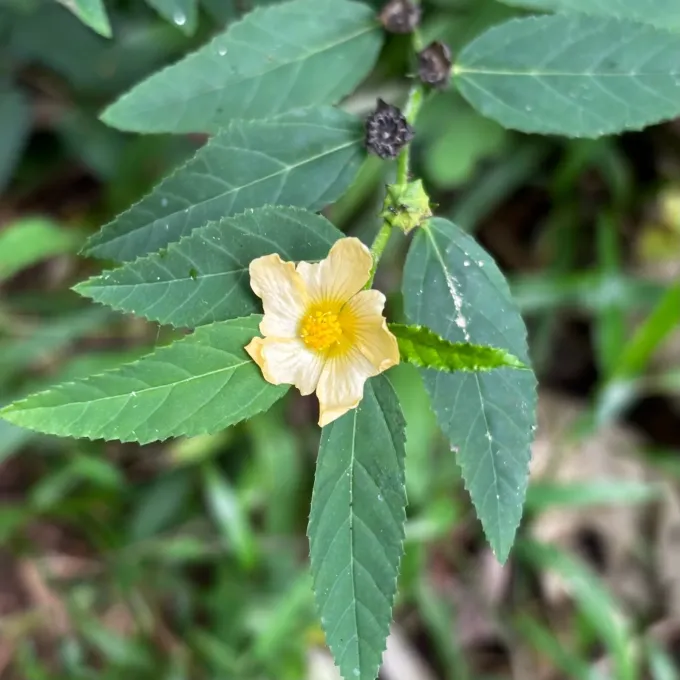
Sida acuta, commonly known as common wireweed, is a perennial herb or subshrub belonging to the Malvaceae family. It is characterized by an erect, branched stem that can grow up to one meter in height.
The leaves are lanceolate to ovate with an acute tip and serrated margins, which is the primary feature that gives the plant its scientific name.
The flowers are small, yellow to pale yellow, and typically grow solitary in the leaf axils, serving as a distinct diagnostic feature of the genus.
It possesses a strong, deep-reaching taproot system that allows the plant to survive in adverse environmental conditions and periods of prolonged drought.
The fruit is a dry capsule that splits into several segments upon maturity, facilitating efficient seed dispersal via wind, water, or contact with animals.
Where it grows
Sida acuta is a highly successful weed in tropical and subtropical regions, where it frequently colonizes disturbed environments and open habitats.
It is commonly found on abandoned farmlands, pastures, roadsides, and along irrigation channels, where it outcompetes native or desired vegetation.
The plant poses a significant threat to various row crops, including corn, soybeans, cotton, and other plantation species that are sensitive to early competition.
Due to its high level of environmental plasticity, it can thrive in a wide range of soil types, from sandy to clay-rich, making it a persistent agronomic problem.
Under favorable conditions, Sida acuta can form dense, near-monoculture stands that effectively suppress the growth of any surrounding vegetation.
Harm it causes
The primary impact of Sida acuta on agricultural systems is its aggressive competition with crops for essential resources such as water, light, and soil nutrients.
By shading emerging crops in their critical early growth stages, the weed can cause substantial reductions in total biomass and eventual crop yield.
It acts as a host for several viral and fungal pathogens, which can then spread to cultivated crops, leading to disease outbreaks within the field.
On grazing lands, the weed is undesirable as it displaces nutritious forage, thereby reducing the carrying capacity and overall productivity of the pasture.
The stems of mature Sida acuta plants are tough and fibrous, which can damage harvesting machinery and increase maintenance costs for agricultural operations.
How to control
Effective management of Sida acuta requires an integrated strategy that combines mechanical control, careful soil cultivation, and chemical applications.
Deep plowing is highly recommended as it targets the robust taproot, significantly hindering the plant's ability to regenerate and establish itself again.
Mechanical cultivation between crop rows is essential for removing young seedlings before they develop deep roots or enter the reproductive phase.
Chemical control strategies rely on systemic herbicides that are absorbed by the foliage and translocated to the roots to ensure complete plant destruction.
A proactive approach involving strict crop rotation and the removal of solitary plants before flowering is crucial to preventing the seed bank from replenishing.
Taxonomy
- Latin name
- Sida acuta
- Family
- Мальвовые
- EPPO code
- SIDAC