
Pavonia urens
Pavonia urens
Description
How to tell it apart
Pavonia urens is a species belonging to the Malvaceae family. It is a perennial herbaceous plant or subshrub characterized by stinging hairs on its stems and leaves.
The leaves are typically heart-shaped or ovate with serrated edges, often covered with trichomes that cause skin irritation upon contact.
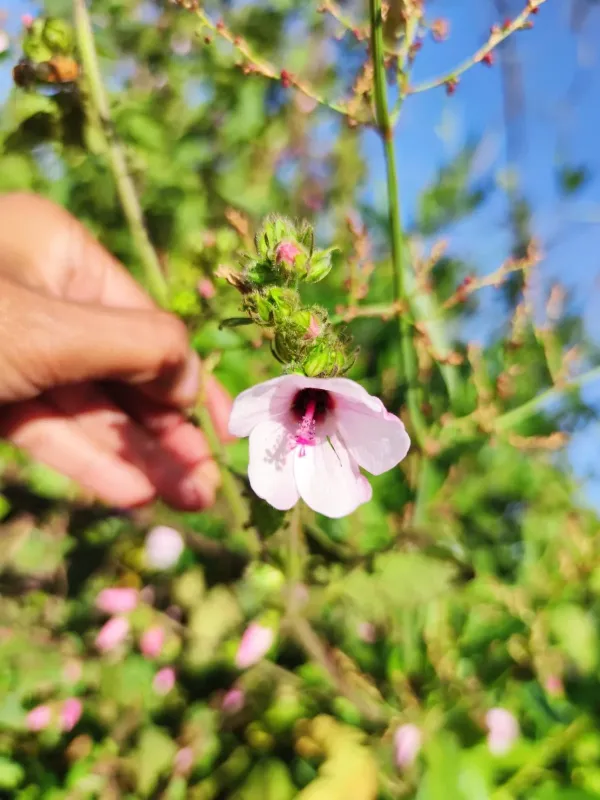
The flowers resemble those of other mallow species, typically appearing in shades of pink or purple, situated in the leaf axils on short stalks.
This weed reproduces both sexually via seeds and vegetatively through its robust root system, allowing it to form dense colonies in infested areas.
Identification is largely based on the distinct stinging sensation experienced when the plant is touched, coupled with its characteristic mallow-like floral structure.
Where it grows
Pavonia urens is primarily native to tropical and subtropical regions, with significant distribution across various parts of South America.
It thrives in disturbed habitats, including abandoned agricultural lands, roadsides, and open pastures where it can compete effectively for resources.
The plant demonstrates a strong ability to invade crop fields, particularly those with fertile and moisture-retentive soils.
It is often found in areas that have been ecologically degraded, where it establishes a stronghold before spreading into adjacent productive fields.
Environmental conditions that favor year-round growth contribute to its rapid expansion and persistence in agricultural environments.
Harm it causes
The primary agricultural harm caused by Pavonia urens is resource competition, as it consumes significant water and nutrients, limiting crop yields.
The stinging hairs pose a health risk to farm workers, making manual weeding and harvesting operations difficult and painful without protective gear.
By creating a dense canopy, the weed effectively shades out young crop seedlings, hindering their development in the early stages of growth.
Infestations on grazing lands are problematic, as the stinging property of the plant makes the forage unsuitable or hazardous for livestock.
Its deep and extensive root system can exhaust soil nutrients and physically interfere with soil aeration and preparation for subsequent plantings.
How to control
Mechanical control through deep plowing is essential to break up the root structure and inhibit the vegetative regeneration of the plant.
Chemical control involves the use of systemic herbicides, such as glyphosate-based products, applied during active growth stages for optimal translocation.
Mowing before the onset of flowering is a critical step to prevent the maturation and dispersal of seeds into the soil bank.
Strict safety protocols, including the use of gloves and protective clothing, are required to prevent dermatological issues for field workers.
- Integrated weed management programs utilizing crop rotation to break the life cycle.
- Spot treatment with herbicides in areas where manual removal is unsafe.
Taxonomy
- Latin name
- Pavonia urens
- Family
- Мальвовые
- EPPO code
- PVAUR