
Melochia corchorifolia
Melochia corchorifolia
Description
How to tell it apart
Melochia corchorifolia, belonging to the Malvaceae family, is an annual herbaceous weed recognized for its rapid growth and wide distribution in tropical and subtropical regions.
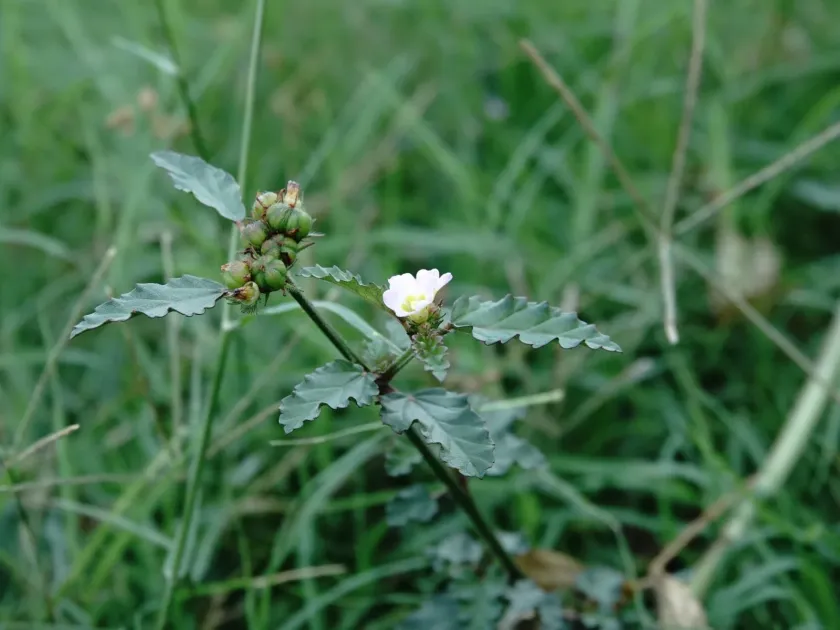
The plant typically grows as an erect shrub, reaching heights of 30 to 100 cm. Its stems are often branched and can be either hairy or smooth, showing a greenish or reddish pigmentation.
The leaves are alternate, petiolate, and display a serrated edge with a shape ranging from ovate to lanceolate, resembling those of jute, which is why it is sometimes called chocolate weed.
Flowers are gathered in dense terminal or axillary clusters, exhibiting white, pink, or yellowish petals, which are a key diagnostic feature for field identification.
The fruit is a small, spherical, or flattened capsule that dehisces at maturity, scattering numerous small seeds into the environment, ensuring the survival of the species.
Where it grows
This weed thrives in moist to wet environments, commonly infesting rice paddies, irrigation canals, and swampy areas where moisture is consistently available.
It is a significant nuisance in wetlands and agricultural fields that suffer from poor drainage, as these conditions favor its seed germination and rapid vegetative development.
Beyond agricultural lands, Melochia corchorifolia can be found on roadsides, along riverbanks, and in disturbed ecosystems where it easily outcompetes local flora.
The plant is highly adaptable to various soil textures, provided that the soil remains sufficiently humid during the primary growing season of the main crops.
Its dissemination is primarily facilitated by water currents during floods and by contaminated agricultural machinery moving between infested and clean fields.
Harm it causes
As a major weed in rice cultivation, it competes aggressively with the crop for water, nutrients, and sunlight, significantly reducing the final grain yield.
The weed's rapid early growth can quickly overshadow young rice seedlings, preventing them from developing properly and leading to patchy crop stands.
Dense infestations complicate mechanical harvesting operations, as the thick stems can clog machinery and increase the moisture content of the harvested crop.
It acts as a host for various insect pests and plant diseases, which can spread to commercial crops and necessitate increased pesticide usage in the affected areas.
The high seed production capacity creates a long-lasting soil seed bank, making the weed difficult to eradicate completely without long-term integrated management.
How to control
Effective control requires an integrated approach starting with preventive measures like using certified, clean rice seeds and maintaining clear irrigation ditches.
Cultural management includes proper land preparation, such as plowing, to bury seeds and prevent them from germinating, as well as maintaining proper water levels in paddies.
- Mechanical weeding during the early stages of crop development.
- Ensuring optimal plant density to shade out the weed.
- Regular monitoring of field margins to prevent seed spread.
Chemical control involves the application of selective herbicides during the early vegetative stage of the crop, when the weed is most susceptible to treatment.
Farmers should rotate chemical products with different modes of action to prevent the development of resistant weed biotypes in the rice fields.
Taxonomy
- Latin name
- Melochia corchorifolia
- Family
- Мальвовые
- EPPO code
- MEOCO