
Cheeseweed mallow
Malva parviflora
Description
How to tell it apart
Malva parviflora, commonly known as cheeseweed mallow, is a herbaceous plant within the Malvaceae family. It typically grows as an annual, reaching heights of up to 80 centimeters.
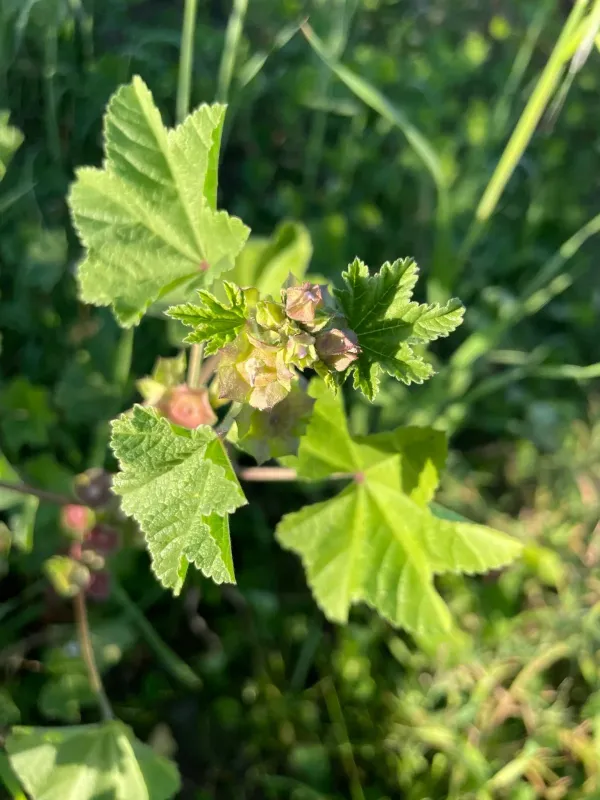
The leaves are rounded or kidney-shaped with 5 to 7 lobes and serrated margins. The texture of the foliage is generally glabrous or sparsely hairy, distinguishing it from other mallow species.
Flowers are small and clustered in leaf axils. The petals are pale white or pinkish and barely exceed the calyx, which is a key identification feature for this specific weed.
The fruit is a schizocarp that splits into 8–11 segments, or mericarps. These seeds have a wrinkled, reticulated surface, helping them persist in the soil for extended periods.
It develops a sturdy, deep taproot system, which allows the plant to thrive in competitive environments and survive under conditions of limited water availability.
Where it grows
This weed is widely distributed in temperate and subtropical regions, including the Mediterranean, Africa, and parts of Asia and the Americas, where it is considered a significant weed.
It commonly invades cereal fields, vegetable crops, vineyards, and orchards. It thrives in nitrogen-rich soils, often appearing near farm buildings, roadsides, and disturbed ground.
Malva parviflora is a prolific seed producer, allowing it to colonize new areas rapidly when conditions such as soil moisture and light are favorable.
The plant is highly adaptable, often forming dense stands in fertile soils where it can easily outcompete slow-growing crops for nutrients and space.
Human activities, including the movement of contaminated equipment and machinery, play a major role in the wide dispersal of its seeds across agricultural land.
Harm it causes
The primary damage caused by Malva parviflora is direct competition with crops for water, light, and essential minerals, leading to significant yield losses in infested fields.
It acts as a host for various agricultural pests, particularly aphids, which can transmit viral diseases to economically important crops like vegetables and pulses.
The plant is known to accumulate nitrates, which can pose a toxicity risk to livestock if the weed is present in significant amounts in hay or forage areas.
Its robust stems and branches can interfere with harvesting operations, potentially clogging equipment and increasing the mechanical load during the threshing process.
With its high reproductive potential, the weed can quickly dominate a site, creating a long-term seed bank in the soil that requires consistent management efforts.
How to control
Cultural control involves deep plowing to bury seeds, which effectively prevents them from germinating in subsequent seasons by placing them below their emergence depth.
Mechanical cultivation between rows in broad-leaved crops is highly effective if performed early, targeting the plant during the rosette stage before flowering occurs.
Chemical control is often necessary and involves the application of selective post-emergence herbicides. Products containing 2,4-D or dicamba are frequently used in cereal crops.
Integrated weed management should include monitoring fields during early crop stages to apply herbicides at the optimal growth stage of the weed to ensure maximum efficacy.
Preventative measures, such as using certified weed-free seeds and cleaning machinery before moving between fields, are essential to stop the spread of this invasive plant.
Taxonomy
- Latin name
- Malva parviflora
- Family
- Мальвовые
- EPPO code
- MALPA