
Corchorus trilocularis
Corchorus trilocularis
Description
How to tell it apart
Corchorus trilocularis belongs to the Malvaceae family. It is an annual herbaceous plant widely recognized by its distinct capsule fruits which typically split into three segments, giving the plant its specific name.
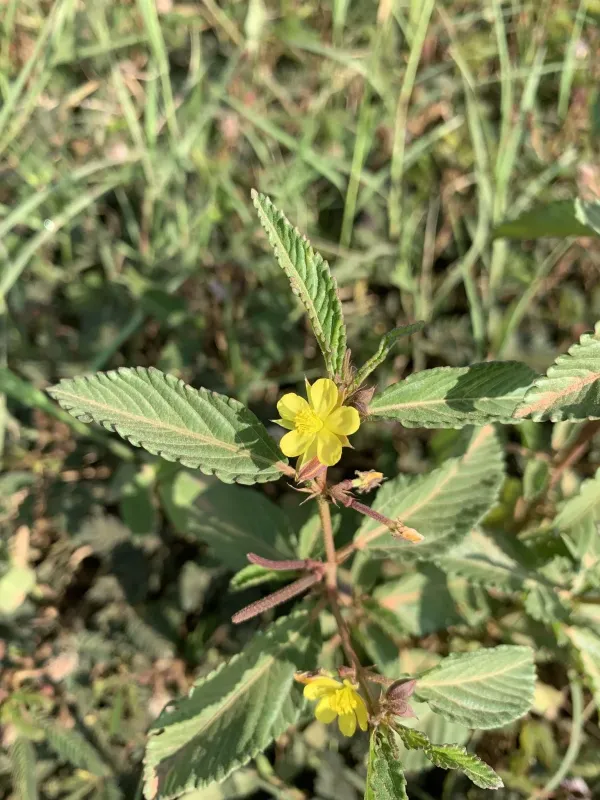
The plant features an erect, highly branched stem that can reach heights of up to one meter. The leaves are generally lanceolate to ovate in shape, characterized by serrated margins and small glands at the base.
Small yellow flowers emerge from the leaf axils, typically blooming in the summer months. These flowers are essential for the plant's high reproductive capacity as they produce abundant seeds.
The fruit is an elongated cylindrical pod. When mature, it opens to release numerous small, dark seeds that are highly resistant to environmental stressors and can survive in the soil for extended periods.
A deep, strong taproot system allows this plant to establish itself firmly in various soil types, providing resilience against drought and ensuring efficient nutrient uptake.
Where it grows
This weed is native to tropical and subtropical regions. It thrives in open, sunny areas, including wastelands, roadsides, abandoned pastures, and disturbed soil environments.
In agricultural settings, it frequently invades crops such as cotton, jute, and various cereals. It is especially troublesome in rows where cultivation space allows for rapid expansion.
The plant prefers well-drained, fertile soils but is highly adaptable to sandy or compacted soils. It requires significant sunlight and generally does not persist in heavily shaded or dense vegetation.
Irrigation networks often serve as a primary dispersal route for Corchorus trilocularis, as water currents transport seeds from infested canal banks directly into irrigated fields.
Warm temperatures are critical for its germination; hence, it is most active during the summer season, often emerging alongside primary summer crops after the soil has thoroughly warmed.
Harm it causes
The primary damage caused by this weed is competition. Corchorus trilocularis competes aggressively with crops for soil moisture, nitrogen, and other essential nutrients, often leading to reduced crop yields.
During the early developmental stages, the weed can rapidly shade out smaller crop seedlings, causing stunted growth and preventing the crop from reaching its full physiological potential.
It acts as a host for various insect pests and pathogens that target the Malvaceae family, thereby increasing the risk of diseases spreading to economically valuable crops like cotton.
The weed’s high seed production leads to a rapid build-up of the soil seed bank. Once established, it can become a persistent problem that requires long-term management strategies to eradicate.
Harvesting challenges are another significant issue; the presence of mature weed stems and seeds in harvested material can lower product quality and increase cleaning costs at processing facilities.
How to control
Integrated weed management (IWM) is essential for controlling Corchorus trilocularis, combining mechanical, cultural, and chemical methods to achieve sustainable suppression.
Crop rotation remains a fundamental strategy. By alternating with competitive crops that form a dense canopy, farmers can naturally suppress the weed's ability to access the light it needs to thrive.
Mechanical control through deep plowing and timely inter-row cultivation is highly effective. Removing the weed before it reaches the flowering stage is critical to stop seed dispersal.
Chemical control involves the use of selective herbicides applied during the vegetative stage. It is vital to consult local agronomic guidelines to select the right herbicide based on the crop.
Maintaining clean field margins, ditch banks, and irrigation channels significantly reduces the risk of re-infestation, ensuring that seed sources outside the field are kept to a minimum.
Taxonomy
- Latin name
- Corchorus trilocularis
- Family
- Мальвовые
- EPPO code
- CRGTR