
Corchorus siliquosus
Corchorus siliquosus
Description
How to tell it apart
Corchorus siliquosus is a perennial subshrub belonging to the Malvaceae family. It is characterized by its branching stems that can grow up to one meter in height.
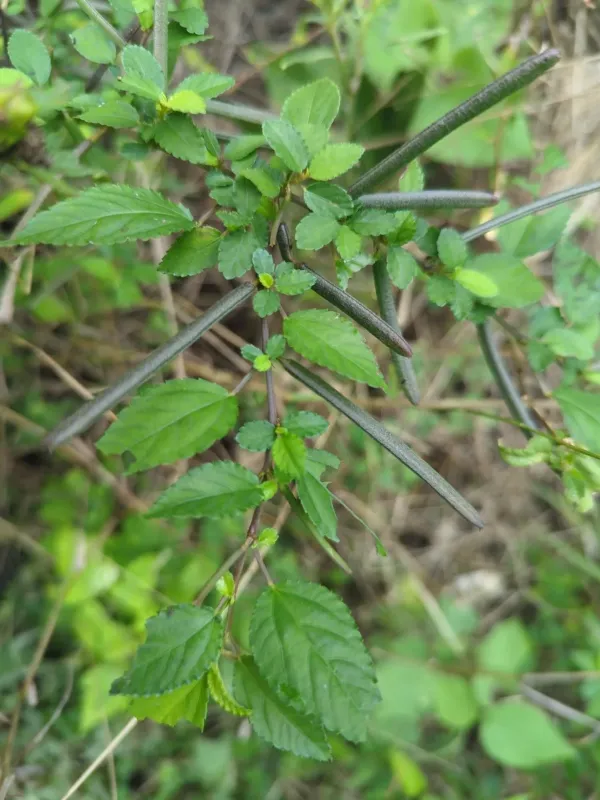
The leaves are lanceolate to ovate with serrated margins. They are arranged alternately along the stem and have a slightly rough texture when touched.
Flowers are small, yellow, and appear solitary or in small clusters in the leaf axils. They exhibit the typical five-petal structure of the mallow family.
The fruits are distinct, long, narrow, pod-like capsules that contain numerous small, dark-colored seeds, which are easily dispersed by environmental factors.
The plant possesses a deep, robust taproot system that allows it to survive harsh conditions and quickly establish itself in various soil types.
Where it grows
This species is native to tropical and subtropical regions of the Americas and is widely found throughout the Caribbean and Latin American countries.
It thrives in disturbed habitats such as abandoned farmland, pasture lands, roadsides, and areas where natural vegetation has been cleared or altered.
In agricultural settings, it frequently infests row crops including corn, cotton, sugarcane, and a variety of vegetable crops grown in open fields.
The weed prefers well-lit, sunny areas with moderate moisture, allowing it to dominate areas that have been poorly managed or left fallow.
Seed dispersal is highly efficient, often aided by machinery movement, water runoff, and wind, making it a difficult weed to contain in large farming operations.
Harm it causes
The primary harm caused by Corchorus siliquosus is intense competition for light and nutrients, often suppressing the growth of young crop seedlings.
By forming dense stands, the weed shades out low-growing crops and competes aggressively for nitrogen and water, significantly reducing potential yields.
It can also act as an alternative host for various pests and diseases that can jump from the weed to economically important agricultural crops.
The presence of this weed complicates farm management, increasing the costs of mechanical weeding and requiring additional labor during the harvesting process.
Furthermore, seed contamination in harvested grains or legumes can significantly lower the market grade and quality of the final agricultural product.
How to control
Effective management requires an integrated approach that combines mechanical cultivation with appropriate chemical control measures for sustainable results.
Mechanical control involves timely plowing and cultivation of inter-row spaces to disrupt the root system and kill seedlings before they flower and set seeds.
Crop rotation remains a crucial strategy; planting different crop species disrupts the cycle of the weed and prevents it from adapting to a single environment.
Herbicides are a vital part of the control program, particularly systemic herbicides that are registered for use in the specific crop being managed.
- Implementation of integrated pest management (IPM) practices
- Regular manual or mechanical weeding in early crop growth stages
- Use of selective herbicides targeting broadleaf weeds
- Cleaning agricultural equipment to prevent weed seed spread
Taxonomy
- Latin name
- Corchorus siliquosus
- Family
- Мальвовые
- EPPO code
- CRGSI