
Spigelia anthelmia
Spigelia anthelmia
Description
How to tell it apart
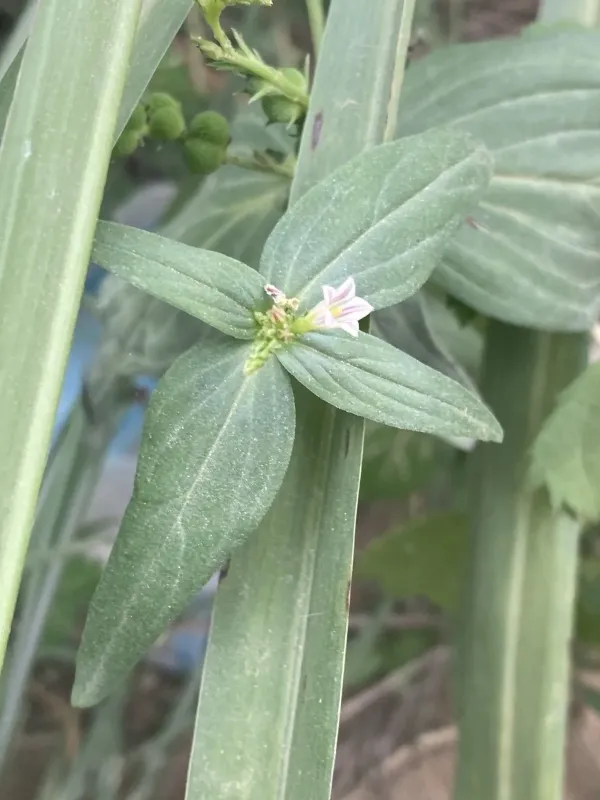
Spigelia anthelmia, commonly known as wormgrass, is an annual herb belonging to the Loganiaceae family. The plant typically grows between 10 and 40 cm in height and features a branched, erect stem structure.
The leaves are arranged oppositely along the stem and possess a lanceolate shape. A distinguishing characteristic is the presence of distinct venation and leaves that often cluster at the upper parts of the stem.
The inflorescence consists of terminal or axillary scorpioid cymes. The flowers are small and tubular, exhibiting a pale pink or white coloration, which distinguishes the species during its flowering stage.
The fruit is a small, two-valved capsule characterized by a tuberculate surface. These capsules contain numerous seeds that ensure the survival and proliferation of the species across various agricultural landscapes.
The root system is fibrous and relatively shallow, allowing the plant to rapidly extract moisture from the upper soil horizons. This efficient root structure contributes to its success as a persistent weed.
Where it grows
Spigelia anthelmia is native to the tropical regions of the Americas and has become naturalized in many other tropical and subtropical parts of the world, including Africa and parts of Asia.
The plant thrives in moist, fertile soils. It is frequently found in cultivated fields, particularly those growing maize, cotton, and various vegetables, as well as in neglected areas and disturbed sites.
It prefers sunny environments and is highly adaptable to various soil types, provided there is sufficient moisture. It is commonly seen along irrigation canals, road verges, and within plantation boundaries.
Due to its high seed production rate, the plant quickly colonizes open spaces where competition from established vegetation is low. It can form dense clusters that overwhelm seedling crops.
The weed is highly responsive to favorable climatic conditions, often completing multiple growth cycles within a single year in warm, humid regions, which increases its impact on agricultural productivity.
Harm it causes
The primary damage caused by Spigelia anthelmia is its intense competition with crops for light, soil moisture, and essential mineral nutrients, leading to stunted crop development and reduced yields.
This species is recognized for its toxic properties, as it contains alkaloids that are hazardous to livestock. Contamination of forage or hay with this weed poses a significant health risk to animals.
The presence of wormgrass in a field can complicate farm management. It serves as an alternative host for various agricultural pests and pathogens, increasing the risk of crop-wide infestations.
If left unmanaged, the weed contributes to a large seed bank in the soil. This complicates long-term crop rotation strategies, as the soil remains infested with viable seeds for several seasons.
Furthermore, the physical presence of the weed increases the need for labor and chemical interventions, thereby raising the overall cost of production for the farmer.
How to control
Cultural control remains the foundation of management, including the use of competitive cover crops that shade out the soil and prevent Spigelia seeds from germinating and establishing.
Mechanical tillage is highly effective if performed before the plant reaches the flowering stage. Frequent cultivation of inter-rows helps disrupt the root system and prevents seed production.
Chemical control involves the application of appropriate post-emergence herbicides. Agronomists must select products that specifically target broad-leaved weeds while ensuring safety for the crop.
Pre-emergence herbicide applications can be utilized to create a residual barrier in the soil, effectively inhibiting the emergence of wormgrass seedlings during the critical early stages of crop growth.
Good field hygiene is essential to limit the spread of seeds via machinery. Ensuring that equipment is cleaned when moving from infested areas to clean fields significantly reduces the risk of re-infestation.
Taxonomy
- Latin name
- Spigelia anthelmia
- Family
- Логаниевые
- EPPO code
- SPKAN