
Mintweed
Salvia reflexa
Description
How to tell it apart
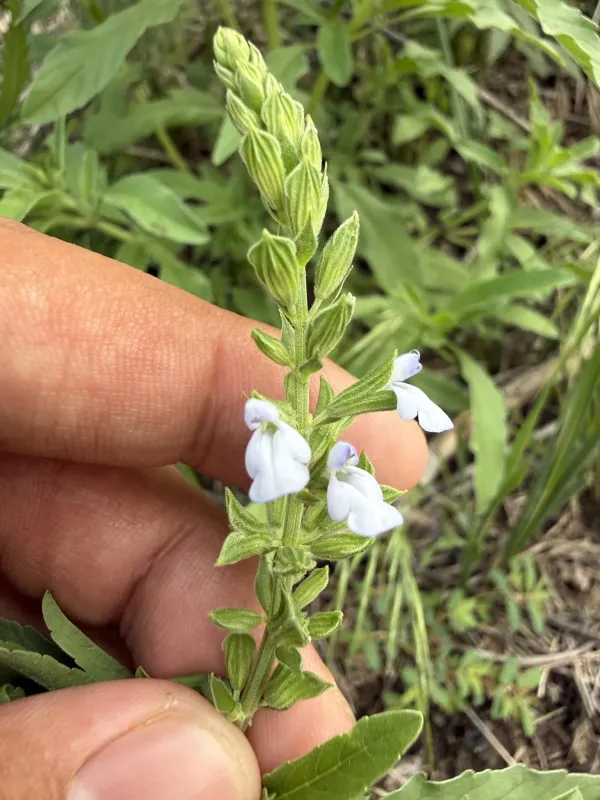
Mintweed (Salvia reflexa) is an annual herbaceous plant in the Lamiaceae family. It is characterized by its square stems that branch significantly from the base.
The leaves are opposite, lanceolate in shape, and possess serrated margins. The plant often emits a pungent, characteristic aroma when crushed.
Flowers are arranged in loose racemes and exhibit a pale blue or lilac color. They typically emerge from the leaf axils in small whorls.
The plant is covered in fine hairs and glandular structures, which give it a grayish-green appearance and contribute to its strong scent.
Seeds are small nutlets, which can survive in the soil for extended periods, contributing to the persistent nature of this weed species.
Where it grows
Native to North America, Mintweed has spread globally and is now considered a significant agricultural weed in many temperate regions.
It favors well-drained, open, and sunny environments. It is commonly found on pastures, fallow fields, and along roadsides.
In agricultural settings, it frequently invades row crops, cereals, and pulse crops, particularly in areas with light-textured soils.
The weed thrives in disturbed soil, quickly colonizing areas where the natural vegetation has been removed or damaged.
Its ability to tolerate drought makes it particularly competitive in regions with low rainfall, where it can outcompete crops for limited soil moisture.
Harm it causes
Mintweed is a highly competitive weed that reduces crop yields by consuming substantial amounts of soil nutrients and water.
It can cause significant economic losses by interfering with harvesting operations and contaminating harvested grain with its seeds.
The plant is known to be toxic to livestock, causing potential health issues if consumed in large quantities in contaminated forage or pasture.
High population densities of Mintweed provide dense shade, which severely restricts the light available to young crop plants, hindering their development.
The presence of this weed degrades the overall health of the field, making it more susceptible to other secondary weed infestations.
How to control
Effective management requires a combination of cultural practices, such as competitive crop planting and rigid adherence to crop rotation cycles.
Mechanical control through tillage and precise inter-row cultivation is effective if performed before the plant reaches the flowering stage.
Chemical control strategies typically involve the application of selective herbicides during the early seedling stage of the weed.
Monitoring field boundaries and non-crop areas is essential to prevent the spread of seeds into production zones.
- Implement fallow period management to deplete the seed bank.
- Use herbicides according to label instructions for the specific crop variety.
- Maintain sanitation protocols to prevent seed movement via machinery.
Taxonomy
- Latin name
- Salvia reflexa
- Family
- Яснотка пурпурная
- EPPO code
- SALRE