
Water horehound
Lycopus
Description
How to tell it apart
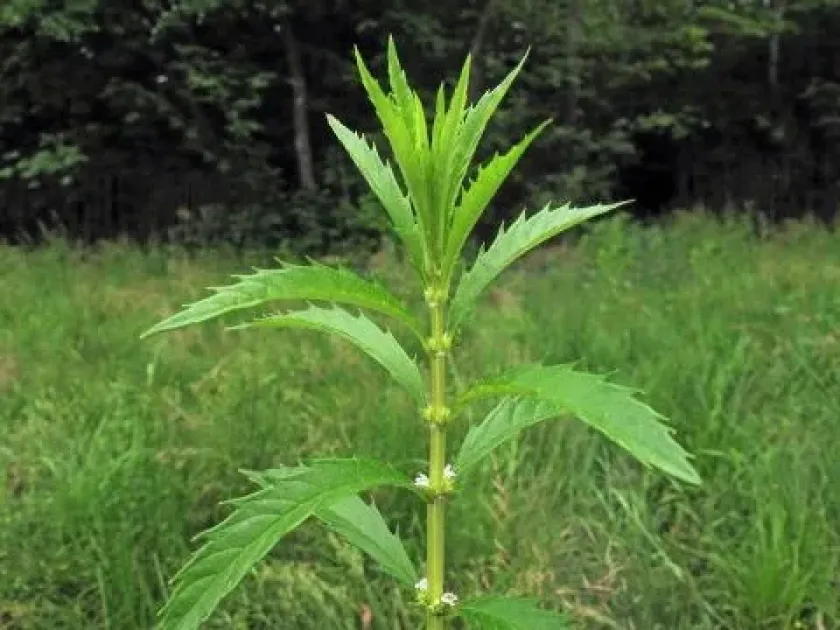
Water horehound (Lycopus) is a perennial herbaceous plant belonging to the Lamiaceae family. It is characterized by a square stem reaching heights of up to 100 cm and opposite, serrated lanceolate leaves.
The flowers are small, arranged in dense axillary whorls, and typically white with purple spots. These features distinguish the plant from other mint-family species during the vegetative and flowering stages.
The plant spreads through an extensive system of rhizomes. These underground stems are very resilient, allowing the weed to propagate vegetatively and colonize large areas quickly.
Where it grows
Water horehound is a classic hygrophyte, thriving in wet and marshy environments. It is frequently found along riverbanks, lake shores, and in damp meadows where the soil remains consistently moist.
In agricultural settings, it thrives in fields with poor drainage or high water tables. It often settles in areas surrounding irrigation ditches or in low-lying parts of the field where water collects after rain.
Harm it causes
The plant causes significant harm by competing with crops for space, light, and nutrients. In dense patches, water horehound can completely suppress the growth of cultivated plants, leading to yield loss.
Due to its rapid rhizomatous spread, it can quickly turn a field into a mono-culture of weeds, making it difficult for commercial crops to establish themselves. This significantly increases costs associated with field cleaning and soil preparation.
The presence of water horehound also hinders mechanical operations, as the thick foliage and persistent root systems can clog farm machinery and complicate harvesting processes.
How to control
The primary control strategy involves moisture management. Improving field drainage and leveling the soil to prevent standing water is the most sustainable way to reduce the population of this weed.
Tillage practices, such as deep plowing and mechanical cultivation, are effective at disrupting the rhizomes. These methods should be repeated to weaken the root system and exhaust the plant's food reserves.
Chemical control focuses on systemic herbicides. Applying approved active ingredients that are translocated to the roots is essential for long-term suppression, particularly after harvest or in non-crop areas.
Taxonomy
- Latin name
- Lycopus
- Family
- Яснотка пурпурная
- EPPO code
- LYASS