
Leucas martinicensis
Leucas martinicensis
Description
How to tell it apart
Leucas martinicensis is an annual herbaceous plant belonging to the Lamiaceae family, known for its distinct morphological traits.
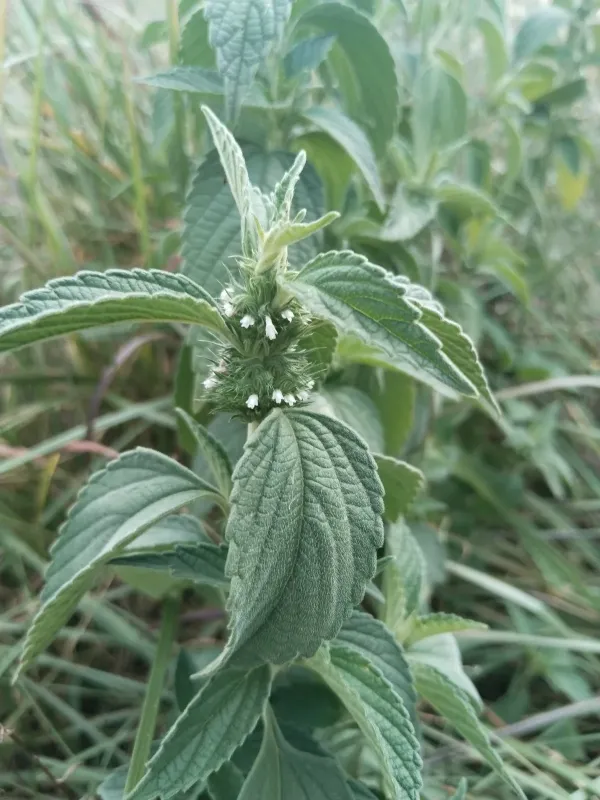
The plant features an erect, branched stem that can grow up to a meter tall, often covered with fine hairs.
Leaves are opposite, lanceolate to ovate, with serrated margins, which is a classic feature of mint-family plants.
The flowers are arranged in dense, globose whorls in the leaf axils, accompanied by spiny bracts that make them easy to identify.
Small white flowers bloom in clusters, and the plant produces numerous seeds, contributing to its rapid spread across agricultural landscapes.
Where it grows
This species is widely distributed throughout tropical and subtropical regions of Africa, Asia, and the Americas.
It thrives in open, sunlit areas, including cultivated fields, pastures, roadsides, and disturbed waste lands.
Leucas martinicensis is highly adaptive and can colonize a variety of soil types, provided there is adequate light exposure.
In farming systems, it acts as a significant weed in various crops, including cereals and legumes, especially in warmer climates.
The weed is a common pioneer species that quickly establishes itself in areas where the soil has been recently disturbed.
Harm it causes
The primary damage is caused by competition for water and soil nutrients, which significantly limits the yield of neighboring crops.
Its fast growth rate allows it to overshadow crops, effectively blocking sunlight required for their optimal photosynthesis and development.
It often serves as an alternative host for pathogens and pests, which can transfer from the weed to valuable agricultural crops.
The presence of weed seeds in harvested produce lowers its commercial grade and complicates the cleaning process for farmers.
In pastoral lands, it creates competition for forage species, potentially reducing the nutritional quality of the available grazing area.
How to control
Effective agrotechnical control requires deep tillage or mechanical weeding of inter-rows before the plant reaches its flowering stage.
Crop rotation practices that utilize fast-growing canopy crops can help naturally suppress the growth of this light-demanding weed.
Chemical control involving the application of registered herbicides at the early seedling stage is a highly effective management strategy.
Strict monitoring and prevention are necessary to ensure that seeds are not transported via contaminated farm equipment or seed stocks.
- Regular weeding and hoeing of fields.
- Mowing before seed production.
- Integration of selective herbicide treatments.
Taxonomy
- Latin name
- Leucas martinicensis
- Family
- Яснотковые
- EPPO code
- LEVMA