
Siberian motherwort
Leonurus sibiricus
Description
How to tell it apart
Siberian motherwort (Leonurus sibiricus) is a plant belonging to the Lamiaceae (mint) family. It can manifest as an annual or biennial herbaceous plant depending on the climate and growing conditions.
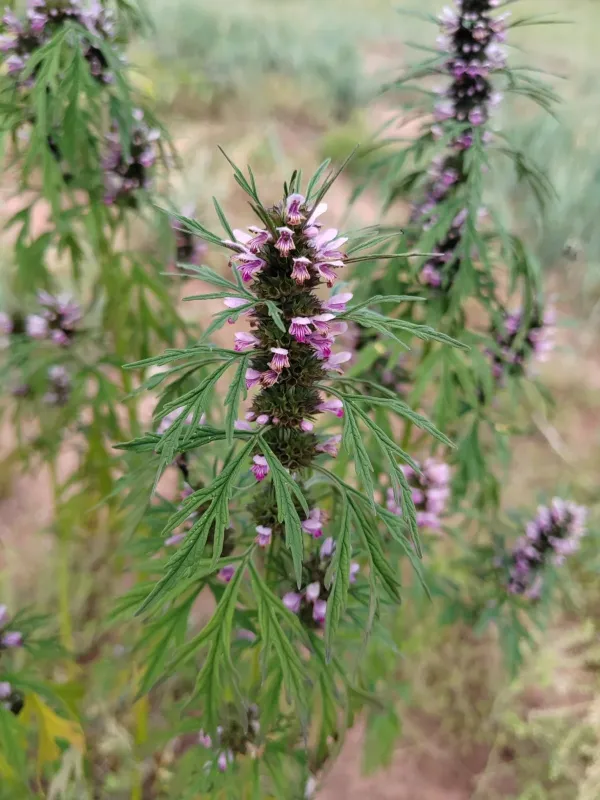
The stem is erect, square in cross-section, and can grow over one meter in height. It is typically branched, with opposite leaves that are deeply divided into narrow, linear segments.
The flowers are arranged in dense whorls in the leaf axils, forming spike-like inflorescences. They feature a distinct two-lipped corolla, usually pink, purple, or lavender in color.
It possesses a strong, well-developed taproot system, which helps it establish quickly in various soil types and allows it to effectively compete for underground resources.
The seeds are produced in large quantities and are encased in small nutlets, which possess specialized structures that facilitate dispersal by wind, water, or farm machinery.
Where it grows
Native to Central and East Asia, including Siberia and Mongolia, Siberian motherwort has become widely distributed across various parts of the globe due to its invasive nature.
It frequently inhabits waste areas, roadsides, disturbed soils, field edges, and abandoned lands where there is little competition from dense vegetation.
In agricultural settings, it infiltrates row crops and fields with poor weed management practices, often spreading from surrounding uncultivated areas into the field interior.
The plant is highly adaptable to environmental conditions, thriving in sun-exposed spots and tolerating different soil structures ranging from sandy to heavier loamy textures.
Due to its high seed set, once established, it forms persistent seed banks in the soil, making long-term control a challenge for farmers and land managers.
Harm it causes
Siberian motherwort competes aggressively with agricultural crops for essential nutrients, water, and sunlight, directly reducing the potential biomass and yield of the primary crop.
The plant's height and dense growth habit create significant shading, which is particularly detrimental to low-growing crops or early-stage development of major agricultural plants.
The presence of this weed during harvest is a major operational issue, as its woody stems can damage harvesting equipment and increase the moisture content of harvested grain.
Acting as an alternate host for various pests and diseases, the weed can facilitate the spread of infections to neighboring crops, thereby complicating plant protection programs.
Contamination of harvested grain with the seeds of Siberian motherwort reduces the marketability and grade of the product, often requiring expensive post-harvest cleaning.
How to control
A primary strategy for control is deep mechanical tillage (plowing) which buries seeds too deep for germination and uproots existing plants, depleting their stored energy.
Crop rotation remains a highly effective agrotechnical method, especially when including competitive crops that form a thick canopy, preventing the weed from receiving sunlight.
Mechanical weeding through inter-row cultivation during the early stages of crop development is essential to eliminate young seedlings before they develop deep roots.
Chemical control options include the timely application of systemic herbicides designed to target broad-leaved weeds. Application should ideally occur at the rosette stage for maximum efficacy.
- Mowing field edges to prevent seed set.
- Regular soil cultivation in fallow fields.
- Using certified, weed-free seed for sowing.
Taxonomy
- Latin name
- Leonurus sibiricus
- Family
- Яснотка пурпурная
- EPPO code
- LECSI