
Hyptis
Hyptis
Description
How to tell it apart
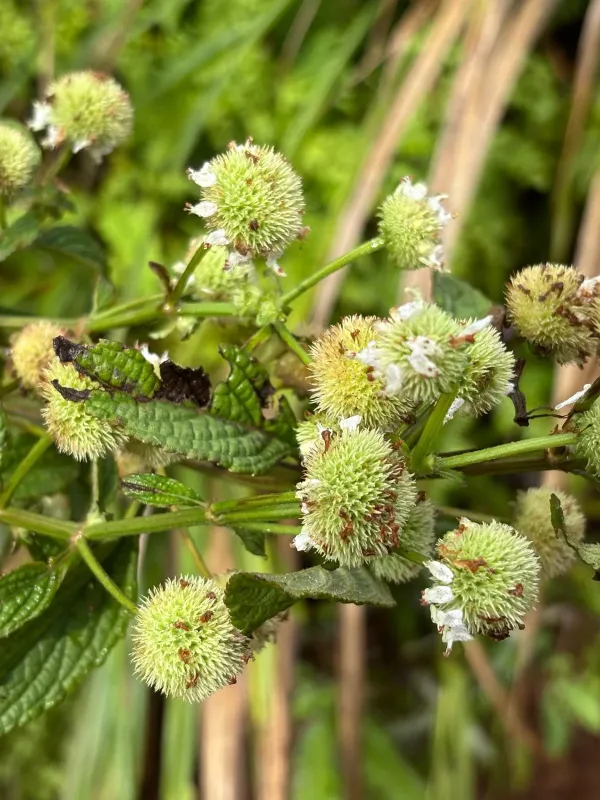
Hyptis is a diverse genus of plants in the Lamiaceae family. They are characterized by square stems and opposite leaves, which are typical hallmarks of this botanical family.
The flowers are arranged in distinctive clusters, often head-like or verticillate, and they can vary in color from white to blue or purple depending on the specific species.
Many species within the genus are aromatic, releasing essential oils when crushed. This scent serves as a chemical defense mechanism against certain types of herbivores.
The seeds are small and often have structures that facilitate dispersal by wind, water, or by attaching to the fur of animals or machinery during field operations.
The root systems vary by species, but they are generally robust, enabling these plants to thrive in diverse soil conditions, from moist floodplains to dry, sandy sites.
Where it grows
Hyptis is primarily found in tropical and subtropical regions. It has become a significant weed in many parts of the world, particularly in warmer climates.
It colonizes disturbed areas such as agricultural fields, roadsides, irrigation ditches, and overgrazed pastures, where it can quickly outcompete native vegetation.
The plant prefers areas with high light availability but is adaptable enough to persist in slightly shaded environments, making it a difficult weed to eradicate.
It often emerges rapidly at the start of the rainy season, utilizing available soil moisture to quickly establish large populations before primary crops can canopy.
Hyptis frequently thrives in nutrient-poor or degraded soils where it acts as a pioneer species, effectively claiming territory in agricultural ecosystems.
Harm it causes
Hyptis acts as a potent competitor for soil nutrients, water, and sunlight, leading to significant yield losses in a variety of row crops and cereals.
The plant exhibits strong allelopathic properties, meaning it secretes chemicals into the soil that actively inhibit the germination and growth of neighboring crops.
In pasture systems, Hyptis can form dense monocultures that are unpalatable to livestock, thereby reducing the overall carrying capacity of the land.
Its prolific seed production ensures that the seed bank in the soil remains high, leading to long-term management challenges for farmers and agricultural managers.
The dense foliage of large infestations can harbor various agricultural pests and diseases, providing a refuge from which they can migrate to healthy crop stands.
How to control
Mechanical control, such as plowing or hand-pulling, is most effective when conducted before the plant reaches its reproductive stage and sets seeds.
Implementing a proper crop rotation strategy helps to disrupt the life cycle of the weed, especially when combined with competitive cover crops that suppress light.
Chemical control involving systemic or contact herbicides is essential for managing heavy infestations in commercial farming operations during the early vegetative phase.
Sanitation of farm equipment is crucial to prevent the accidental transfer of seeds from infested zones to clean fields during planting or harvesting seasons.
- Regular mowing to prevent seed production in non-crop areas.
- Application of selective pre-emergence herbicides for long-term control.
- Integrated weed management programs to combine mechanical and chemical efforts.
Taxonomy
- Latin name
- Hyptis
- Family
- Яснотка пурпурная
- EPPO code
- HPYSS