
Vallisneria spiralis
Vallisneria spiralis
Description
How to tell it apart
Vallisneria spiralis, commonly known as tape grass or eelgrass, belongs to the Hydrocharitaceae family and is a submerged perennial aquatic plant.
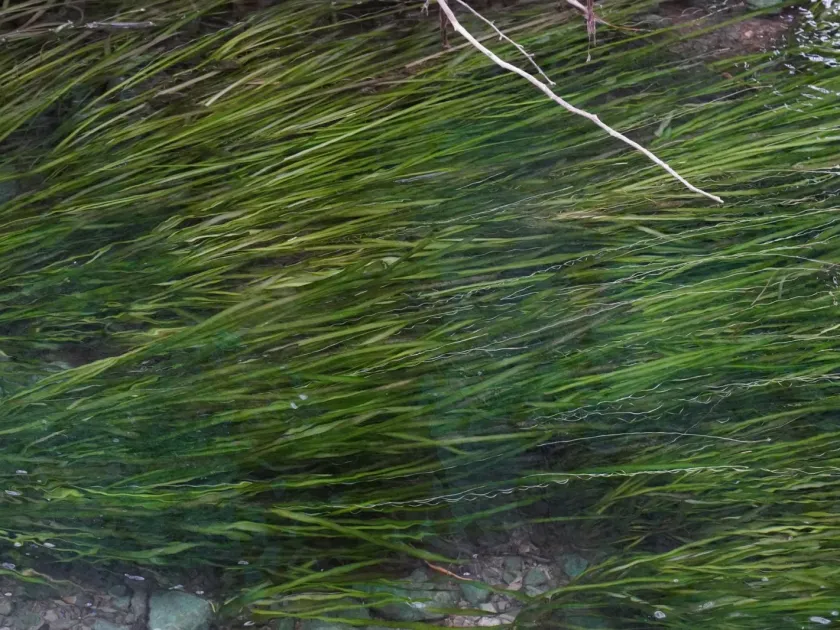
The plant is characterized by long, ribbon-like leaves that emerge in clusters from a basal rosette, connected by a network of underground stolons.
The leaves are typically bright green, featuring longitudinal veins, and can grow to lengths of over 50 centimeters, creating dense underwater mats.
The name "spiralis" refers to the long, coiled flower stalks of the female plants that spiral toward the surface of the water during the pollination process.
The root system is extensive and anchors the plant firmly into the sediment, making it a robust and persistent weed in slow-moving water bodies.
Where it grows
Vallisneria spiralis is naturally found in slow-flowing rivers, lakes, ponds, and is a major nuisance in irrigation ditches and drainage canals.
In agriculture, it specifically impacts rice fields where it competes directly with crops, thriving in the nutrient-rich, flooded conditions of paddy cultivation.
The plant prefers sandy or silty substrates and is highly adaptable to various water depths, provided there is enough light for photosynthesis.
Eutrophic water bodies, heavily influenced by fertilizer runoff from nearby farmland, provide an ideal environment for explosive growth of this species.
The species is highly resilient to varying water temperatures, which contributes to its wide distribution across temperate and tropical climate zones.
Harm it causes
The primary economic impact of Vallisneria spiralis is the obstruction of hydraulic infrastructure, where it severely restricts water flow in canals.
In rice production, it suppresses crop development by outcompeting young seedlings for vital space and limiting the amount of sunlight reaching the water surface.
The dense vegetative cover can cause significant changes to the oxygen concentration in the water, adversely affecting local biodiversity and aquatic health.
Decaying plant matter at the end of the season leads to water quality degradation, potentially increasing the costs of water treatment for agricultural use.
The tangled root systems and leaves provide shelter for various pests, contributing to ecological imbalances within the agricultural water management zones.
How to control
Mechanical control includes the use of aquatic weed harvesters to cut and remove biomass from canals to prevent water stagnation and secondary growth.
Good agricultural practice involves the periodic dredging of canals to remove silt and destroy the rooting structures of the plant, preventing re-infestation.
Chemical control can be implemented using aquatic-approved herbicides, though this is often restricted due to environmental impact concerns and water use safety.
Biological control methods, such as the introduction of herbivorous fish species, have proven successful in managing biomass levels in contained aquatic systems.
- Draining irrigation systems during the off-season to allow for frost or desiccation of the roots.
- Installation of screens or filters at canal intakes to stop the spread of plant fragments.
- Integrated water management to limit nutrient runoff and reduce the risk of eutrophication.
Taxonomy
- Latin name
- Vallisneria spiralis
- Family
- Водокрасовые
- EPPO code
- VAISP