
Halophila ovalis
Halophila ovalis
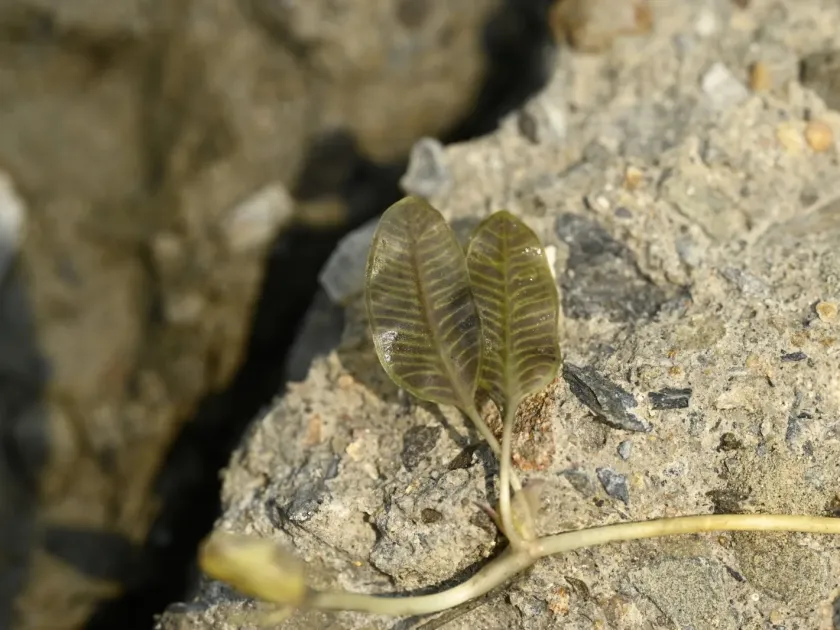
Description
How to tell it apart
Halophila ovalis is a member of the Hydrocharitaceae family. It is a perennial marine seagrass characterized by its distinct oval-shaped leaves growing from a creeping rhizome.
The plant typically forms small, dense patches. Its leaves are smooth, thin, and translucent, reaching lengths of up to five centimeters depending on the depth.
The root system is composed of fine stolons that anchor the plant into sandy or muddy substrates, allowing it to withstand moderate wave action.
Reproduction is primarily vegetative through the spread of rhizomes, though the plant can also reproduce sexually via small, inconspicuous flowers.
Biologically, it is highly adaptable to fluctuating salinity, making it a competitive species in various coastal and estuarine environments.
Where it grows
Halophila ovalis thrives in coastal marine waters, particularly in sandy or silty bottom habitats where it can access sufficient nutrients.
It has a wide geographical distribution across the tropical and subtropical regions of the Indian and Pacific Oceans, often inhabiting lagoons and reefs.
In managed environments, it can colonize water supply channels, cooling ponds, and coastal aquaculture facilities that draw seawater.
The plant requires high light penetration, which restricts its growth to shallow coastal shelves and clear water zones.
Temperature is a critical growth factor, with the species preferring warmer waters where the temperature remains above 20 degrees Celsius.
Harm it causes
The primary harm involves the overgrowth of the plant in ports and water channels, which can obstruct water flow and interfere with infrastructure.
Dense mats of Halophila can accumulate silt and debris, leading to water stagnation and potential localized changes in water chemistry.
In aquaculture, it acts as a competitor for space and resources, potentially displacing native species of higher economic value.
The decay of accumulated biomass can cause local hypoxic conditions, negatively impacting the health of other marine life within the area.
Managing the plant is economically burdensome due to the need for frequent clearing and monitoring to prevent clogging of intake pipes and gates.
How to control
Mechanical control is the most practical approach, involving manual harvesting or the use of aquatic weed harvesters to remove the biomass.
Managing the depth and turbidity of the water can effectively suppress the plant by limiting the amount of sunlight reaching the seafloor.
In controlled industrial systems, salinity manipulation or seasonal drying of the channels can significantly reduce the viability of rhizomes.
Chemical control is generally avoided due to the sensitivity of marine ecosystems and strict environmental regulations regarding herbicide use.
Biological control, such as the introduction of specific herbivorous fish species, can provide a sustainable way to limit the plant's density.
Taxonomy
- Latin name
- Halophila ovalis
- Family
- Водокрасовые
- EPPO code
- HAHOA