
Canadian waterweed
Elodea canadensis
Description
How to tell it apart
Elodea canadensis, commonly known as Canadian waterweed, is a perennial aquatic plant belonging to the Hydrocharitaceae family, typically submerged.
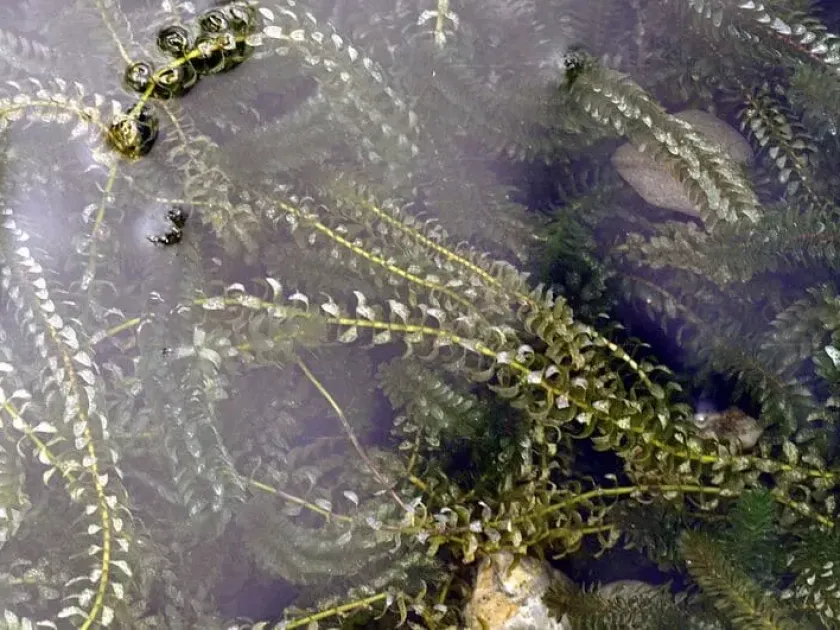
The plant features long, fragile, and highly branched stems covered in whorls of three small, translucent, bright green leaves with serrated edges.
It lacks a deep root system, often growing as a free-floating mass that can be easily dispersed by water currents or human activity.
In many regions outside its native range, the species reproduces exclusively through vegetative fragmentation, as only female plants are often present.
Small white flowers may appear on long stalks reaching the water surface, but these are rarely seen in many introduced populations where vegetative growth dominates.
Where it grows
Native to North America, Canadian waterweed has become a widespread invasive species in freshwater habitats across Europe, Asia, and Australia.
It thrives in stagnant or slow-moving water bodies, including ponds, lakes, irrigation ditches, and slow-flowing rivers where light can penetrate.
The plant demonstrates high ecological plasticity, allowing it to colonize diverse environments, from shallow margins to deeper, low-light areas.
It prefers nutrient-rich waters, often colonizing areas impacted by agricultural runoff, which accelerates its aggressive growth rate.
Human transport via recreational boating, contaminated fishing gear, and disposal of aquarium waste are the primary drivers of its rapid geographical expansion.
Harm it causes
Known as a major aquatic pest, Elodea canadensis creates dense monotypic stands that choke waterways and outcompete native aquatic flora.
The rapid accumulation of plant biomass causes significant dissolved oxygen fluctuations, often leading to fish kills and ecosystem degradation.
Extensive infestations hinder recreational activities such as swimming and boating, as well as obstructing commercial fishing nets and small vessel engines.
The accumulation of decaying matter from the dense mats accelerates the sedimentation process, leading to the rapid filling and eventual silting of ponds.
Hydroelectric power and irrigation systems are frequently impacted, as the plant clogs intake screens and reduces the water flow capacity in critical channels.
How to control
Mechanical harvesting is the most common control method, using aquatic weed harvesters to remove the biomass from the water surface.
It is vital to collect all plant fragments during mechanical removal, as broken stems easily regenerate, potentially worsening the infestation if left behind.
Biological control involves stocking water bodies with grass carp (Ctenopharyngodon idella), which graze effectively on the plant’s succulent foliage.
Chemical control using approved aquatic herbicides can be effective, but requires strict regulation to prevent collateral damage to native species and water quality.
Preventive measures include managing nutrient loads into water bodies to limit growth and strictly monitoring the introduction of non-native plant material in aquariums.
Taxonomy
- Latin name
- Elodea canadensis
- Family
- Водокрасовые
- EPPO code
- ELDCA