
Brazilian elodea
Egeria densa
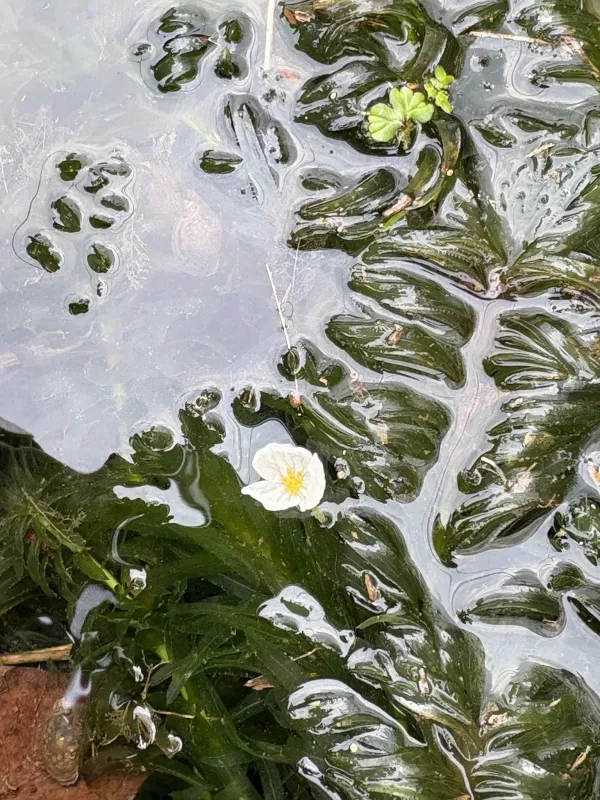
Description
How to tell it apart
Brazilian elodea (Egeria densa) is a member of the Hydrocharitaceae family. It is a perennial submerged aquatic plant often confused with its relative, Elodea canadensis, but it is typically more robust.
The plant is characterized by bright green leaves arranged in whorls of 4 to 8 around the stem. It can grow in dense mats, reaching several meters in length through rapid stem branching.
It possesses a root system that anchors the plant to the sediment, but fragments can thrive while drifting in the water column, allowing it to colonize new areas easily.
White, three-petaled flowers emerge above the water surface during the growing season. The plant reproduces mainly through vegetative fragmentation, making it a very successful invasive species.
As a hydrophyte, it is highly adaptable to various lighting conditions and nutrient levels, enabling it to thrive in diverse types of stagnant and slow-moving water bodies.
Where it grows
Native to South America, Egeria densa has become a widespread invasive species across North America, Europe, Africa, and parts of Asia due to human activity and aquarium releases.
It primarily inhabits freshwater systems, such as ponds, lakes, irrigation canals, and slow-moving rivers. It prefers nutrient-rich water where it can quickly outcompete native vegetation.
In agricultural settings, it is a common pest in irrigation and drainage channels, where it colonizes shallow areas and disrupts water flow significantly.
The plant can survive in various water conditions, including moderate pollution, which helps it establish populations in man-made waterways near agricultural sites.
Its ability to propagate from small fragments means that human maintenance of canals and waterways often inadvertently spreads the plant further downstream.
Harm it causes
Brazilian elodea causes severe damage by creating dense canopy-like mats that block sunlight, preventing native plants from photosynthesizing and disrupting the underwater ecosystem.
The accumulation of massive amounts of biomass leads to oxygen depletion, particularly at night, which can cause significant fish kills and death of other aquatic organisms.
For agricultural operations, the primary harm is the clogging of irrigation systems. Dense growth reduces water capacity and flow, leading to inefficiencies in crop watering.
Mechanical harm is significant; the weed clogs pumps, intake screens, and filtration systems, leading to high maintenance costs and potential equipment failure in irrigation infrastructure.
Furthermore, these dense mats impede water quality and increase sedimentation, which can exacerbate flooding issues in agricultural zones during heavy rainfall events.
How to control
Mechanical harvesting is the most common control method. Special aquatic weed harvesters cut and remove the biomass; however, extreme care must be taken to capture all fragments.
Because Egeria densa spreads through fragmentation, poor mechanical control can worsen the infestation. All cut material should be disposed of securely away from any water source.
Biological control, specifically the stocking of grass carp (Ctenopharyngodon idella), has proven effective in many closed or contained systems for managing excessive growth of Brazilian elodea.
Chemical control using systemic aquatic herbicides is an option, though it requires permits and careful application to ensure that water quality for irrigation and wildlife is not compromised.
An integrated management strategy involving regular monitoring, physical removal of small patches, and potential water-level drawdown remains the most effective way to protect agricultural water supplies.
Taxonomy
- Latin name
- Egeria densa
- Family
- Водокрасовые
- EPPO code
- ELDDE