
Sesbania herbacea
Sesbania herbacea
Description
How to tell it apart
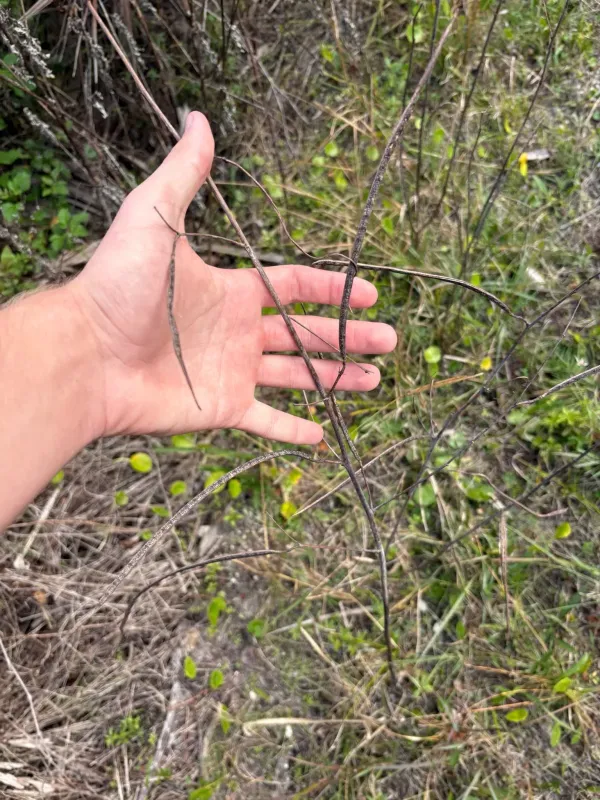
Sesbania herbacea, commonly known as hemp sesbania, is an annual legume that can reach heights of up to two meters. It features pinnately compound leaves and erect stems that tend to become woody as the plant matures during the growing season.
The flowers are pea-like, typically yellow, and often show purple or dark brown spotting on the petals. The fruit is a long, slender pod that holds numerous small, hard seeds capable of remaining dormant in the soil for several years.
Its root system is characterized by the presence of nitrogen-fixing nodules, which allows the plant to thrive even in nutrient-poor soils. This biological trait contributes to its competitive edge against crops that rely heavily on soil nutrients.
Being a heat-loving species, its growth rate is particularly aggressive during the peak of the summer, often outpacing that of surrounding crops. The rapid elongation of its stems makes it a highly visible and obstructive weed in agricultural settings.
The resilience of the seeds to environmental stress ensures the survival of the population even after years of dormant conditions, making long-term management a challenge for farmers.
Where it grows
Hemp sesbania primarily invades moist environments, such as rice paddies, irrigated fields, and floodplains. It is frequently found along irrigation canals, drainage ditches, and in areas prone to seasonal waterlogging.
The weed is commonly distributed through irrigation water, as seeds easily float and spread across different sections of a farm. It also colonizes disturbed soils, roadsides, and the edges of cultivated fields where the primary crop may be less dense.
It thrives in regions with warm, humid summers, where temperatures provide the necessary conditions for rapid germination and establishment. In these climates, it can quickly dominate open areas if left unmanaged.
The ability to withstand temporary flooding makes it particularly problematic for paddy-based agriculture. Once established in an irrigation system, it can migrate throughout the entire network, affecting multiple fields simultaneously.
It also appears in soy and cotton fields where wide-row spacing allows more light penetration, providing the weed with the necessary space and solar exposure to develop its full size.
Harm it causes
The primary damage caused by Sesbania herbacea is through resource competition. It competes aggressively for sunlight, moisture, and soil nutrients, often shading out the crop and significantly reducing overall biomass production and final yield.
The woody nature of its stems poses a physical threat to harvesting equipment. Encountering dense patches of hemp sesbania can clog or damage combine headers, leading to costly equipment repairs and significant downtime during critical harvest periods.
The presence of sesbania seeds as a contaminant in harvested grain lowers the grade and value of the agricultural produce. Cleaning these seeds from the harvest requires additional processing steps, which increases post-harvest costs.
It can also serve as an alternate host for various insect pests and pathogens that may subsequently spread to the main crop. This creates an additional layer of complexity in integrated pest management programs.
Uncontrolled growth of this weed leads to uneven crop maturity, making it difficult to optimize harvesting timing and potentially resulting in significant field losses if the harvest is delayed.
How to control
Control strategies for hemp sesbania include a combination of cultural practices and chemical interventions. Early season mechanical control, such as tillage, is effective at destroying seedlings before they develop a deep root system.
Chemical control focuses on applying selective herbicides during the early stages of growth, typically when the plants are small and most susceptible. Timely application is crucial to prevent the weed from reaching a size where it is no longer controllable by standard field equipment.
Managing the margins of fields and irrigation infrastructure is a vital component of prevention. Keeping these areas free from sesbania helps reduce the amount of seeds introduced into the main cropping area via irrigation water.
- Use of systemic herbicides during active vegetative stages.
- Implementation of crop rotations to break the weed's life cycle.
- Regular monitoring and spot-treating of field perimeters.
Integrated weed management, incorporating both preventative and corrective measures, is essential for keeping infestations at sub-economic levels. Ensuring the use of clean, certified crop seeds also prevents the introduction of the weed into new areas.
Taxonomy
- Latin name
- Sesbania herbacea
- Family
- Бобовые
- EPPO code
- SEBEX