
Purple Locoweed
Oxytropis splendens
Description
How to tell it apart
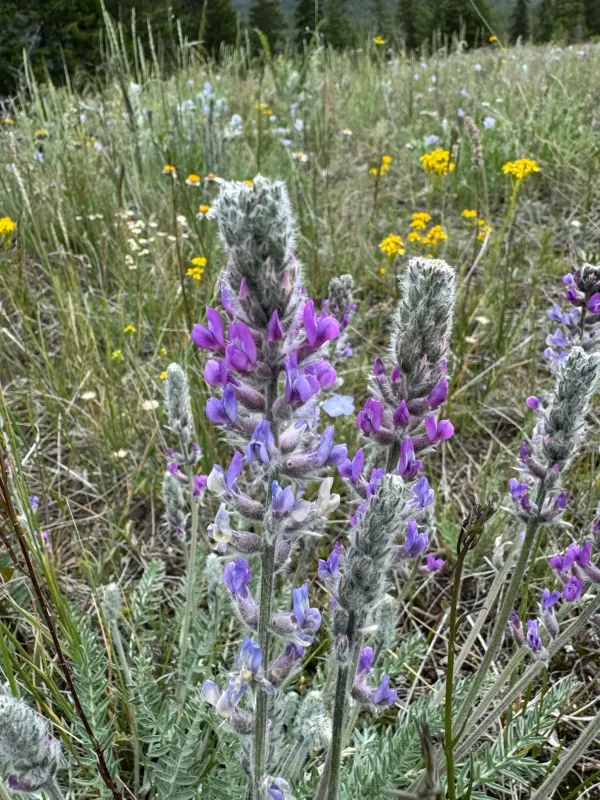
Purple Locoweed (Oxytropis splendens) is a perennial herbaceous plant belonging to the Fabaceae (legume) family. It is easily identified by its dense, silvery-white silky hairs that cover its leaves and stems, giving the plant a brilliant, shimmering appearance.
The plant grows in basal clumps, producing numerous pinnately compound leaves with narrow leaflets. Its flower stalks are elongated and topped with spikes of showy, purple-to-violet pea-like flowers, which are characteristic of this genus.
Its root system consists of a tough, deep-seated taproot, which allows it to thrive in harsh environments and arid conditions. The seeds are produced in legumes that split open at maturity, allowing the plant to spread across open spaces efficiently.
Biologically, it is classified as a tap-rooted perennial weed. It possesses high environmental plasticity, making it exceptionally resilient to cold weather and drought, which often gives it a competitive edge in degraded or neglected landscapes.
The defining feature that distinguishes it from other similar legumes is the persistent, soft, and dense pubescence that covers almost the entire plant, as well as the crowded, vertical orientation of the flower clusters.
Where it grows
This species is widely distributed in temperate and northern regions, including the steppes and mountainous areas of the Northern Hemisphere. It prefers sunny, open environments with well-drained soils, often colonizing disturbed sites.
You can commonly find Purple Locoweed on gravelly slopes, dry grasslands, and rocky outcrops. In agricultural contexts, it often infiltrates rangelands and pastures where the original vegetative cover has been compromised by overgrazing or erosion.
On farms, it frequently invades fallow fields or areas where the soil has been neglected for long periods. It is highly competitive in nutrient-poor soils where other more demanding plants struggle to establish a foothold.
The plant thrives in sites that lack dense competition from taller, more aggressive grasses. Once established, it can form large patches that eventually exclude beneficial forage crops, leading to a loss of land productivity.
Its ability to propagate through both seed dispersal and root regrowth makes it a persistent inhabitant of abandoned or poorly managed agricultural lands, complicating efforts to restore natural or cultivated vegetation.
Harm it causes
The primary concern regarding Purple Locoweed is its severe toxicity to livestock. The plant contains indolizidine alkaloids that cause "locoism," a neurological condition affecting horses, cattle, sheep, and goats.
Symptoms of toxicity include erratic behavior, loss of coordination, weight loss, and general lethargy. In chronic cases, the consumption of this plant leads to significant economic loss for livestock producers due to death or permanent health damage in animals.
Beyond its toxicity, it acts as a significant weed by reducing the quality and safety of hay. Contamination of harvested forage with even small amounts of this plant can make the entire bale dangerous for animal consumption.
The weed competes heavily with valuable pasture grasses for soil nutrients and water, reducing the overall biomass of the rangeland. This competitive pressure leads to a decline in the carrying capacity of the land for livestock.
Managing areas infested with Purple Locoweed often requires significant extra labor and costs for removal or avoidance, which limits the available area for productive grazing and forage harvesting.
How to control
Control strategies for Purple Locoweed involve an integrated approach combining mechanical and chemical methods. Mowing infested areas before the flowering stage can help weaken the plants by preventing seed set and exhausting the root reserves.
Effective pasture management is crucial for long-term control. Avoiding overgrazing is the most important cultural practice to maintain a dense, vigorous stand of competitive forage plants that can naturally suppress the establishment of weed seedlings.
Chemical control utilizing systemic herbicides (such as 2,4-D or picloram formulations) is effective when applied during the plant's active growth stage, usually prior to the onset of the bud stage.
Care must be taken when using herbicides to ensure that non-target beneficial legumes in the forage mix are protected. Always follow local regulations regarding pesticide use on grazing lands to ensure safety for livestock.
- Timely mowing to prevent seed production.
- Application of selective systemic herbicides in early spring.
- Over-seeding pastures with vigorous, competitive perennial grasses.
Taxonomy
- Latin name
- Oxytropis splendens
- Family
- Бобовые
- EPPO code
- OXRSP