
Silky crazyweed
Oxytropis sericea
Description
How to tell it apart
Silky crazyweed (Oxytropis sericea) is a perennial herbaceous plant belonging to the legume family (Fabaceae).
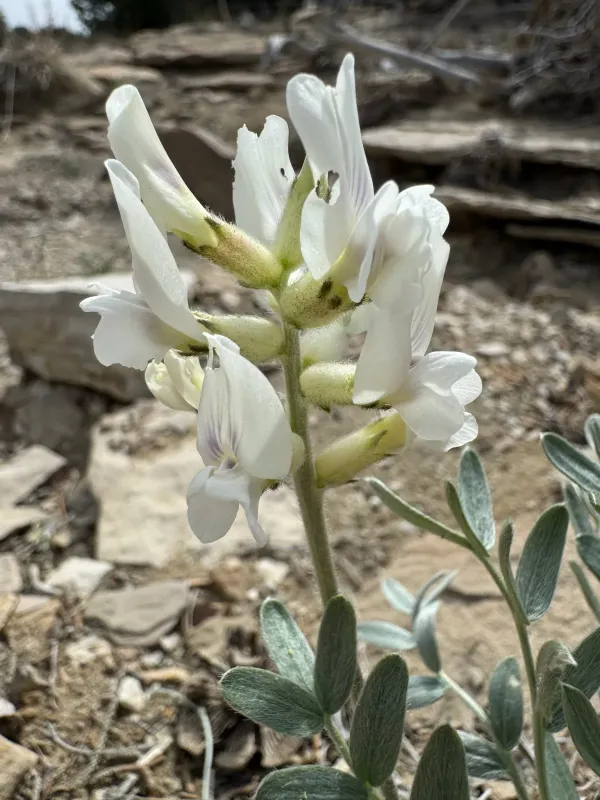
The plant is distinguished by a thick, silky, silvery pubescence covering its stems and leaves, which gives it a distinct visual appearance.
It possesses a deep taproot that makes it highly resilient and difficult to eradicate from infested pastures and rangelands.
Leaves are pinnately compound, forming a dense basal rosette, while the flowers are arranged in spike-like racemes on long stalks.
The corolla color typically ranges from pale lavender to purple, although white-flowered variations can also be found in certain regions.
Where it grows
This weed typically inhabits dry, rocky slopes, open grasslands, and areas with well-drained but poor quality soils.
It is often found in degraded rangelands where native grasses have been depleted, allowing the weed to establish dominance.
Silky crazyweed is common in the mountainous regions of North America, where it thrives in diverse ecological niches.
Its spread is primarily facilitated by seeds, which can persist in the soil for several years before germinating.
Livestock movement and wildlife often act as vectors for seed dispersal, leading to the invasion of previously unaffected areas.
Harm it causes
The primary concern regarding this plant is its high toxicity to livestock, containing the alkaloid swainsonine.
Ingestion of the plant causes a condition commonly referred to as "locoism," which leads to severe neurological degradation in animals.
Symptoms include loss of coordination, erratic behavior, reproductive failure, and, in many cases, eventual death.
Beyond animal health, the plant reduces the carrying capacity of pastures by displacing nutritious forage plants needed for grazing.
It represents a significant economic burden for farmers who must bear costs related to veterinary care and loss of animal production.
How to control
Management strategies should focus on improving overall pasture health through proper grazing rotation and soil fertility maintenance.
Preventing overgrazing is crucial, as healthy, thick grass cover naturally suppresses the establishment of crazyweed seedlings.
Physical removal, including digging out the entire taproot, is effective for managing isolated small patches before they spread.
Chemical control using selective herbicides is recommended for larger infestations, typically applied during the early growth stage.
- Monitor grazing lands regularly for early detection of the plant.
- Implement herbicide application during the pre-flowering stage.
- Avoid overstocking pastures to preserve ground cover competition.
Taxonomy
- Latin name
- Oxytropis sericea
- Family
- Бобовые
- EPPO code
- OXRMA