
Rocky Mountain crazy-weed
Oxytropis saximontana
Description
How to tell it apart
Rocky Mountain crazy-weed (Oxytropis saximontana) belongs to the Fabaceae family. It is a perennial herbaceous plant characterized by a taproot system, which allows it to thrive in challenging soil and environmental conditions.
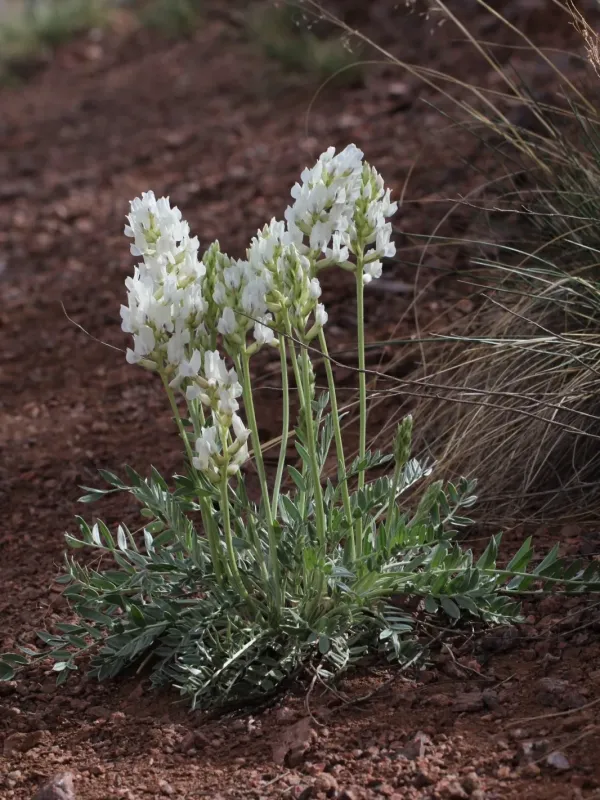
Visually, the plant appears as a low-growing cluster with pinnate leaves arranged in a basal rosette. Stems can be shortened or ascending, making mechanical eradication difficult during early vegetative stages.
The flowers are clustered into dense spike-like or head-like inflorescences, typical of the Oxytropis genus. The petal color ranges from light purple to lilac, assisting in identification during the flowering season.
The fruit consists of pods containing small, hard seeds. The plant has a high seed production rate, which facilitates rapid colonization in areas with favorable conditions for germination.
As a perennial taproot weed, it demonstrates significant ecological plasticity, allowing it to compete effectively with crops for space, sunlight, and soil nutrients.
Where it grows
This species is primarily found in mountainous and foothill regions. It favors open, well-lit areas with well-drained, often stony soils, where it can easily establish itself.
In agricultural practice, Rocky Mountain crazy-weed can infest pastures, rangelands, and field edges. It is particularly hazardous in forage production areas as it quickly colonizes empty niches in the canopy.
The dispersal of the weed occurs mainly through seeds, which are spread by wind, water, or agricultural machinery. It adapts successfully to soils susceptible to erosion.
While less common in row crops, the weed can be aggressive in fields adjacent to wild mountain ecosystems, often displacing valuable forage legumes and grasses.
The plant demonstrates resistance to periodic drought, making it a formidable competitor in arid agricultural zones where crop plants have higher moisture demands during the growing season.
Harm it causes
The primary harm caused by Rocky Mountain crazy-weed is its toxicity to livestock. Like many members of the Oxytropis genus, it contains specific alkaloids that cause dangerous poisoning in animals.
When consumed by livestock, particularly sheep and horses, it causes chronic nervous system disorders, often referred to as "locoism," which is reflected in its common name "crazy-weed."
The weed causes direct economic loss by reducing the productivity and safety of grazing lands. Infested areas may become unsuitable for grazing unless strict quarantine or control measures are implemented.
Its competitive nature leads to a decline in the floral diversity of hayfields. Over time, it displaces beneficial forage species, significantly reducing the nutritional value of the harvest.
Furthermore, the seeds of this plant can contaminate harvested grains, increasing cleaning costs and negatively affecting the overall quality of agricultural products.
How to control
Mechanical control includes regular mowing of the infested vegetation before the flowering and seed-set phases. This technique helps deplete the root reserves and prevents further seed dispersal.
An essential agricultural practice is the maintenance of a vigorous, healthy canopy, which can suppress weed development through high competition for available resources.
Chemical control involves the use of systemic herbicides effective against perennial broad-leaved weeds. Applications should be timed during the period of active growth to ensure maximum efficacy.
Selectivity is key; using 2,4-D or dicamba-based herbicides, where permitted for pasture use, is recommended, provided that application rates and safety regulations are strictly followed.
- Regular phytosanitary cleaning of machinery and tools.
- Using high-quality seed stocks free from weed impurities.
- Consistent monitoring of infestation hotspots from early spring to late autumn.
Taxonomy
- Latin name
- Oxytropis saximontana
- Family
- Бобовые
- EPPO code
- OXRSA