
Oxytropis ochrocephala
Oxytropis ochrocephala
Description
How to tell it apart
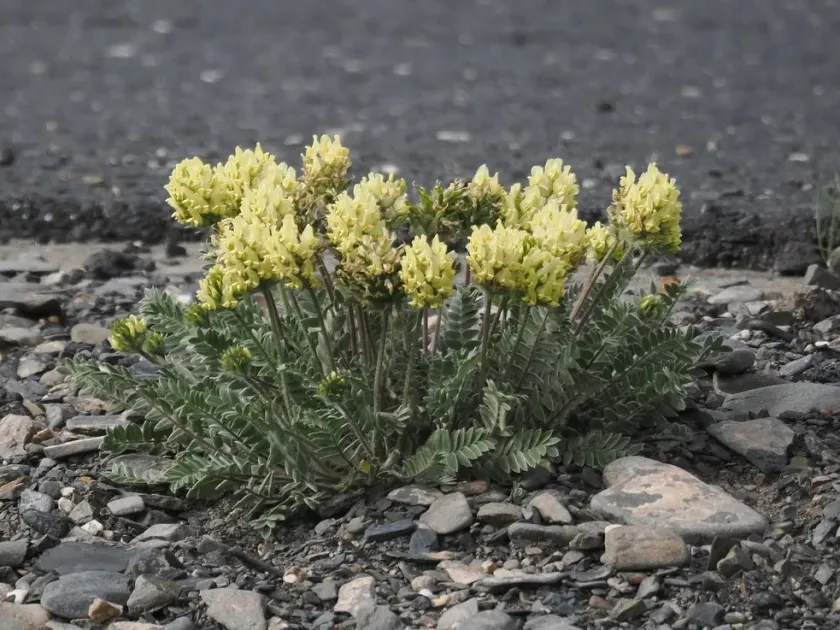
Oxytropis ochrocephala is a perennial herb belonging to the Fabaceae family. It typically forms dense mats or clumps, featuring a sturdy root system that is highly resistant to drought.
The leaves are odd-pinnate and covered with fine hairs, giving the plant a distinct grayish appearance. The stems are usually short, contributing to its compact growth habit.
The inflorescences are dense, head-like racemes located on long peduncles. The flowers display a characteristic pale yellow or cream color, which is essential for visual identification.
The fruit is a pod containing multiple seeds, ensuring high reproductive success. The plant's ability to propagate both by seeds and roots makes it a formidable agricultural weed.
Botanically, it can be identified by the specific shape of its keel, which is notably pointed compared to other legumes found in the same region.
Where it grows
This weed is commonly found in steppe zones, mountainous regions, and arid plains. It thrives in soils that are often nutrient-poor or rocky.
In agricultural settings, Oxytropis ochrocephala colonizes fallow lands, pastures, and poorly managed fields. It is frequently observed along roadsides and irrigation ditches.
It prefers well-drained, dry soil conditions, which allows it to outcompete standard crops that require more consistent soil moisture during the germination phase.
Its wide dispersal is supported by natural factors like wind and water, as well as human activity involving the transport of contaminated machinery between fields.
The plant often acts as a pioneer species on degraded land, quickly stabilizing the ground and making eradication more difficult as it becomes established.
Harm it causes
Oxytropis ochrocephala causes significant economic losses by competing with crops for limited water and essential nutrients, leading to reduced yield quantity.
Many species in the Oxytropis genus are toxic to livestock, causing serious health issues when present in forage, hay, or pastures.
The weed's presence decreases the quality of harvested fodder, requiring strict measures to prevent contamination during the harvesting process.
The root system depletes soil moisture to depths that many cereal crops cannot reach, creating water stress during dry seasons.
By producing a large volume of biomass, it shades out emerging crop seedlings, leading to uneven stands and potentially causing complete loss in heavily infested patches.
How to control
Agrotechnical control includes deep autumn plowing to bury the crown and root system, which significantly inhibits the plant's regrowth capacity.
Implementing a rigorous crop rotation program is essential to disrupt the life cycle of the weed, especially by including competitive cover crops.
Chemical control can be achieved through the application of systemic herbicides. On non-crop areas, glyphosate-based products are highly effective.
Selective herbicide applications using hormone-type chemicals are recommended within grain fields to manage the weed without harming the main crop.
- Timely mechanical removal before flowering to stop seed dispersal.
- Regular monitoring and spot-spraying in headlands and field boundaries.
- Using high-quality, weed-free seed stock to prevent field contamination.
Taxonomy
- Latin name
- Oxytropis ochrocephala
- Family
- Бобовые
- EPPO code
- OXROC