
Lambert locoweed
Oxytropis lambertii
Description
How to tell it apart
Lambert locoweed (Oxytropis lambertii) is a perennial herbaceous plant in the Fabaceae family. It is typically stemless or nearly stemless, growing in dense clumps that are characteristic of rangeland plants in this region.
The leaves are pinnately compound, arranged in a basal rosette, and covered with fine, silky hairs. This silvery pubescence is a key identification feature that helps the plant survive in dry, harsh environments.
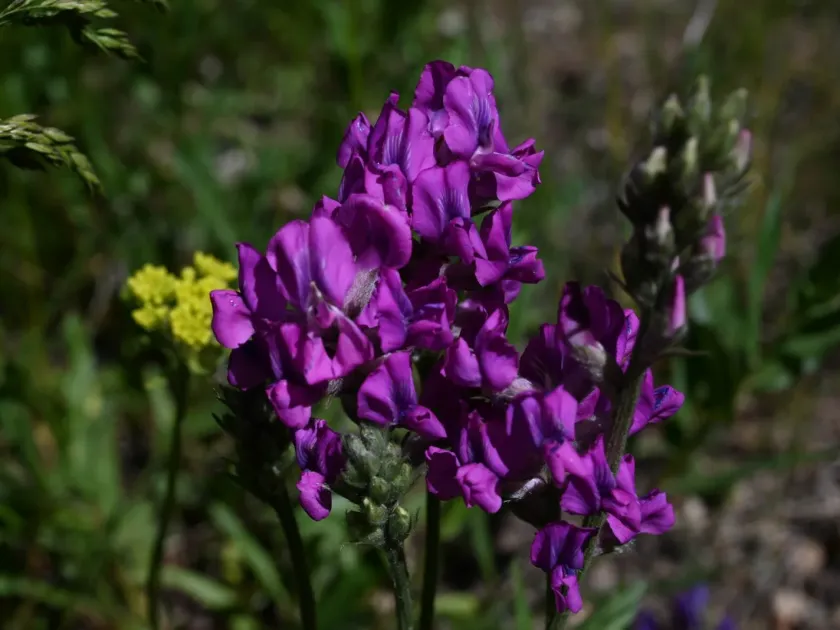
The flowers are arranged in spikes or heads on stalks emerging from the center of the rosette. They typically display vibrant shades of purple or violet, which makes the plant easy to spot during the flowering stage.
The fruit consists of rigid, inflated pods that contain small, kidney-shaped seeds. These seeds are highly durable and can remain viable in the soil for several seasons, contributing to long-term infestations.
The plant features a deep taproot, which provides exceptional stability and makes it highly resistant to drought and difficult to remove via manual weeding methods alone.
Where it grows
Lambert locoweed is native to the dry prairies and steppes of North America. It thrives in well-drained, sandy, or rocky soils, often appearing on exposed slopes and disturbed land.
In agricultural settings, it is a significant weed on rangelands and pastures. It frequently colonizes overgrazed areas where the native grass cover is thinned, allowing it to compete successfully.
The weed is particularly problematic in areas with poor management, where low plant diversity and soil disturbance create the perfect environment for it to spread rapidly.
While primarily found on native pastures, it can also encroach into hay fields if proper soil and vegetation management are neglected over time.
Its high adaptability to environmental stress makes it a persistent presence in arid and semi-arid climates, where it can dominate other forage species.
Harm it causes
The primary concern regarding Lambert locoweed is its toxicity to livestock. It contains alkaloids that cause a condition known as locoism, characterized by severe neurological damage in cattle, horses, and sheep.
Symptoms of locoism include impaired movement, depression, weight loss, and reproductive issues, leading to significant economic losses for farmers and ranchers.
The plant remains toxic even after drying. Therefore, hay contaminated with locoweed poses a continuous threat to livestock throughout the winter season when fresh forage is unavailable.
By displacing high-quality forage grasses, the weed significantly reduces the carrying capacity of pastures and lowers the overall nutritional output of the land.
The persistence of the plant in the field requires ongoing surveillance and management, adding to the operational costs of maintaining a healthy and safe grazing environment.
How to control
Effective control requires a combination of improved grazing management and competitive planting. Seeding pastures with vigorous perennial grasses helps keep locoweed from establishing.
Implementing a rotational grazing system is essential. This prevents overgrazing and ensures that the forage plants remain strong enough to crowd out invasive weeds like locoweed.
Chemical control can be effective when using selective herbicides registered for pasture use. Timing the application during the early growth stage, before the plant produces seeds, is crucial.
Mechanical removal, such as digging out the taproot, is feasible in small, manageable patches, but it is labor-intensive and requires thoroughness to prevent regrowth from the crown.
Long-term success depends on monitoring infestations and acting quickly to prevent the plant from flowering and spreading its seeds across the pasture.
Taxonomy
- Latin name
- Oxytropis lambertii
- Family
- Бобовые
- EPPO code
- OXRLA