
Field locoweed
Oxytropis campestris
Description
How to tell it apart
Field locoweed (Oxytropis campestris) is a perennial herbaceous plant belonging to the legume family (Fabaceae). It is characterized by a strong taproot that allows it to survive in harsh environmental conditions and poor soils.
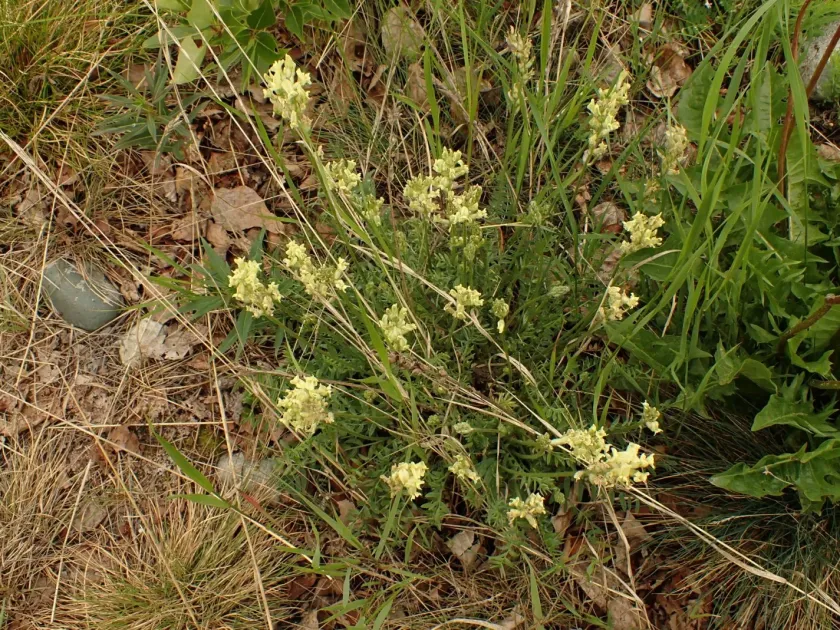
The plant grows in a basal rosette of pinnate leaves, which are usually covered with fine, silver-colored hairs. Its inflorescence consists of spikes or racemes of pea-like flowers, which range in color from pale yellow to purple.
The fruit of the plant is an inflated or elongated pod containing small, kidney-shaped seeds. These seeds are capable of remaining viable in the soil for extended periods, contributing to the persistence of the species.
Botanically, it is a variable species, with several subspecies found in mountain ranges and alpine tundra. Its ability to form dense clusters makes it highly competitive against surrounding vegetation.
Identification is best achieved by examining the flower structure and the specific arrangement of the seed pods, which are diagnostic features distinguishing it from other Oxytropis species.
Where it grows
The species has a broad distribution across the Northern Hemisphere, particularly in mountainous regions of Europe and North America. It thrives in open, sunny areas, often in rocky or gravelly soil substrates.
In agricultural settings, field locoweed is frequently found in neglected pastures, fallow lands, and along the margins of fields. It is considered an indicator of degraded soil or overgrazed conditions.
It can invade established perennial forage crops, especially if the canopy of the primary crop is sparse or has been damaged. Its preference for well-drained soil makes it a common weed in highland farming regions.
Dispersal primarily occurs via wind and animals, as the light seeds can be carried across pastures. The plant does not favor heavily waterlogged or acidic soils, preferring drier, neutral to alkaline environments.
Invasion often starts from surrounding wildlands and gradually spreads into managed plots, especially in areas where maintenance of the field edges is neglected.
Harm it causes
Field locoweed is well-known for its toxicity to livestock. It contains alkaloids that cause neurological damage, a condition known as "locoism," characterized by abnormal behavior and coordination loss.
When present in forage, it significantly reduces the quality of hay and pasture. Consumption by horses, cattle, and sheep leads to weight loss, poor health, and in severe cases, the death of the animals.
As a weed, it is a strong competitor for nutrients and space, suppressing the growth of desirable forage grasses. Its extensive root system allows it to effectively extract resources, limiting the yield of cultivated crops.
Large infestations can render entire pastures unusable for grazing. The economic impact is felt through both the loss of forage production and the veterinary costs associated with managing poisoned livestock.
Beyond toxicity, it can act as an alternate host for various pests and fungal diseases that affect other legumes, potentially increasing the pressure on sustainable legume crop production.
How to control
Effective management begins with mechanical control. Deep plowing and the manual removal of the root system are necessary to prevent regrowth, as the plant can recover from minor disturbance.
Preventative measures include maintaining high vigor in desired forage crops to minimize competition. Avoiding overgrazing is crucial, as field locoweed quickly fills gaps left by depleted grasses.
Chemical control involving selective herbicides is effective when applied during the early growth stages, specifically the rosette phase. Products containing systemic active ingredients are generally recommended.
Integrated weed management should focus on regular field edge monitoring to eliminate small outbreaks before they have the chance to set seeds and multiply across the site.
- Mechanical root destruction during site preparation.
- Maintaining optimal pasture density to outcompete weed seedlings.
- Targeted herbicide application in early spring.
- Rigorous cleaning of farming equipment to prevent seed dispersal.
Taxonomy
- Latin name
- Oxytropis campestris
- Family
- Бобовые
- EPPO code
- OXRCA