
Velvet bean
Mucuna pruriens
Description
How to tell it apart
The velvet bean belongs to the Fabaceae family. It is a vigorous herbaceous vine capable of reaching significant sizes by actively climbing up supports.
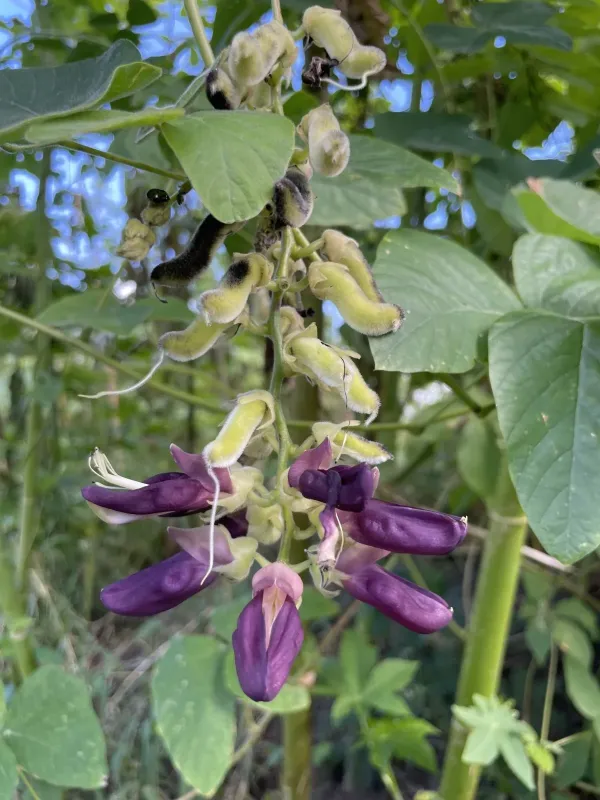
The main distinguishing feature is its pods, which are densely covered in hairs that cause severe irritation to the skin and mucous membranes upon contact.
The leaves are trifoliate, broad, and possess characteristic pubescence, giving them a dull grayish appearance. The root system is well-developed and penetrates deep into the soil.
The flowers are arranged in drooping racemes and range in color from white to purple. They are pollinated primarily by insects or bats in their natural habitat.
The seeds of the plant are large, smooth, varied in shape and color, and can remain viable in the soil substrate for a long period.
Where it grows
The plant is widespread in tropical and subtropical regions of Asia, Africa, and America, preferring moist, well-drained areas.
Velvet bean is frequently found on abandoned fields, forest edges, along roadsides, and near agricultural lands where it can find climbing structures.
In fields, it harms grain and vegetable crops by rapidly occupying open spaces and intertwining with cultural plants using its vines.
It easily adapts to various soil types but grows most aggressively in conditions of sufficient humidity and high temperature.
In agroecosystems, it often becomes a weed of coffee, cocoa, and maize plantations, as well as other tall crops that require intensive management.
Harm it causes
The primary harm involves the mechanical suppression of crops, which suffer from shading and physical constriction by the powerful vines.
Thickets of velvet bean hinder field operations, harvesting, and routine crop maintenance, significantly increasing labor costs for farmers.
The hairs on the pods pose a serious threat to personnel working in the field, causing dermatitis and inflammatory reactions upon skin contact.
The plant is highly competitive, actively extracting moisture and nutrients from the soil, which leads to a decrease in the yield of the main crop.
Rapid vegetative growth allows the velvet bean to displace beneficial vegetation, creating monocultural stands unsuitable for agricultural use.
How to control
Agrotechnical methods include regular weeding and mowing before seed formation, which prevents the spread of the weed across the site.
An important technique is crop rotation combined with deep plowing, which helps destroy the root system and deplete soil seed banks.
The use of mulching with dense materials can suppress young weed seedlings by limiting their access to sunlight.
Chemical control is effective when using broad-spectrum systemic herbicides during the active growth phase before the flowering stage.
It is recommended to follow safety protocols when treating fields, using personal protective equipment due to the plant's irritating hairs.
Taxonomy
- Latin name
- Mucuna pruriens
- Family
- Бобовые
- EPPO code
- MUCPR