
Deerweed
Lotus scoparius
Description
How to tell it apart
Deerweed (Lotus scoparius, syn. Acmispon glaber) is a perennial subshrub belonging to the Fabaceae family, characterized by its branching stems and woody base as it matures.
The plant features small, alternate leaves typically composed of three to five leaflets, which are usually narrow and lanceolate in shape.
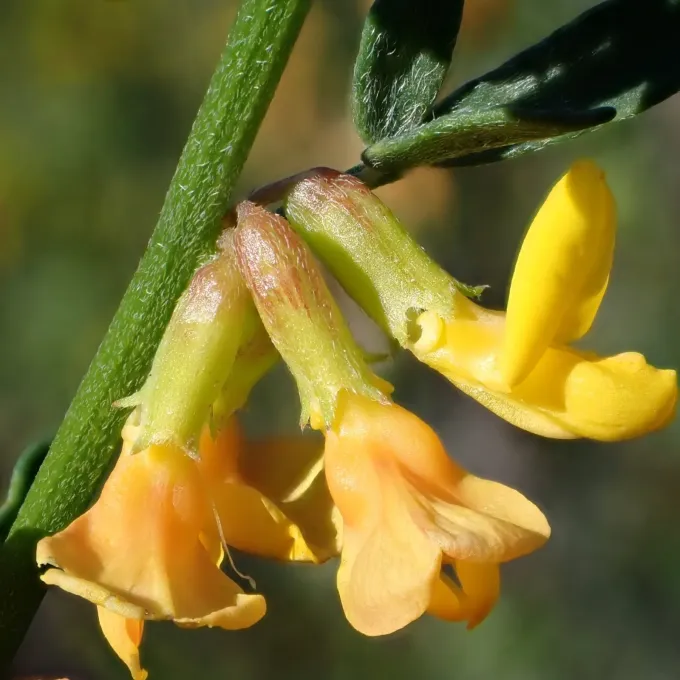
Its vibrant yellow flowers, often tinged with orange or red, bloom from spring through late summer, eventually producing elongated pods filled with durable seeds.
The root system is a robust taproot that extends deep into the soil profile, granting the plant exceptional drought tolerance and resilience in harsh environments.
The entire plant emits a distinctive, somewhat pungent scent, which is a key identification feature compared to other leguminous vegetation found in fields.
Where it grows
Deerweed is primarily native to western North America, thriving in open, dry habitats such as coastal scrub, slopes, and disturbed areas like roadsides.
It colonizes poor, rocky, and sandy soils with ease, often establishing itself in agricultural fields that have been left fallow or poorly maintained for long periods.
The plant prefers disturbed ground, making it a common intruder in newly tilled fields or areas cleared for infrastructure, where it can quickly become established.
It is frequently found in patches, forming dense thickets that can rapidly expand if not monitored and treated during the initial growth phase.
Its seeds can persist in the soil for years, meaning that habitat re-invasion is a common challenge for farmers managing infested lands.
Harm it causes
The primary damage caused by Deerweed is through intense resource competition, as it deprives primary crops of water and essential soil nutrients during critical growth stages.
Its presence in forage fields significantly reduces the quality of hay and pasture, as the woody stems are unpalatable and often rejected by livestock.
Deerweed poses a mechanical challenge, as its dense, woody structure can clog or damage harvesting equipment, leading to costly downtime and maintenance.
The plant acts as a reservoir for various pests and pathogens that affect commercial legumes, thereby increasing the disease pressure on the main crop.
Invasive colonies of Deerweed contribute to the thinning of crop stands, which eventually leads to reduced yields and overall economic losses for farmers.
How to control
Effective control strategies start with deep mechanical cultivation, which is necessary to sever the strong taproot and prevent regrowth from root fragments.
Mowing and clearing must be performed before the plant reaches the flowering stage to prevent the seed bank in the soil from increasing further.
Chemical management involves the use of systemic herbicides applied during active growth periods, ensuring the chemical reaches the root system for complete eradication.
Integrated Weed Management (IWM) practices, including crop rotation and the use of competitive cover crops, are essential to minimize the recurrence of the weed.
Continuous monitoring of field margins and surrounding non-crop areas is vital to prevent the spread of seeds into the cultivated sections of the field.
Taxonomy
- Latin name
- Lotus scoparius
- Family
- Бобовые
- EPPO code
- LOTSC