
Inga feuillei
Inga feuillei
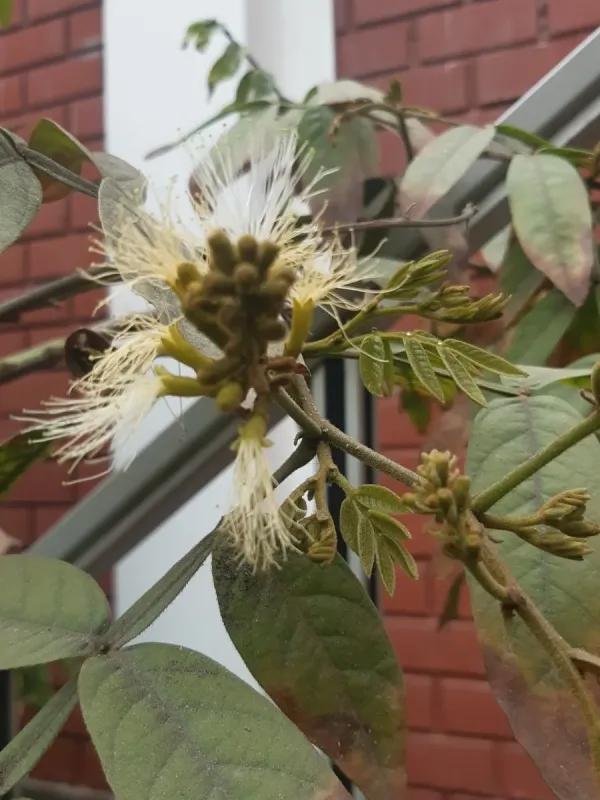
Description
How to tell it apart
Inga feuillei is a perennial legume tree species that often functions as a persistent and aggressive weed in tropical agricultural environments.
It is characterized by pinnate leaves and elongated, pod-like fruits containing succulent seeds that facilitate dispersal by wildlife.
The plant grows rapidly, developing a woody structure that quickly overtakes surrounding vegetation in unmanaged or poorly maintained fields.
Young plants are particularly vigorous and can establish deep root systems that make mechanical removal difficult as they mature.
Floral structures, which are typically small and clustered, allow for massive seed production throughout the growing season.
Where it grows
This species is native to South and Central America, frequently appearing as a volunteer plant in agricultural landscapes and plantation margins.
It thrives in humid, warm conditions, often invading cultivated areas after land clearing or during periods of reduced field management.
The weed is commonly found along irrigation canals, drainage ditches, and fence lines, which serve as primary corridors for further spread.
Inga feuillei is highly adaptable to various soil types, particularly benefiting from nitrogen-fixing nodules that allow it to colonize nutrient-poor soils.
Its ability to tolerate partial shade makes it a frequent competitor in multi-story cropping systems or among perennial horticultural crops.
Harm it causes
The primary damage caused by this species is severe resource competition, including the deprivation of sunlight and moisture from commercial crops.
Its aggressive growth habit leads to the formation of dense thickets that physically obstruct farm equipment and increase harvesting labor costs.
By competing for nutrients and space, it significantly reduces the overall yield potential and quality of the main crop being cultivated.
The presence of large populations can lead to ecosystem imbalances and facilitate the buildup of agricultural pests that use the tree as a host.
Left unmanaged, the woody debris and dense root matting can degrade soil structure over time, complicating future land preparation activities.
How to control
Integrated weed management is essential, starting with thorough mechanical clearing and the removal of the root crown to prevent regrowth.
Regular surveillance and spot-removal of juvenile plants before they reach reproductive age is the most efficient way to limit population expansion.
Chemical control involving systemic herbicides applied to fresh cuts or the basal bark is often necessary for mature, established individuals.
Strategic planting of competitive cover crops can help suppress the germination of new seedlings by reducing light availability at the soil surface.
- Mechanical grubbing of roots and stems.
- Systemic herbicide application to cut surfaces.
- Preventive edge management to block seed dispersal.
- Regular manual weeding of young specimens.
Taxonomy
- Latin name
- Inga feuillei
- Family
- Бобовые
- EPPO code
- INGFE