
Dyer's greenweed
Genista tinctoria
Description
How to tell it apart
Dyer's greenweed (Genista tinctoria) is a perennial shrub belonging to the Fabaceae (legume) family. It typically grows between 20 and 100 cm tall, featuring erect or ascending stems.
The leaves are alternate, lanceolate, and simple, often with a slight pubescence. This structure allows the plant to thrive in dry conditions, contributing to its resilience in varied habitats.
It possesses a deep taproot system, which makes established plants difficult to pull out manually. This root structure allows it to anchor firmly and survive periods of drought and nutrient scarcity.
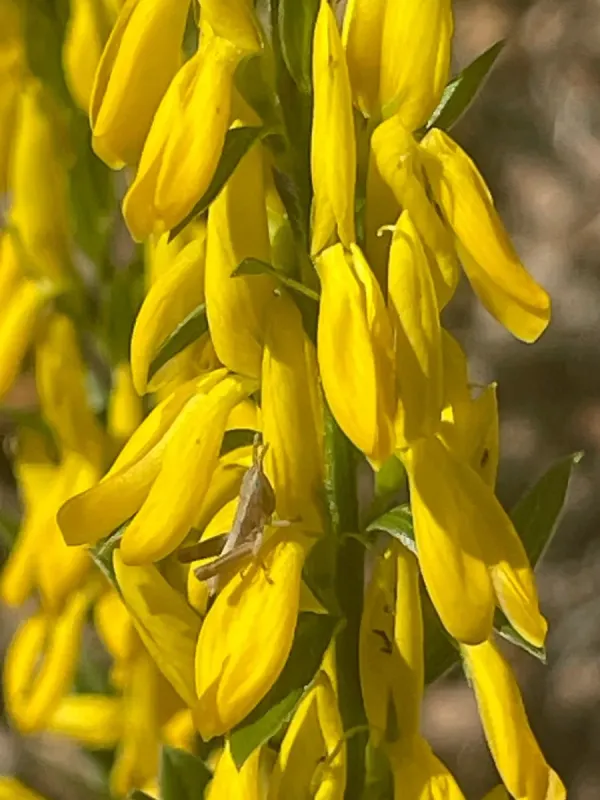
The golden-yellow flowers are arranged in terminal racemes and bloom from June to August. This distinct coloring makes the plant highly visible during the peak of summer.
The fruit consists of a glabrous or pubescent legume pod containing several seeds. These seeds remain viable in the soil for extended periods, complicating eradication efforts.
Where it grows
This weed prefers open, sunny locations such as dry meadows, forest edges, and rocky hillsides. It thrives in soils that are poor in nutrients, such as sandy or stony terrains.
In an agricultural context, it is particularly problematic in natural pastures and meadows that have been neglected or under-managed for a significant period.
While it is less common in frequently tilled croplands, it rapidly invades abandoned fields and pastures where the original protective ground cover has been lost.
The plant's preference for well-drained, nutrient-poor soil gives it a competitive advantage over more desirable forage grasses in those specific environments.
Its distribution is widespread across Europe and temperate zones, where it easily occupies empty niches in neglected land areas.
Harm it causes
Dyer's greenweed is a significant competitor for resources, often outcompeting nutritious forage species due to its ability to fix nitrogen and survive in poor soil.
The plant contains alkaloids that can be toxic to livestock if ingested in large quantities, thereby reducing the safety and quality of grazing land.
Dense infestations create thickets that hinder mechanical operations, making it nearly impossible to harvest hay or maintain the land without costly clearing.
It promotes the degradation of high-quality grassland, turning productive areas into scrubland and reducing the overall biomass output of the farmland.
Because it is a hardy perennial, once it establishes a foothold in a pasture, it becomes extremely difficult to remove without systematic, multi-year intervention.
How to control
Mechanical control includes deep plowing to destroy the taproot system. Frequent mowing before the plant enters the flowering stage is essential to prevent seed production.
Improving soil health and overseeding with aggressive, high-yielding perennial grasses can help suppress the growth of greenweed by increasing competition for light and nutrients.
Chemical control involving systemic herbicides that target brush and woody plants is often necessary for large, established infestations.
Applications should be timed during the plant's active growth phase to ensure that the chemical is translocated effectively into the root system.
- Deep tillage for root system destruction.
- Consistent mowing prior to seed development.
- Application of systemic herbicides during peak growth.
Taxonomy
- Latin name
- Genista tinctoria
- Family
- Бобовые
- EPPO code
- GENTI