
German greenweed
Genista germanica
Description
How to tell it apart
German greenweed is a thorny, low-growing perennial shrub belonging to the Fabaceae family, recognized for its resilience and ability to thrive in challenging soil conditions. It typically grows between 30 and 60 centimeters in height, featuring stiff, spiny stems that can create dense thickets.
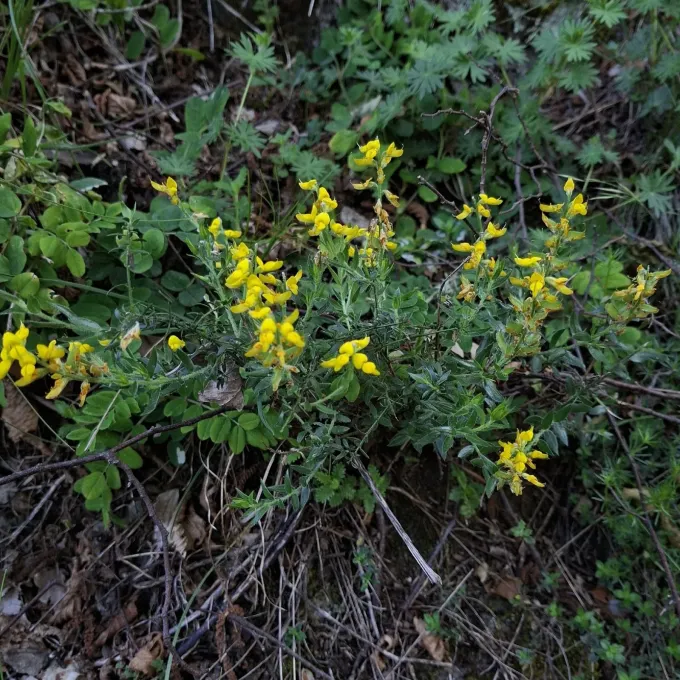
The leaves are simple and lanceolate, often possessing a light pubescence that helps the plant retain moisture. During early summer, it produces small, bright yellow flowers arranged in terminal clusters, making the plant highly conspicuous during its blooming phase.
The root system is exceptionally robust and deep-reaching, allowing the plant to survive in poor or nutrient-depleted soils. This depth makes it particularly difficult to remove through shallow mechanical cultivation, as the roots are capable of regrowth if left in the ground.
Reproduction occurs via small, multi-seeded pods that split upon ripening to disperse seeds over a wider radius. This ensures the plant can colonize neighboring agricultural land if allowed to flower and set seed undisturbed.
As a perennial species, German greenweed is well-adapted to survive annual disturbances, making it a persistent nuisance that requires a long-term management strategy rather than a one-time intervention.
Where it grows
This weed prefers acidic, sandy, or light soils and is commonly found on forest edges, heathlands, and abandoned pastures. It frequently invades crop fields from adjacent marginal lands, fences, or unmanaged buffer zones around agricultural plots.
It poses a significant threat to perennial forage crops and grazing pastures. In arable fields, its presence is usually concentrated along the perimeters where it is less likely to be disturbed by heavy field equipment during standard tillage practices.
Harm it causes
The primary harm is the intense competition for soil moisture and nutrients, which stunts the growth of surrounding crops. On grazing land, it renders forage unusable by creating impenetrable prickly patches that prevent livestock from accessing high-quality grasses.
In terms of operations, German greenweed complicates harvesting and field preparation. Its woody, thorny stems can wear down or damage blades and other soil-engaging machinery, leading to increased maintenance costs and operational downtime.
How to control
Mechanical control focuses on deep tillage to expose and remove the root crowns, combined with periodic mowing to prevent seed dispersal and deplete the plant's carbohydrate reserves. Removal should be timed before the plant enters the reproductive stage.
Chemical control is most effective when systemic herbicides, such as glyphosate or specific hormonal formulations, are applied during the active growth phase. Spot-treatment is often recommended to manage localized infestations without harming surrounding crop coverage.
Taxonomy
- Latin name
- Genista germanica
- Family
- Бобовые
- EPPO code
- GENGE