
Grayleaf ticktrefoil
Desmodium incanum
Description
How to tell it apart
Grayleaf ticktrefoil is a perennial herbaceous plant belonging to the Fabaceae (legume) family. It features a branched stem that can be either erect or prostrate, typically reaching heights of 30 to 100 cm.
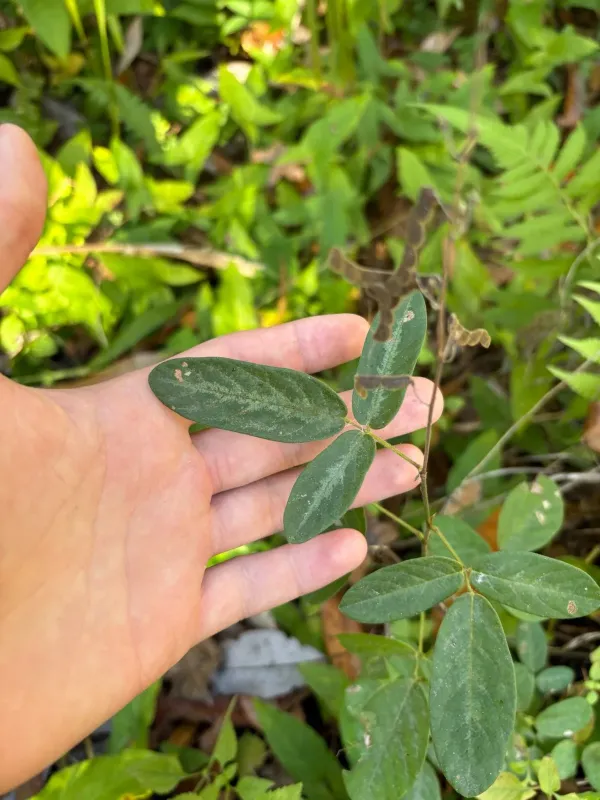
The leaves are usually trifoliate, with the terminal leaflet significantly larger than the lateral ones. A defining characteristic of the species is the presence of fine, dense hairs on the surface of both leaves and stems, giving them a grayish appearance.
The flowers are arranged in loose, raceme-like inflorescences. They display the typical legume floral structure, with petals appearing in shades of pink, purple, or reddish, making the plant easily noticeable within vegetation.
The fruits are jointed pods (loments) that break apart easily into individual segments. The surface of these pods is covered in hooked hairs, which allow them to attach firmly to clothing and animal fur.
The plant possesses a robust root system, often taproot-based with adventitious roots. This structure ensures high survival rates even under drought conditions or mechanical stress.
Where it grows
This species is widely distributed throughout tropical and subtropical regions globally. It thrives in well-drained soils but shows significant adaptability to various soil types, including nutrient-poor areas.
It is commonly found in pastures, along roadsides, on abandoned agricultural land, and at forest edges. In the agricultural sector, it has become a persistent nuisance for crops grown in warm climates.
In cropping systems, Grayleaf ticktrefoil rapidly colonizes open spaces, outcompeting local vegetation. Its ability to spread actively through vegetative growth makes it resilient to changing environmental conditions.
The seeds exhibit high viability, allowing them to persist in the soil seed bank for several years. This significantly complicates the effort to completely eradicate the weed from infested fields.
Livestock play a major role in its spread, as the hooked seed pods easily attach to animal coats, facilitating long-distance dispersal and the colonization of new grazing grounds.
Harm it causes
The primary impact of Grayleaf ticktrefoil is the reduction of pasture productivity. It competes aggressively with forage grasses for sunlight, moisture, and essential soil nutrients, leading to pasture degradation.
Because of the hooked hairs on the seed pods, the weed poses a direct threat to the quality of livestock products. Seeds adhering to sheep wool significantly reduce the market value and complicate the shearing process.
In cultivated crops, it acts as a strong competitor. High densities of this weed can suppress crop emergence and growth, leading to reduced overall harvest yields.
Furthermore, this plant serves as a reservoir for various pests and plant pathogens. Its presence along field margins creates an infection reservoir that threatens neighboring agrosystems.
Harvesting difficulties represent another economic burden. Infested fields often require additional resources for mechanical cleaning and post-harvest processing to remove weed contaminants from grains or fodder.
How to control
Agrotechnical management includes systematic mowing of the weed before it reaches the seed-setting stage. This practice effectively limits seed bank replenishment and weakens the root system.
Deep tillage and proper soil preparation are effective in suppressing the development of Grayleaf ticktrefoil. Turning the soil profile disrupts the root structure and inhibits the regrowth of vegetative organs.
Chemical control is often the most effective method for heavy infestations. Systemic, selective herbicides are used, though care must be taken as legumes are often sensitive to broad-spectrum chemistry.
Crop rotation is a vital strategy in its long-term control. Incorporating highly competitive cover crops helps suppress weed emergence during the initial stages of the growing season.
Integrated pest management (IPM) systems, which combine strategic herbicide applications with sound cultural practices, provide the best approach for long-term population suppression on agricultural lands.
Taxonomy
- Latin name
- Desmodium incanum
- Family
- Бобовые
- EPPO code
- DEDCA