
Astragalus tweedyi
Astragalus tweedyi
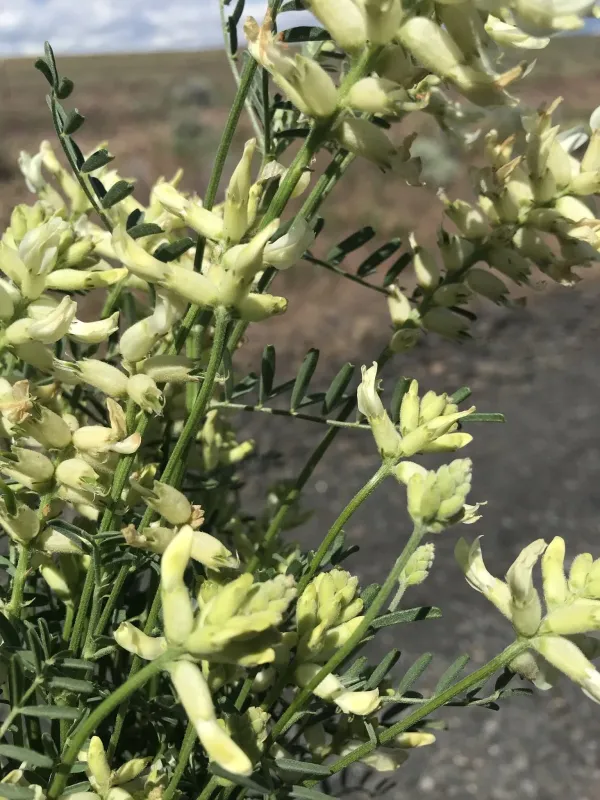
Description
How to tell it apart
Astragalus tweedyi is a perennial herbaceous plant belonging to the Fabaceae family, characterized by a deep taproot that allows it to survive in harsh conditions.
The plant features upright or ascending stems covered with fine hairs, and its leaves are compound, odd-pinnate, with oval-shaped leaflets.
Flowering occurs in the spring and summer, producing dense racemes with yellow or creamy flowers typical of the Astragalus genus.
The fruit is a pod, which dries out upon maturity, protecting the seeds and facilitating their dispersal by wind or through mechanical movement.
This species is well-adapted to the environments of the North American prairies and can easily establish itself in disturbed soil habitats.
Where it grows
Astragalus tweedyi is commonly found in open habitats, such as pastures, meadows, and along the edges of agricultural fields and roadsides.
It acts as a weed in cultivated areas, particularly encroaching from unmanaged borders or field margins into crop zones where competition is lower.
The plant favors well-drained, sandy or loamy soils and is frequently observed on slopes or areas where soil erosion has cleared the vegetation.
In agricultural settings, it can persist in permanent pastures or fallow fields, gradually spreading if no intervention is performed.
Its ability to tolerate drought makes it a persistent weed in regions where summer precipitation is variable or scarce.
Harm it causes
The primary harm caused by Astragalus tweedyi is its aggressive competition for moisture and soil nutrients, which directly impacts the yield of nearby crops.
Its established root system can outcompete annual crop plants during critical growth stages, leading to stunted development of the primary crop.
Many Astragalus species are known to be toxic to livestock due to the accumulation of compounds that can cause neurological issues in animals consuming contaminated hay.
The weed acts as an alternative host for various agricultural pests and diseases, increasing the risk of infestations in adjacent fields.
Because it is a perennial, it can persist for several years, making it an ongoing challenge that requires consistent management to prevent dominance.
How to control
Mechanical control focuses on deep tillage, which is essential to sever the taproot and prevent the plant from re-sprouting during the growing season.
Regular mowing of field edges and pastures before the plant sets seed is highly effective in reducing the long-term spread of the population.
Implementing crop rotation with aggressive, fast-growing cover crops can help shade out the weed and minimize its light access.
Chemical control involving systemic herbicides is often necessary for persistent infestations to ensure that the herbicide is transported to the root.
- Spot treatment with glyphosate-based herbicides on isolated patches.
- Application of selective herbicides during the rosette or active growth phase.
- Continuous field monitoring to detect and remove seedlings before they develop a deep taproot.
Taxonomy
- Latin name
- Astragalus tweedyi
- Family
- Бобовые
- EPPO code
- ASATW