
Spotted locoweed
Astragalus lentiginosus
Description
How to tell it apart
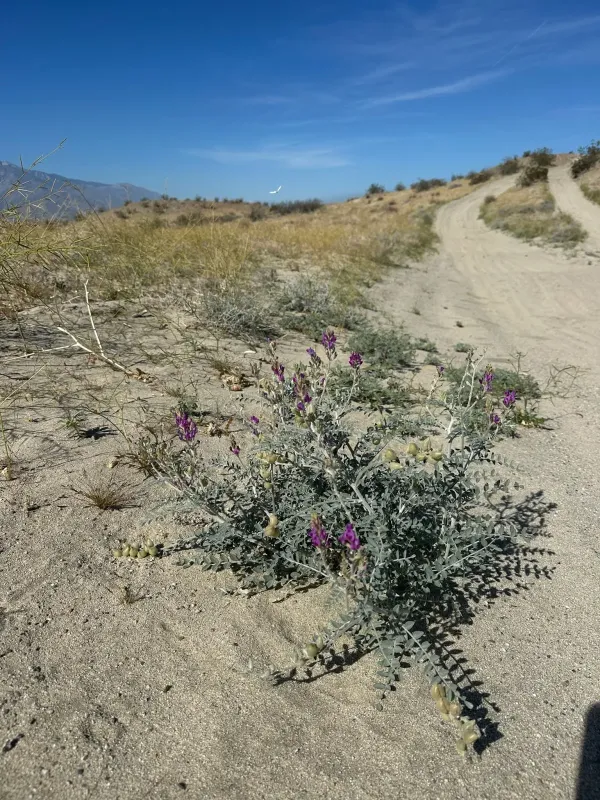
Spotted locoweed (Astragalus lentiginosus) is a perennial member of the Fabaceae family, often characterized by its prostrate or spreading growth habit.
The leaves are odd-pinnate, consisting of several oval to lance-shaped leaflets that are typically covered in soft, silver-colored hairs.
Flowers are arranged in racemes and vary in color, ranging from white to cream or deep purple, often featuring a distinct shape typical of the legume family.
The fruit is a distinctive inflated pod, which often displays reddish or purple spots, giving the plant its common name of "spotted" locoweed.
It possesses a deep taproot, allowing the plant to persist in dry, harsh environmental conditions where other flora might fail to survive.
Where it grows
This species is native to western North America and is commonly found in arid and semi-arid rangelands, including desert scrub and foothills.
It thrives in sandy, gravelly, or rocky soil types, often colonizing disturbed ground, roadsides, and abandoned agricultural lands.
In managed pastures, spotted locoweed can become a problematic invasive plant, outcompeting native forage species due to its drought resistance.
The plant frequently spreads through wind-blown seeds or by contamination from heavy machinery used in field operations.
It is rarely found in highly fertile, irrigated crop fields but is a major concern in livestock grazing areas across the Western United States.
Harm it causes
The primary concern regarding spotted locoweed is its toxicity to livestock, specifically horses, cattle, and sheep, caused by the alkaloid swainsonine.
Ingestion of the plant disrupts cellular enzyme functions, leading to "locoism," a chronic neurological condition that causes severe coordination loss.
Clinical signs in affected animals include lethargy, tremors, reproductive failure, and in severe cases, death due to secondary complications.
Economic losses are significant due to the reduced carrying capacity of infested rangelands and the veterinary costs associated with poisoned animals.
Furthermore, because the plant is often green during dry periods when other forage is dormant, livestock are more tempted to consume it, increasing the risk.
How to control
Physical removal, including digging out the entire taproot, is effective for managing small patches, provided it is done before seed set.
Chemical control remains the standard for large-scale infestations, utilizing selective herbicides such as picloram or triclopyr for effective suppression.
Proper grazing management is essential; keeping livestock away from infested areas during the active growth period is crucial for prevention.
Integrated weed management should include long-term monitoring and reseeding with competitive, non-toxic grasses to occupy the ecological niche.
- Routine site inspections during spring.
- Targeted herbicide applications.
- Prevention of seed bank accumulation.
- Monitoring animal behavior for early signs of poisoning.
Taxonomy
- Latin name
- Astragalus lentiginosus
- Family
- Бобовые
- EPPO code
- ASALE