
Rhynchospora colorata
Rhynchospora colorata
Description
How to tell it apart
Rhynchospora colorata, commonly known as starrush whitetop, is a perennial herbaceous plant belonging to the Cyperaceae (sedge) family. Its visual similarity to other grasses and sedges makes early-stage identification challenging for farm managers.
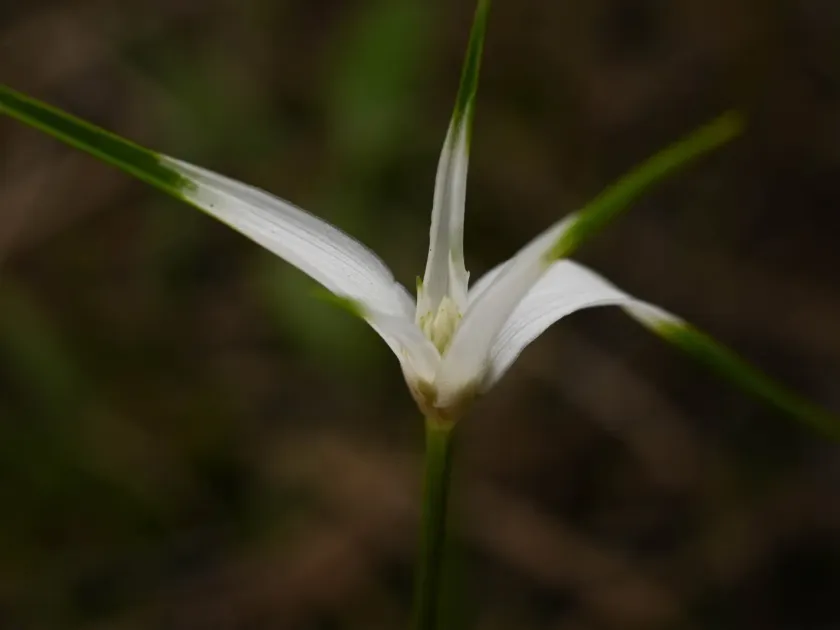
The most striking feature of this plant is the presence of white bracts at the base of the inflorescence. These bracts resemble a white star, which makes the plant highly visible and distinct when it matures in the field.
The stems of the plant are erect and triangular, typically reaching heights between 20 and 60 centimeters. The leaves are narrow, linear, and originate from the base, often featuring rough edges characteristic of many sedge species.
The inflorescence consists of a dense, head-like cluster of small spikelets. The flowering period is extended, typically spanning from spring through autumn, depending on local climate conditions and moisture availability.
The plant possesses a robust root system and often produces short rhizomes. This underground structure allows for vigorous vegetative propagation, enabling the weed to form dense, problematic patches in agricultural fields.
Where it grows
This weed species thrives in wet, saturated, or poorly drained soils. It is frequently observed along the edges of water bodies, in low-lying areas, on irrigated land, and specifically in rice paddies.
In agricultural settings, Rhynchospora colorata is most detrimental in crops that require high moisture levels or in fields with impeded drainage where high water tables persist throughout the growing season.
The plant demonstrates high ecological plasticity, allowing it to adapt to various soil types, including acidic or heavy clay soils where competitive pressure from other weed species might be lower.
Seed dispersal occurs primarily via water movement (hydrochory), as well as through contaminated agricultural machinery and the transport of soil containing viable rhizome fragments between fields.
In warmer climates, it acts as an aggressive invasive species, rapidly colonizing open ground and displacing desirable crops by outcompeting them for essential sunlight and soil nutrients.
Harm it causes
The primary damage caused by this weed is the intense competition for resources. It effectively absorbs water and mineral nutrients, which can significantly deplete the soil profile needed for crop growth.
When the infestation density is high, the weed forms a thick canopy that suppresses crop seedlings, leading to stunted development, reduced vigor, and a substantial decrease in overall harvestable yield.
Its tough, fibrous stems create significant mechanical difficulties during harvest. The vegetation can clog the intake and cleaning mechanisms of combines, leading to increased maintenance and downtime.
Rhynchospora colorata may also serve as a secondary host for various plant pathogens and insect pests, which can migrate from the weed patches to the main crop, complicating integrated pest management.
In rice production, controlling this weed is particularly difficult due to its affinity for the same aquatic environment as the crop, often leading to contaminated grain lots and lower market value.
How to control
Cultural control strategies prioritize effective land preparation. Deep plowing with soil inversion helps bury rhizomes at depths where they cannot easily resprout, limiting their early-season vigor.
Water management is a key control tool. Carefully timed drainage cycles in irrigated fields can place significant physiological stress on the weed, provided these cycles are managed to avoid damaging the crop.
Integrating crop rotation into the farm plan is essential. Rotating out of high-moisture crops into those that prefer drier conditions can reduce the soil seed bank and deplete rhizome reserves.
Chemical control focuses on the use of selective herbicides labeled for sedge species. Applications are most effective when timed for the early growth stages before the weed establishes a massive root system.
- Regular mechanical weeding before the onset of flowering.
- Usage of certified, weed-free crop seeds for planting.
- Spot-spraying of herbicides in primary infestation patches.
- Thorough cleaning of farm equipment to prevent inter-field spread.
Taxonomy
- Latin name
- Rhynchospora colorata
- Family
- Осоковые
- EPPO code
- CYPKY