
Cyperus sesquiflorus
Cyperus sesquiflorus
Description
How to tell it apart
Cyperus sesquiflorus belongs to the Cyperaceae family. It is a perennial herbaceous plant that forms dense clumps or small groups through short rhizomes.
The stems are triangular and smooth, reaching a height of 10 to 40 centimeters. The leaves are typically narrow, linear, shorter than or equal to the stem, and gathered in a basal rosette.
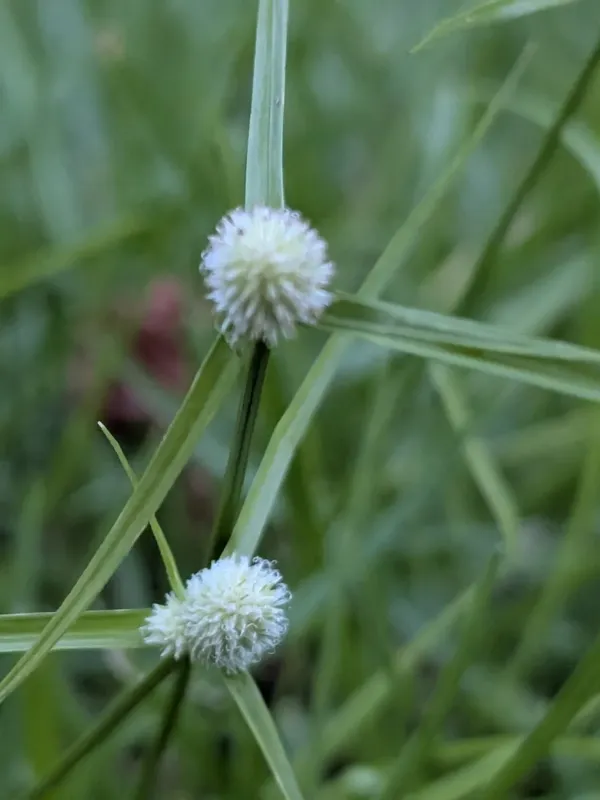
The inflorescence is a dense, almost spherical head, which appears as one or several spikes located at the top of the stem. The bracts are long and spreading, making the inflorescence clearly visible.
The plant has a high capacity for vegetative reproduction, which complicates its early-stage identification as it often mimics grass species.
For accurate species diagnosis, it is important to observe the structure of the spikelets and the number of scales surrounding each flower, which are key botanical features of this genus.
Where it grows
This species is a typical inhabitant of moist environments. It is most commonly found along the banks of water bodies, in marshes, wet meadows, and low-lying areas.
As a weed, Cyperus sesquiflorus actively colonizes irrigated lands, rice paddies, and plantations of crops that require constant soil moisture.
The plant prefers well-warmed areas with high organic matter content and is frequently encountered in tropical and subtropical regions worldwide.
Under intensive agricultural conditions, this weed rapidly populates drainage and irrigation channels, from which seeds and rhizome fragments are spread by irrigation water to farm fields.
It also occurs in disturbed soil areas, along roadsides, and in places with compacted soil where competition from other species is limited.
Harm it causes
The primary damage consists of severe competition with cultivated plants for mineral nutrients, light, and, most importantly, water.
Due to the intensive development of its root system, Cyperus sesquiflorus rapidly depletes available moisture reserves in the upper soil horizon, which is critical for young seedlings.
The weed creates conditions that favor the mass reproduction of pests and pathogens, which may subsequently spread to major agricultural crops.
In rice field infestations, the weed population density can reach levels that reduce yields by 20-30% by suppressing crop growth.
The presence of this weed complicates harvest operations and necessitates additional expenses for cleaning seed material, thereby reducing product market value.
How to control
Effective control requires a multi-faceted approach, as the plant's vegetative organs (rhizomes) are resistant to many forms of mechanical disturbance.
- Deep autumn plowing with soil inversion to cut the root system.
- Regular disking during the growing season to deplete nutrient reserves in the roots.
- Managing irrigation levels, as reducing water supply can suppress the growth of the species.
- Application of systemic herbicides that are effective against sedge species.
- Implementation of crop rotation with crops requiring different cultivation practices.
Chemical control includes the use of glyphosate-based products for total vegetation control before planting, as well as selective herbicides during the active growth period of the crop.
An essential aspect is the maintenance and cleaning of irrigation systems to prevent re-infestation of fields by seeds or plant fragments carried by water.
Constant monitoring of field margins and channels allows for the localization of infestations before the weed spreads to the main cropping areas.
Taxonomy
- Latin name
- Cyperus sesquiflorus
- Family
- Осоковые
- EPPO code
- CYPSF