
Clammyweed
Polanisia dodecandra
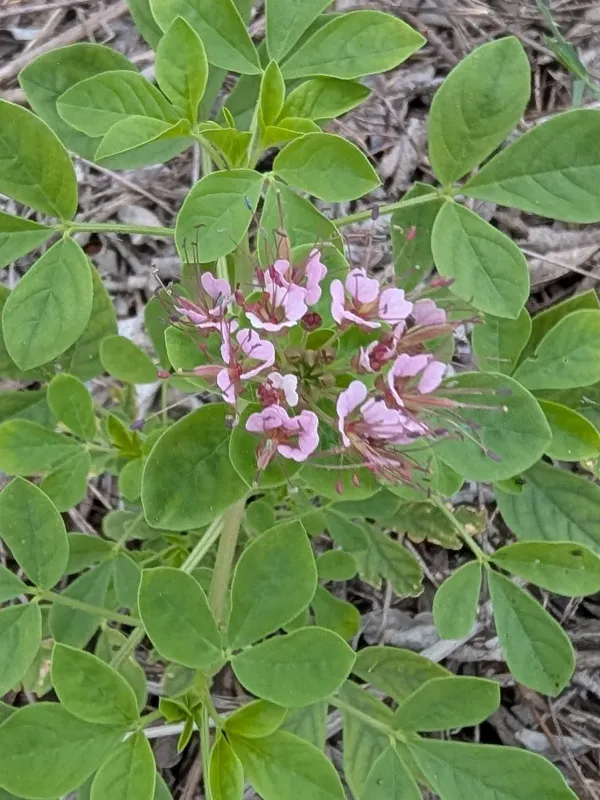
Description
How to tell it apart
Clammyweed (Polanisia dodecandra) is an annual herbaceous plant belonging to the Capparaceae family. It is easily identified by its sticky, glandular-pubescent stems, which grow to a height of 20 to 60 centimeters.
The leaves are alternate and trifoliate, with lanceolate-shaped leaflets. The entire plant has a distinctive, pungent, and often unpleasant odor, which is caused by the presence of sticky glandular hairs covering its surfaces.
Flowers are arranged in terminal racemes and consist of four petals, typically white or cream-colored, accompanied by long, prominent stamens that give the flowers a unique appearance.
The fruit is a elongated, pod-like capsule that splits open upon maturity, releasing numerous small, dark brown or black seeds into the surrounding soil profile.
The plant features a deep taproot, allowing it to remain firmly anchored and survive in nutrient-poor or sandy soils where many other species might struggle to establish.
Where it grows
Clammyweed is native to North America and typically thrives in open, sunny environments. It is commonly found in disturbed habitats such as riverbanks, roadsides, and abandoned fields.
In agricultural settings, it frequently emerges as a problematic weed in row crops, particularly corn and soybeans. It prefers loose, well-drained soils and is highly resilient in hot, arid conditions.
The species is particularly invasive in fallow land, where lack of tillage allows it to proliferate and build up a significant seed bank for subsequent cropping seasons.
Due to its high adaptability, Clammyweed can quickly colonize patches of land where canopy cover is low, effectively competing for light, space, and soil nutrients.
Seeds are dispersed by gravity, wind, and movement of soil, ensuring that the weed can persist in a field even after years of suppression if not managed continuously.
Harm it causes
The primary harm caused by Clammyweed is its aggressive competition for moisture and nitrogen. In early crop development stages, its rapid growth can severely overshadow seedlings.
The weed's presence reduces crop yield by depleting soil water reserves, which is especially detrimental during mid-season dry spells that are common in many agricultural regions.
Clammyweed can act as a secondary host for various plant viruses and insect pests, increasing the disease pressure and need for additional pesticide applications in the crop.
The sticky nature of the plant debris can interfere with mechanical harvesting equipment, potentially clogging machinery and increasing maintenance requirements during peak harvest times.
Infestations lead to increased costs for weed management, including both chemical inputs and labor-intensive mechanical cleaning of seeds, lowering overall farm profitability.
How to control
Management of Clammyweed centers on preventing seed production. Given its ability to build a robust seed bank, persistent efforts are required to suppress its growth cycle.
Cultural methods, such as timely deep tillage, are effective at burying seeds to depths where they are less likely to germinate and emerge in subsequent seasons.
Mechanical cultivation between crop rows is essential for removing young seedlings before they develop a deep taproot and gain resistance to physical disturbance.
Chemical control strategies include:
- Application of pre-emergence herbicides to provide a persistent barrier in the soil.
- Use of post-emergence herbicides targeting early growth stages for maximum efficacy.
Maintaining a diverse crop rotation is a critical long-term strategy, as it allows for the use of different herbicide modes of action and helps disrupt the life cycle of the weed.
Taxonomy
- Latin name
- Polanisia dodecandra
- Family
- Клеома
- EPPO code
- PONGR