
Cleome rutidosperma
Cleome rutidosperma
Description
How to tell it apart
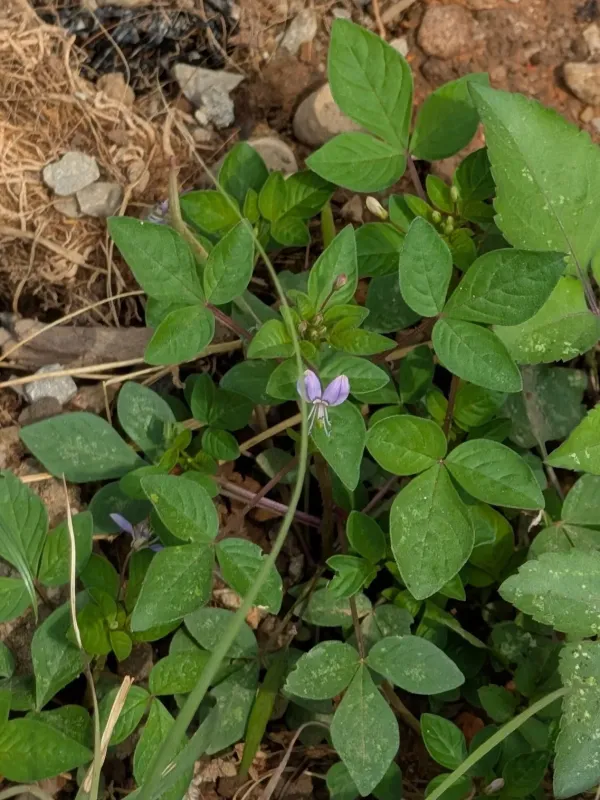
Cleome rutidosperma is an annual herbaceous plant belonging to the Capparaceae family. It features erect or spreading stems that can grow up to one meter in height, often branching extensively.
The leaves are alternate and trifoliate, with narrow leaflets. The flowers are generally small, often pink, purple, or lilac, and are arranged in loose racemes. The plant is easily recognizable by its unique floral morphology.
The fruit is a slender, capsule-like pod that dehisces at maturity. Its seeds possess a distinctively wrinkled surface, which is a key diagnostic feature of this specific species and aids in its dispersal.
This weed exhibits high regenerative capacity and rapid growth rates, allowing it to colonize disturbed soils and open spaces effectively. It thrives in high-moisture conditions and responds quickly to irrigation.
The root system is a robust taproot that penetrates deep into the soil. This structural feature provides the plant with significant resilience against drought and mechanical removal attempts.
Where it grows
Cleome rutidosperma is native to tropical regions but has become a widespread invasive weed in many parts of Asia, Africa, and the Americas. It is frequently found in tropical and subtropical agriculture.
It prefers well-lit areas with fertile, moist soil. It is commonly observed along roadsides, waste ground, gardens, and at the edges of agricultural fields where it can easily invade crops.
The weed is a significant pest in various row crops, including corn and vegetable farming, as well as in perennial plantations. It is highly competitive in irrigated systems where constant moisture is available.
Its ability to produce large quantities of seeds that can persist in the soil seed bank makes it a recurring problem for farmers, often requiring multiple years of management to eradicate.
Contaminated crop seeds and agricultural machinery are primary vectors for the spread of this species into new farm plots, highlighting the need for good seed hygiene.
Harm it causes
The primary damage caused by this weed is competition for essential resources, such as sunlight, moisture, and soil nutrients. This direct competition can significantly reduce crop yields.
Cleome rutidosperma is known to act as an alternative host for various pests and viral pathogens. These can easily migrate to agricultural crops, leading to disease outbreaks within the field.
Due to its fast growth cycle, the weed can overshadow young crop plants, suppressing their early development and reducing the overall vigor of the plantation.
Seed contamination is a major concern at harvest. The presence of these seeds in the final harvest can significantly degrade the quality of the produce, leading to higher processing costs.
Heavy infestations create physical barriers that complicate mechanized agricultural tasks, such as cultivation, spraying, and the mechanical harvesting of crops.
How to control
Agricultural control measures include regular mechanical weeding or row cultivation, which is highly effective if performed while the weeds are still in the seedling stage, before their roots become too established.
Implementing strategic crop rotation and the use of competitive cover crops can help suppress the weed population by depriving it of the necessary light and space to thrive.
Chemical control involves the application of selective herbicides effective against broad-leaved weeds. Application timing is critical to ensure crop safety while maximizing the control of the weed.
The most important control strategy is preventing seed production. Clearing fields before the plants reach the flowering stage is essential to deplete the soil seed bank over time.
Integrated pest management, combining deep plowing to bury seeds and the use of pre-emergence soil herbicides, offers the best long-term strategy for managing infestations of this persistent weed.
Taxonomy
- Latin name
- Cleome rutidosperma
- Family
- Клеома
- EPPO code
- CLERT