
Stellaria pubera
Stellaria pubera
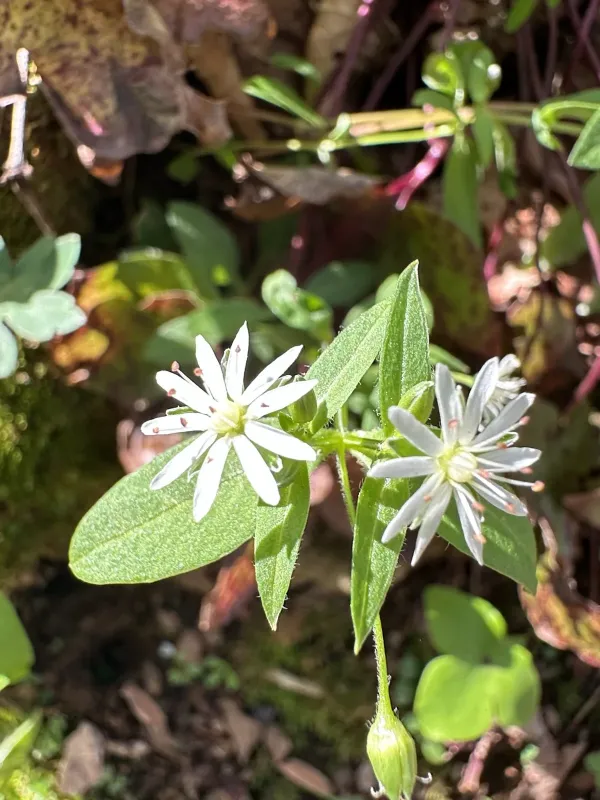
Description
How to tell it apart
Stellaria pubera, commonly known as great chickweed, belongs to the Caryophyllaceae family. It is a herbaceous perennial plant that typically reaches a height of 10 to 40 centimeters. The species is characterized by its opposite leaves and distinct hairiness along the stems, which serves as a key diagnostic feature.
The flowers of this plant consist of five deeply cleft white petals, creating an appearance of ten distinct lobes. These flowers grow in loose clusters at the stem ends. Its root system is shallow but relatively robust, allowing it to establish itself firmly in loose or tilled soil.
Biologically, the plant is known for its early growth cycle. In temperate climates, active vegetation often begins in late winter or early spring. It propagates both vegetatively and through seed production, which significantly complicates eradication efforts within agricultural settings.
Seeds of Stellaria pubera remain viable in the soil for several years. Their small size facilitates dispersal via meltwater, wind, and farm machinery, leading to the infestation of previously clean plots. This high reproductive capacity is a major concern for field managers.
For accurate field identification, agronomists look for the specific pubescence (hairiness) on the stems, which is visible even without magnification. This feature distinguishes it from other closely related chickweed species found in similar environments.
Where it grows
While naturally found in forest ecosystems, Stellaria pubera easily adapts to agroecosystems when land is developed. It is predominantly observed in North American regions, favoring moist, shaded habitats with humus-rich soils that provide adequate nutrients.
In agricultural practice, Stellaria pubera is frequently encountered in winter cereal fields, vegetable gardens, and orchards. It thrives in environments with high moisture levels where competition from dense crop canopy is initially low, allowing it to take hold.
The weed successfully colonizes field margins, fence rows, and abandoned areas, acting as a source for subsequent migration into cultivated fields. Its tolerance to partial shade allows it to survive in the lower canopy of growing crops, often remaining undetected until infestation is well-established.
Soil disturbance caused by plowing or tilling creates optimal conditions for seed germination. The plant can form dense mats that outcompete emerging crops for light and space during the critical early stages of crop development, potentially impacting plant vigor.
Climate preferences for the species include moderate temperatures and consistent moisture. Dry conditions tend to limit its spread, making the plant a more significant problem in regions with high precipitation or on farms utilizing intensive irrigation systems.
Harm it causes
The primary damage caused by this weed involves intense competition with crops for vital resources such as light, water, and soil nutrients. During active growth, Stellaria pubera can significantly reduce the yield potential of cereals by depleting nitrogen and other essential elements.
This weed acts as a secondary host (reservoir) for various phytopathogens and pests that affect commercial crops. Its foliage can harbor fungal infections that may spread to vegetables and grains, resulting in severe economic losses for producers.
The dense vegetative mats formed by this plant create physical barriers that inhibit photosynthesis in young crop seedlings. This mechanical suppression leads to uneven stands and may necessitate expensive reseeding operations in affected areas of the field.
The presence of Stellaria pubera hinders routine field operations, particularly during mechanical weeding or cultivation. Its robust biomass can clog machinery components, reducing the overall operational efficiency and increasing the time required for field maintenance.
In vegetable production, the plant increases local humidity levels in the root zone. This creates a microclimate highly favorable for the development of rot and fungal diseases in vegetables, particularly in greenhouses or under dense planting densities.
How to control
Managing Stellaria pubera requires a multi-faceted approach involving both mechanical and chemical control strategies. The most effective preventative measure is thorough pre-planting cultivation, designed to eliminate weed seedlings before the crop emerges.
Crop rotation plays a critical role in long-term management. Integrating crops with dense canopy structures helps suppress weed growth through natural shading. Furthermore, early spring harrowing is highly effective at destroying the weed during its fragile "white thread" growth stage.
Chemical control involves the application of selective herbicides specifically designed for broadleaf weeds. In cereal crops, products containing sulfonylureas or phenoxy acid derivatives have demonstrated high efficacy in controlling populations of this species.
To prevent re-infestation, it is essential to regularly mow field edges and roadside ditches to prevent the plant from reaching the seed-set stage. Ensuring that agricultural equipment is cleaned before moving between fields is also a fundamental prophylactic practice.
- Implement deep fall plowing to bury weed seeds.
- Utilize cover crops to outcompete and suppress weed development.
- Apply systemic herbicides during early growth phases.
- Maintain strict hygiene protocols for all agricultural machinery.
Taxonomy
- Latin name
- Stellaria pubera
- Family
- Гвоздичные
- EPPO code
- STEPB