
Lesser chickweed
Stellaria pallida
Description
How to tell it apart
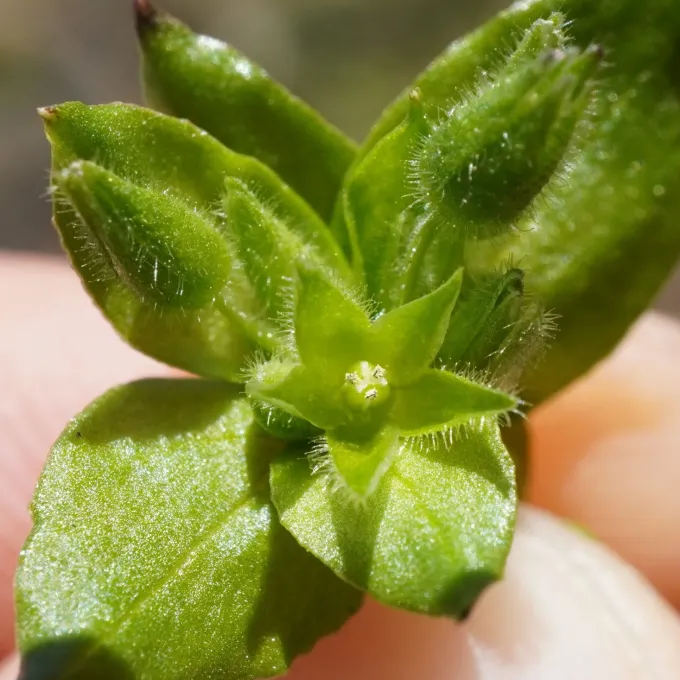
Lesser chickweed (Stellaria pallida) is an annual herbaceous plant belonging to the Caryophyllaceae family, often confused with the common chickweed due to visual similarity.
The plant features sprawling, branched stems that are capable of rooting at the nodes, allowing it to form dense, mat-like ground cover in favorable conditions.
Leaves are opposite, ovate in shape, and pointed, with a characteristic light green color and a relatively smooth, glabrous surface texture.
A key botanical distinction is the flower structure: lesser chickweed flowers often lack petals or have significantly reduced petals, with distinct yellowish anthers.
The seeds are minute, rounded-kidney shaped, and feature a slightly tuberculate surface, which enables them to persist in the soil seed bank for extended periods.
Where it grows
This species thrives in loose, moist, and nutrient-rich soils, frequently appearing in agricultural fields, vegetable gardens, and disturbed waste areas.
It is commonly found infesting winter cereal crops, where it exploits the lack of crop competition during the early spring growth phase.
Lesser chickweed demonstrates high ecological adaptability, capable of germinating at low temperatures, which gives it an early start compared to many other weeds.
In regions with mild winters, the plant may remain vegetative throughout the colder months, serving as a year-round presence in sheltered field margins.
High seed production rates contribute to its ability to rapidly colonize new areas, especially in systems with reduced tillage or poor crop rotation practices.
Harm it causes
The primary harm caused by lesser chickweed is the intense competition for soil nutrients and water, which stunts the development of emerging crop plants.
By forming dense mats, the weed shades the soil surface, hindering proper soil warming and delaying the early development of spring-sown crops.
In water-limited environments, its active transpiration contributes to soil moisture depletion, exacerbating stress conditions for the main agricultural crop.
The plant acts as an important alternative host for various pathogens, including fungal diseases that can easily spread to valuable crops in the vicinity.
Additionally, it provides a habitat for various crop pests, ensuring their survival during periods when the primary crop is absent or dormant.
How to control
Effective agricultural management involves thorough soil preparation and cultivation practices to disrupt the life cycle of the weed before crop emergence.
Timely inter-row cultivation and harrowing are essential mechanical methods to remove young seedlings before they become established and create large mats.
Integrating diverse crop rotations helps minimize the build-up of the seed bank, preventing lesser chickweed from becoming a dominant weed species in the field.
Chemical control relies on the application of selective herbicides; however, timing is critical, as treatment is most effective on young, actively growing weeds.
- Application of sulfonylurea herbicides.
- Use of growth-regulator type herbicides where appropriate.
- Strict hygiene in field margins to prevent seed dispersal into the crop area.
Taxonomy
- Latin name
- Stellaria pallida
- Family
- Гвоздичные
- EPPO code
- STEPD