
Shining chickweed
Stellaria nitens
Description
How to tell it apart
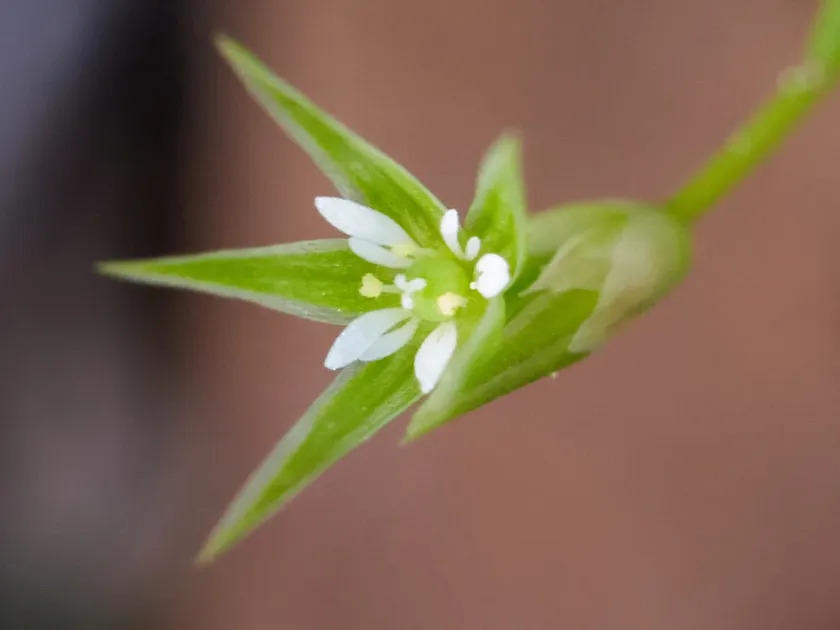
Shining chickweed (Stellaria nitens) belongs to the Caryophyllaceae family. It is a small annual herbaceous plant with erect or ascending stems that often exhibit a characteristic glossy sheen.
The leaves are opposite, sessile, and lanceolate or oval in shape, frequently tapering to a point. The surface of the leaf blade can be glabrous or covered in sparse hairs.
The flowers of shining chickweed are tiny and arranged in loose dichasial inflorescences. The white petals are deeply bifid, which is a classic taxonomic feature of the Stellaria genus.
The root system is fibrous and weakly developed, making the plant dependent on the moisture of the topsoil layer. This weed propagates exclusively via seeds.
The seeds are very small, rounded or kidney-shaped, with a tuberculate surface, which facilitates their dispersal by wind, water, and agricultural machinery.
Where it grows
This species prefers open, well-lit areas with light, sandy, or loamy soils where competition from taller vegetation is limited.
Shining chickweed is most commonly found in winter cereal fields, fallow land, along roadsides, and at the edges of fields. It also successfully colonizes orchards and vineyards.
It is a typical ephemeral plant that completes its life cycle in a short period, often finishing development before the harvest of main crops begins.
The plant shows high adaptability to temperate climates and is capable of rapidly colonizing disturbed soil areas following cultivation or livestock grazing.
In regions where it is prevalent, shining chickweed can form dense mats during the spring, intensively utilizing soil moisture before the active growth phase of crops.
Harm it causes
The harmfulness of shining chickweed lies in its ability to actively absorb nutrients and water during the early growth stages of crops, which reduces their overall potential yield.
At high infestation densities, the weed competes for sunlight, shading cereal seedlings and causing them to weaken or become etiolated.
The presence of this plant in fields promotes moisture stagnation in the surface layer, creating favorable conditions for the development of fungal diseases in both the weed and surrounding crops.
The presence of weeds complicates field management practices and can lead to crop contamination with weed seeds, negatively affecting the market quality of the harvest.
Additionally, shining chickweed can serve as an intermediate host for various pests and pathogens that survive throughout the vegetation period.
How to control
The primary method for controlling shining chickweed is timely and thorough soil cultivation, including discing and deep plowing to stimulate seed germination and ensure subsequent destruction.
Crop rotation plays a vital role, as it helps prevent the buildup of a weed seed bank in the soil by alternating crops with different sowing and cultivation schedules.
- Utilizing certified, clean seed material free from weed seed impurities.
- Performing mechanical hoeing in the inter-rows of row crops.
- Timely mowing of field margins and uncultivated patches to prevent seed dispersal.
Chemical control involves the use of systemic herbicides that effectively suppress the development of broad-leaved weeds in appropriate crop stands.
When applying chemical products, it is essential to strictly follow application regulations, taking into account the growth stages of both the weed and the crop to achieve maximum efficacy.
Taxonomy
- Latin name
- Stellaria nitens
- Family
- Гвоздичные
- EPPO code
- STENI