
Wood stitchwort
Stellaria nemorum
Description
How to tell it apart
Wood stitchwort (Stellaria nemorum) is a perennial herbaceous plant belonging to the Caryophyllaceae family. It typically grows to a height of 30–60 cm and features stems that can be ascending or erect.
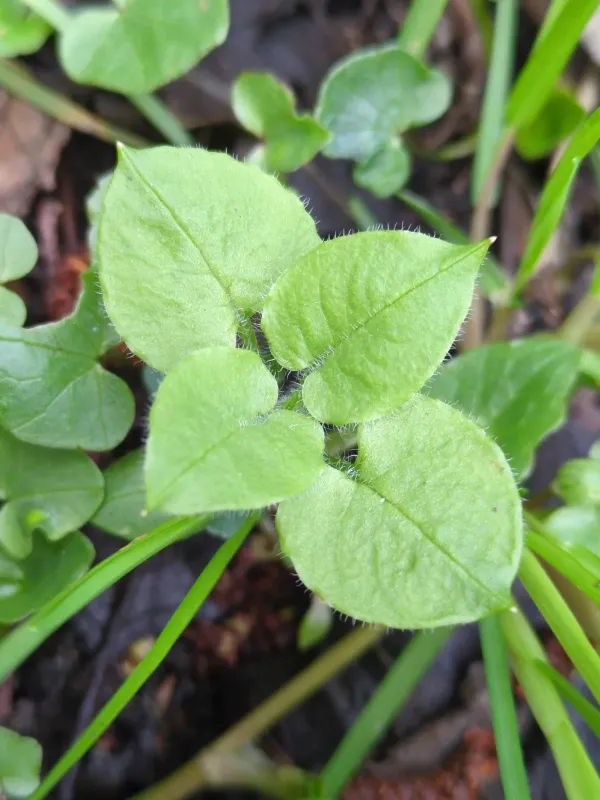
The leaves are distinct: the lower leaves are heart-shaped with long petioles, while the upper leaves are sessile and ovate. The entire plant is often covered in fine glandular hairs, giving it a soft texture.
Its white flowers are arranged in loose cymes. The petals are deeply cleft, creating a star-like appearance that is characteristic of the genus, hence the common name stitchwort.
The plant possesses a creeping rhizome system that allows for rapid vegetative spread, making it a persistent weed in moist, shaded environments where it can colonize areas effectively.
Flowering occurs from late spring to summer, and the plant produces a significant amount of seeds, which ensures its survival and continued presence in the seed bank of the soil.
Where it grows
Stellaria nemorum thrives in damp, shaded locations such as woodland floors, along riverbanks, and in shaded ravines. It prefers habitats with high humidity and fertile, organic-rich soil.
In agricultural settings, it is commonly found in fields adjacent to forests or hedgerows, particularly in low-lying areas where water tends to accumulate after rain.
The weed is highly shade-tolerant, which allows it to thrive underneath the crop canopy, where it competes for light and space with more desirable agricultural plants.
Neutral to slightly acidic soil conditions are ideal for its development, and it often spreads rapidly if fields are not properly drained or if the canopy of the crop is not closed.
Changes in moisture levels and field maintenance practices can influence the density of this weed, as it requires relatively stable environmental conditions to establish fully.
Harm it causes
The primary damage caused by Wood stitchwort is resource competition. It competes heavily with crops for water, essential soil nutrients, and sunlight, often leading to reduced crop vigor.
By forming dense patches, it shades out emerging crop seedlings, which can lead to thinning stands and a lower overall yield potential for the agricultural field.
The presence of this weed creates a moist microclimate within the field, which can encourage the development of fungal pathogens and pests that threaten crop health.
Furthermore, it acts as a reservoir for diseases that can easily spread to nearby crops, complicating the pest management strategy for farmers throughout the growing season.
Harvesting efficiency is also affected, as the excessive biomass of the weed can increase the moisture content of the harvested product and lead to increased contamination.
How to control
Cultural control strategies include thorough soil cultivation to disrupt the rhizome network and prevent the plant from establishing a firm foothold in the crop field.
Maintaining a well-planned crop rotation is crucial, as it limits the opportunity for the weed to proliferate and forces a change in the growing environment that disrupts its life cycle.
Chemical control can be achieved using systemic herbicides. It is most effective to treat the area before planting or when the weed is in its early stages of active growth.
Farmers should focus on improving field drainage to make the environment less hospitable to this moisture-loving weed, thereby reducing its competitive advantage.
- Deep plowing to destroy root systems.
- Inter-row cultivation to suppress weed growth.
- Selective herbicide application for dense infestations.
- Field drainage improvements to manage moisture.
- Regular monitoring of field margins and shaded areas.
Taxonomy
- Latin name
- Stellaria nemorum
- Family
- Гвоздичные
- EPPO code
- STENM