
Drymaria pachyphylla
Drymaria pachyphylla
Description
How to tell it apart
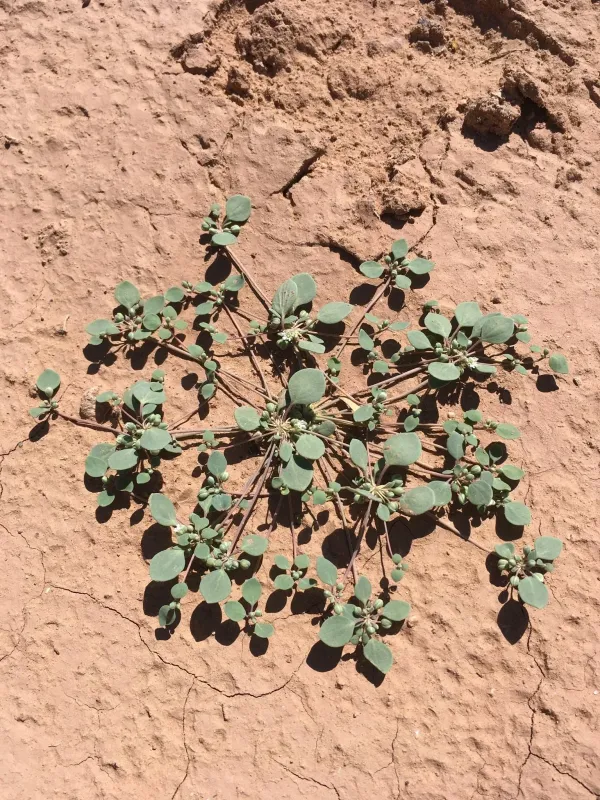
Drymaria pachyphylla, commonly known as thick-leaf drymary or threadleaf drymary, is a member of the Caryophyllaceae family. It is a prostrate, herbaceous plant that grows in dense mats.
The leaves are opposite, succulent, and have a distinctive rounded shape. The plant features a taproot system, allowing it to remain anchored in diverse soil conditions.
It produces small, inconspicuous white flowers that bloom rapidly following precipitation. These flowers transition into seed capsules that release numerous small seeds upon maturity.
This weed is highly resilient, capable of thriving in saline environments and disturbed soils where other plant species would likely struggle to establish.
Its small, succulent nature is its most defining morphological characteristic, helping it retain water during periods of moisture scarcity.
Where it grows
This species is primarily found in the southwestern United States and northern Mexico, favoring arid and semi-arid grasslands and disturbed rangelands.
It is frequently associated with clay-rich, saline soils where it can outcompete native vegetation that is sensitive to high salt concentrations.
Drymaria pachyphylla often colonizes areas degraded by overgrazing or land mismanagement, quickly covering bare soil patches and establishing new colonies.
The spread is heavily influenced by water movement, with seeds frequently accumulating in low-lying areas, ditches, and near livestock watering points after storms.
The plant adapts well to varying degrees of soil compaction and is a common sight in fields that have been subjected to significant environmental stress.
Harm it causes
The primary concern regarding Drymaria pachyphylla is its extreme toxicity to livestock, particularly cattle and sheep, which can be poisoned by consuming the plant.
The plant contains potent toxins that cause severe liver and kidney failure. In many cases, animals may ingest lethal doses before symptoms of poisoning become apparent.
In addition to livestock losses, the plant degrades the quality of forage, forcing farmers to reduce grazing intensity or abandon infested pastures entirely.
The high reproductive rate of the weed allows it to quickly overwhelm beneficial flora, leading to reduced biodiversity and productivity of the rangeland.
Early identification of the plant is critical, as its toxic effects are cumulative and often irreversible once the damage to the animal's organs has occurred.
How to control
Effective management focuses on rangeland health; maintaining a thick cover of competitive, healthy forage plants is the best defense against infestation.
Grazing management strategies, such as rotational grazing, should be implemented to prevent overgrazing, which creates the bare spots the weed thrives in.
Chemical control using systemic herbicides is most effective when applied during the early growth stages before the plant begins to set seed.
Manual removal of localized infestations can be helpful, provided the plants are destroyed before they have a chance to shed their seeds.
- Regular inspection of grazing areas after rainfall.
- Fencing off heavily infested areas to prevent livestock access.
- Implementing long-term rangeland restoration to encourage native grass growth.
Taxonomy
- Latin name
- Drymaria pachyphylla
- Family
- Гвоздичные
- EPPO code
- DRYPA