
Drymaria arenarioides
Drymaria arenarioides
Description
How to tell it apart
Drymaria arenarioides, commonly known as wolf-weed or sandwort-like drymaria, is a low-growing herbaceous plant belonging to the Caryophyllaceae family.
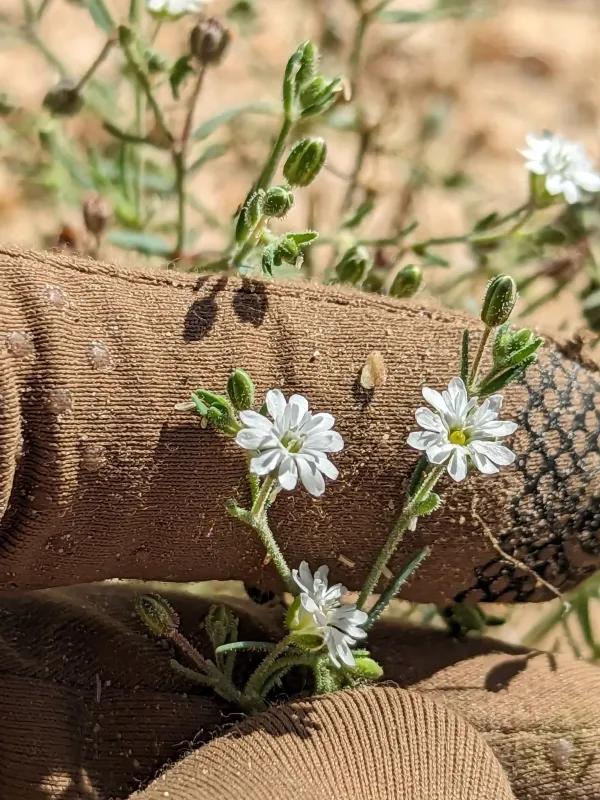
The plant is characterized by its fragile, trailing or ascending stems and small, opposite, elliptical leaves that grow in clusters along the nodes.
Its small, white flowers are composed of five petals, each deeply cleft, which is a diagnostic feature for identifying the species during the flowering season.
It possesses a relatively shallow root system, which allows it to thrive in nutrient-poor, sandy soils where it often forms dense, mat-like patches.
The prolific production of tiny seeds ensures its rapid colonization of open or disturbed habitats, making it a persistent nuisance in infested areas.
Where it grows
The native range of Drymaria arenarioides primarily includes arid and semi-arid regions of Mexico and the southwestern United States.
It favors sunny, exposed environments with sandy or gravelly soil types, frequently colonizing rangelands, roadside verges, and heavily grazed pastures.
The plant often exploits areas where the native plant cover has been degraded or removed, allowing it to establish itself without competition from perennial grasses.
In agricultural settings, it can infiltrate pastures and hay fields, posing a significant risk to livestock that graze on infested plots.
Environmental factors such as drought often exacerbate the spread, as this species demonstrates high resilience in harsh, moisture-limited climates.
Harm it causes
The primary concern regarding Drymaria arenarioides is its potent toxicity, which causes severe health issues and mortality in livestock, particularly cattle, sheep, and horses.
Ingestion of the plant leads to acute poisoning, characterized by severe damage to the heart, liver, and kidneys, often resulting in death within a short period.
Clinical signs of poisoning include lethargy, loss of appetite, muscle weakness, and labored breathing, which are often observed shortly after grazing on affected areas.
The economic impact is substantial due to direct livestock losses, veterinary costs, and the reduced utilization of land deemed unsafe for animal husbandry.
Furthermore, the species displaces valuable forage plants, leading to a loss of pasture productivity and long-term degradation of grazing resources.
How to control
Management of Drymaria arenarioides requires a combination of vigilance, early detection, and the implementation of strict grazing management protocols.
Manual removal of plants is effective for small, newly discovered infestations, provided it is completed before the plants reach the seed-setting stage.
Chemical control utilizing herbicides can be an effective strategy, though application must be carefully planned to protect desirable vegetation.
- Systemic herbicide application to target weed patches in non-crop areas.
- Early season scouting to detect and eliminate individual plants before they proliferate.
- Pasture improvement techniques to maintain a thick canopy, shading out weed seedlings.
Long-term control relies heavily on maintaining a healthy, dense forage cover, which creates an environment where this opportunistic weed struggle to establish.
Taxonomy
- Latin name
- Drymaria arenarioides
- Family
- Гвоздичные
- EPPO code
- DRYAR