
Cerastium subtriflorum
Cerastium subtriflorum
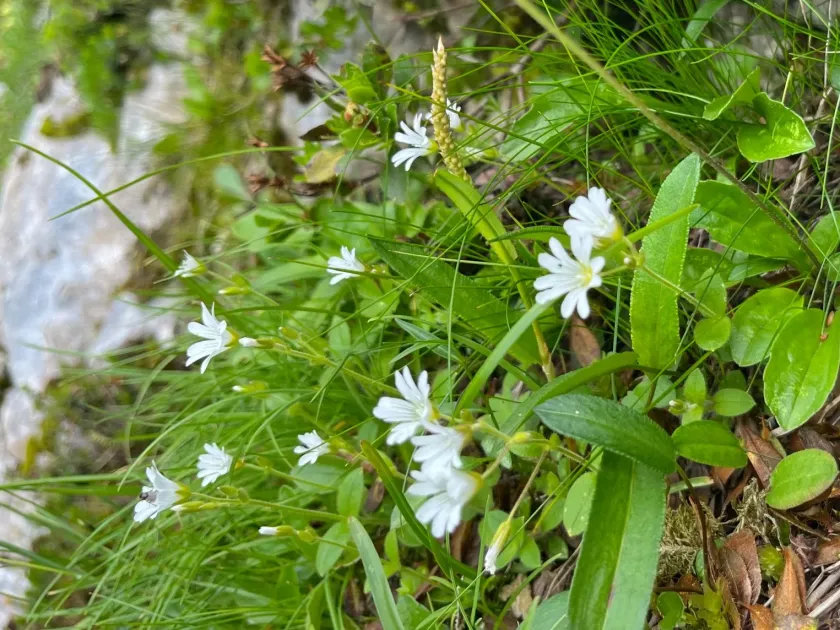
Description
How to tell it apart
Cerastium subtriflorum belongs to the Caryophyllaceae family. It is a perennial herbaceous plant known for forming dense patches that can quickly invade agricultural plots.
The plant features distinctively pubescent stems and small, opposite leaves. These physical traits help it thrive in various environmental conditions, making it a persistent competitor.
The flowers are typically small and white, with deeply bifid petals. They appear in the spring and summer, facilitating the spread of seeds across cultivated fields.
The root system of Cerastium subtriflorum is highly branched, allowing the plant to recover quickly even after surface mechanical damage.
Botanically, it is classified as a ruderal weed, displaying high adaptability to disturbed soils and varying levels of sun exposure.
Where it grows
This weed is commonly found in arable fields, gardens, and along field margins. It thrives in moist, nutrient-rich soils that are often found in managed agricultural ecosystems.
It frequently invades winter crop fields, where its early growth cycle allows it to establish dominance before the main crops begin their rapid development phase.
Cerastium subtriflorum often colonizes areas with poor drainage, serving as an indicator of soil compaction or excessive water retention in specific zones.
Seed dispersal occurs primarily through wind and agricultural machinery, making it difficult to contain without integrated management strategies.
The plant is highly resilient and can colonize abandoned farmland or neglected sections of a farm, acting as a constant source of re-infestation for nearby crops.
Harm it causes
The primary damage caused by Cerastium subtriflorum is the intense competition for nutrients, water, and sunlight, which significantly stunts the growth of main crops.
Dense mats of this weed reduce soil temperature and impede proper aeration, which can negatively affect seed germination and early root development.
The weed acts as a host for various pathogens and pests, which can migrate to crops, increasing the overall phytosanitary risk to the farm.
By creating high-humidity zones within the canopy, the weed promotes the growth of mold and mildew, threatening the quality of the harvest.
In addition to yield losses, the presence of these weeds increases harvesting costs, as they complicate the operation of mechanical harvesters.
How to control
Effective control starts with mechanical tillage, specifically deep plowing, which disrupts the weed's root system and prevents it from spreading further.
Timed inter-row cultivation is a crucial agricultural practice that effectively removes young weeds before they reach the flowering stage.
Crop rotation remains one of the most effective non-chemical strategies, as it disrupts the growth cycle of the weed by varying the conditions of the field.
Chemical control involves the use of selective herbicides applied at the most vulnerable growth stages of the plant, ensuring minimal impact on the crop.
Integrated weed management, combining both preventative and corrective measures, is essential for maintaining long-term control over Cerastium subtriflorum populations.
Taxonomy
- Latin name
- Cerastium subtriflorum
- Family
- Гвоздичные
- EPPO code
- CERSU