
Dwarf mouse-ear
Cerastium pumilum
Description
How to tell it apart
Dwarf mouse-ear (Cerastium pumilum) is a small annual herbaceous plant from the Caryophyllaceae family. It is recognized as a minor but persistent weed in agricultural lands.
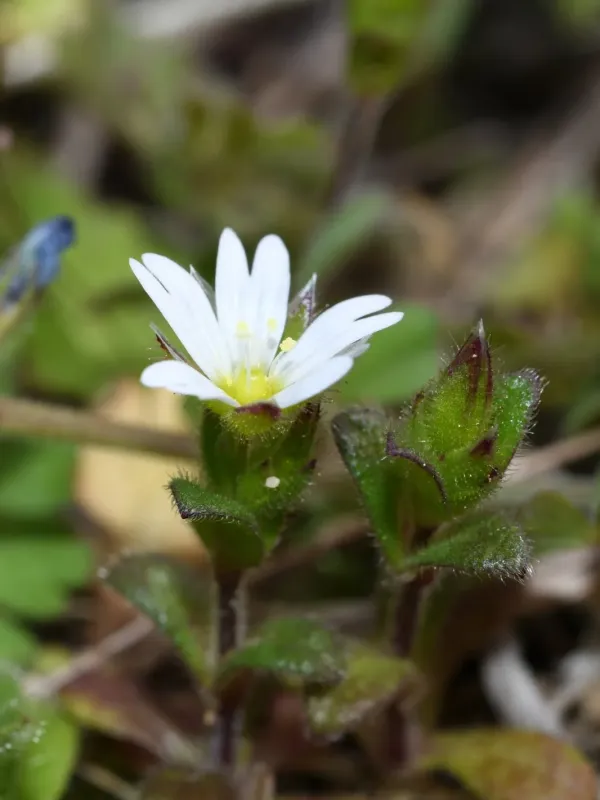
The plant typically grows to a height of 5–15 centimeters. Its stems and leaves are covered in glandular hairs, which give the plant a distinct sticky texture.
Leaves are small, opposite, and vary from oblong to oval in shape. The lower leaves are often arranged in a basal rosette, while upper leaves are sessile.
The flowers are white, relatively small, and appear in loose inflorescences. The petals are shorter than or equal to the sepals, which is a key trait for identification.
It reproduces solely by seeds, which can remain dormant in the soil seed bank for several seasons, germinating whenever favorable conditions arise.
Where it grows
This weed prefers well-drained, sandy, or light-textured soils. It is commonly found in disturbed sites, fields, pastures, and along roadsides throughout Europe.
In agricultural settings, it is most troublesome in winter cereal crops, as it thrives in the cooler temperatures of early spring.
Harm it causes
The primary harm caused by dwarf mouse-ear is early-season competition for nutrients and water, which stunts the growth of sensitive crop seedlings.
High infestations create a dense cover that inhibits soil aeration and can lead to uneven crop development across the field.
The sticky nature of the plant attracts dust and debris, which can create a micro-environment for the spread of certain fungal plant diseases.
Competition from this weed leads to reduced tillering in cereal crops, ultimately causing a measurable decrease in grain yield at harvest.
Furthermore, the presence of the weed increases the moisture content of the harvested product, making it harder to process and store effectively.
How to control
Effective control begins with proper soil preparation, including deep ploughing in the autumn to bury seeds and prevent germination.
Crop rotation remains one of the best cultural practices to break the life cycle of the weed and reduce its seed population in the soil.
Chemical control can be achieved using selective post-emergence herbicides specifically registered for use in grain crops to manage broad-leaved weeds.
Mechanical operations, such as harrowing or inter-row cultivation in wider-spaced crops, help to eliminate weeds physically without chemical input.
Maintaining clean field borders and managing non-crop areas is vital to preventing the encroachment of dwarf mouse-ear into the main cultivation areas.
Taxonomy
- Latin name
- Cerastium pumilum
- Family
- Гвоздичные
- EPPO code
- CERPU