
Cerastium pedunculatum
Cerastium pedunculatum
Description
How to tell it apart
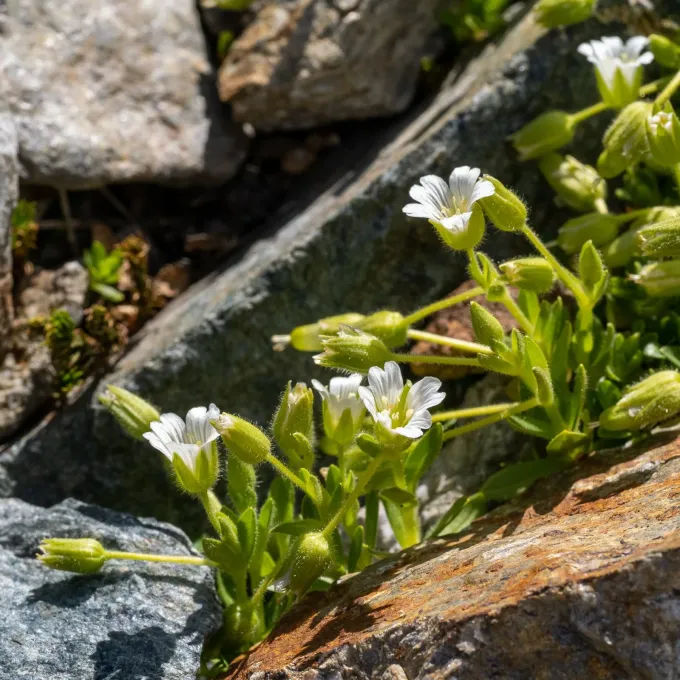
Cerastium pedunculatum belongs to the Caryophyllaceae family. It is an annual herbaceous plant characterized by small, pubescent leaves and distinct white flowers with deeply lobed petals.
The stems of this weed are slender and can be either erect or ascending, typically reaching a modest height during the early growing season.
Key identification features include the long flower stalks, which distinguish it from other related species, and the presence of glandular hairs on the foliage.
The root system is fibrous and shallow, allowing the plant to rapidly establish itself in moist, disturbed soil environments during the spring months.
Seeds are small, dark brown, and have a tuberculate surface, facilitating their dispersal through wind, water, and agricultural equipment used in field operations.
Where it grows
This weed thrives in moist, well-aerated soils with high nitrogen content. It is commonly found in cereal crops, vegetable plantations, and fallow fields.
Cerastium pedunculatum is a typical component of weed communities in temperate regions where spring moisture levels favor early germination.
It frequently colonizes field margins, pathways, and uncultivated edges, acting as a source for infestation of adjacent arable land.
The plant demonstrates high adaptability to varying light conditions, allowing it to flourish both in open areas and within moderately dense crop canopies.
Dispersal is often compounded by the movement of farm machinery between fields, which carries seeds attached to mud and plant debris.
Harm it causes
The primary damage caused by Cerastium pedunculatum is intense competition with young crops for essential nutrients, water, and available soil minerals.
Dense clusters of this weed can physically suppress the growth of crop seedlings, reducing their access to light and hindering early-stage development.
Widespread infestation can significantly reduce final crop yields by exerting pressure on the resources that should be allocated to the main culture.
The plant acts as an alternative host for various pests and fungal diseases, providing a reservoir that facilitates the infection of agricultural crops.
Contamination of harvested grain with the small seeds of this weed complicates processing and increases the costs associated with seed cleaning and quality control.
How to control
Effective management begins with sound crop rotation practices that break the life cycle of the weed and prevent its establishment in the field.
Mechanical control methods such as tillage, including stubble breaking and deep autumn plowing, are essential for destroying weed populations and seed banks.
Pre-sowing cultivation is highly recommended to stimulate the germination of weed seeds, followed by mechanical removal before the main crop is planted.
Chemical control involves the application of selective herbicides that effectively target broad-leaved weeds within cereal and vegetable crop systems.
Proper timing is critical for chemical interventions; spraying should occur during the early vegetative stages of the weed to ensure maximum efficacy and crop safety.
Taxonomy
- Latin name
- Cerastium pedunculatum
- Family
- Гвоздичные
- EPPO code
- CERPD