
Cerastium lineare
Cerastium lineare
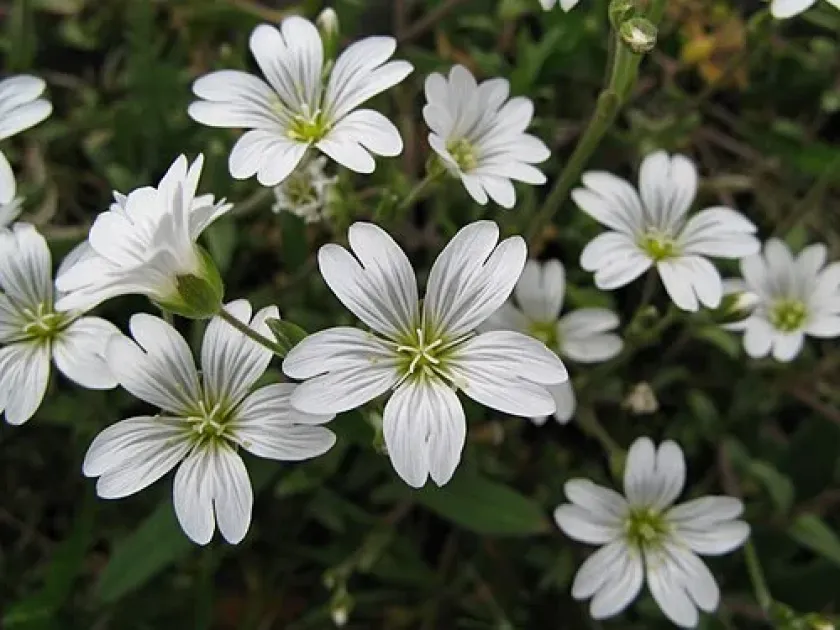
Description
How to tell it apart
Cerastium lineare is a perennial herbaceous plant belonging to the Caryophyllaceae family. It is distinguished by its narrow, linear leaves, which serve as its primary identifying feature compared to other related species.
The stems of this weed are often creeping or ascending and are covered in soft, fine hairs that protect the plant from environmental stress and water loss during dry spells.
The flowers have the characteristic appearance of the Caryophyllaceae family, featuring five white petals that are deeply notched at the tips. The plant grows in dense mats, which allows it to dominate available surface space in fields.
Biological propagation occurs both through seeds and vegetative parts. Its root system is robust and capable of regenerating quickly, making it a highly persistent weed in agricultural landscapes.
This weed has a long growing season, allowing it to establish itself early in the spring and persist until late autumn, outcompeting many local crops and native plant species.
Where it grows
Cerastium lineare prefers well-lit environments and thrives in loose, sandy, or rocky soils. It is commonly found in fallow lands, field margins, and roadsides, from which it easily spreads into cultivated farm areas.
In agricultural settings, this weed poses a significant threat to winter cereals and various vegetable crops. It aggressively competes for space, light, and nutrients during the most critical stages of crop development.
The weed frequently colonizes fallow fields, where it faces minimal competition and rapidly forms dense patches that deplete soil nutrients, particularly in the top layer where crops establish their root systems.
Dispersal across large distances is facilitated by wind and water, as well as by agricultural machinery that carries seeds and plant fragments between different fields, contributing to its invasive nature.
It exhibits high ecological plasticity, meaning it adapts well to varying moisture levels and nutrient conditions, allowing it to survive in areas where other plants might struggle to persist.
Harm it causes
The primary damage caused by Cerastium lineare is its intense competition for water and minerals. Its extensive root system drains soil moisture, which often results in reduced crop yields, especially in drought-prone regions.
By forming thick mats, the plant alters the local microclimate at the soil surface, hindering proper aeration and potentially creating environments favorable for the development of soil-borne pathogens.
This weed often acts as a reservoir for various pests and diseases that affect commercial crops. Consequently, its presence complicates phytosanitary management and necessitates increased expenditure on pesticides.
The presence of this weed creates significant problems during harvest. Dense patches can clog combine harvester machinery, slowing down operations and increasing grain losses during the threshing process.
Furthermore, the plant may release allelopathic substances into the soil that inhibit the germination of crop seeds, leading to uneven crop emergence and reduced overall stand density in the field.
How to control
Controlling Cerastium lineare requires an integrated strategy combining mechanical cultivation and chemical intervention. The goal is to exhaust the root reserves through consistent and timely management practices.
Effective plowing techniques, including deep autumn tillage with complete soil inversion, are essential for burying seeds and disrupting the survival of established root systems before the next planting season.
Chemical control should be implemented using systemic herbicides that can effectively target the root system of the weed. Timing is critical, with applications most effective during the period of peak vegetative growth.
- Implementation of crop rotation using competitive varieties to suppress weed growth.
- Application of systemic herbicides, such as glyphosate or sulfonylureas, when appropriate.
- Rigorous cleaning of sowing material to prevent the introduction of weed seeds to fields.
- Frequent inter-row cultivation in row crops to disrupt weed development and growth.
Systematic scouting of fields allows farmers to identify early infestations, enabling spot treatments that can prevent the weed from spreading across larger areas, thereby reducing overall pesticide usage.
Taxonomy
- Latin name
- Cerastium lineare
- Family
- Гвоздичные
- EPPO code
- CERLI