
Common mouse-ear
Cerastium holosteoides
Description
How to tell it apart
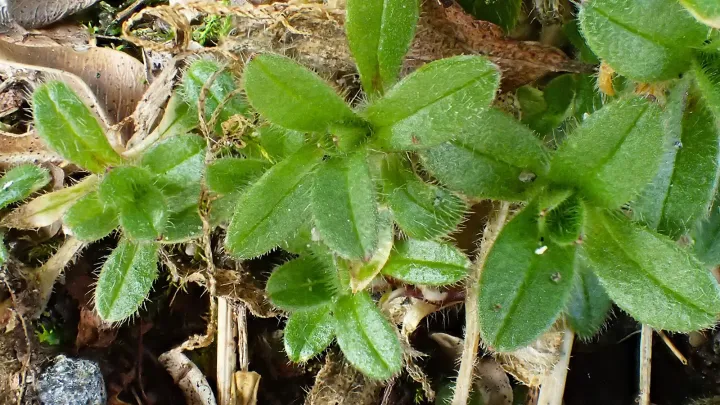
Common mouse-ear (Cerastium holosteoides) is a herbaceous plant belonging to the Caryophyllaceae family. It is a perennial or winter annual that typically grows in low, spreading patches or mats across the soil surface.
The stems can grow up to 40 cm in height, often being ascending or decumbent with glandular hairs. The leaves are opposite, sessile, and vary from ovate to lanceolate, providing a dense foliage coverage.
Flowers are white, arranged in loose cymes, and are characterized by having deeply bifid petals. This distinct feature makes it easier to distinguish from other similar weed species during the vegetation period.
The fruit is a cylindrical capsule filled with numerous small, brown, rough-surfaced seeds. These seeds are easily dispersed by wind, water, and human activity, facilitating the rapid colonization of new areas.
The root system is fibrous and highly capable of vegetative reproduction. Any stem nodes touching moist soil can readily develop adventitious roots, making the plant difficult to eradicate through superficial cultivation.
Where it grows
This weed is widely distributed throughout temperate regions, commonly found in pastures, meadows, and disturbed agricultural land. It thrives in moist, fertile soils but can adapt to various conditions.
In cropping systems, Cerastium holosteoides is a frequent problem in winter cereals, perennial grasses, and vegetable crops. It is particularly competitive during early spring, exploiting the lack of canopy cover in young crops.
The species prefers compacted or poorly drained soil, often appearing as a pioneer species in areas with moisture accumulation. It is cold-tolerant, allowing it to survive through winter as a vegetative rosette.
Due to its high seed production, it can form a persistent soil seed bank. Once established, it can remain a persistent problem for years, requiring long-term management strategies to reduce its population.
The plant frequently inhabits field margins and ditches, which act as reservoirs for seeds that are then spread into the main production areas by machinery and wind currents.
Harm it causes
The primary harm caused by common mouse-ear is resource competition. It efficiently absorbs nutrients and water, which stunts the growth of crop plants and reduces overall yield quality.
By forming dense mats on the ground, the weed keeps the soil surface cool and moist. This microenvironment can promote the growth of soil-borne pathogens and fungal diseases that affect main crops.
In perennial pastures, the weed outcompetes desirable forage species, leading to a significant drop in hay quality. Its presence makes the fields less productive and can lead to forage contamination.
Furthermore, it acts as a host for various insects and viruses. By harboring pests such as aphids, it increases the risk of viral infection in adjacent vegetable or cereal crops, complicating plant protection.
Economic losses arise not only from reduced yields but also from the increased costs of manual weeding or repeated herbicide applications necessary to keep the fields clean throughout the season.
How to control
Agronomic control is essential for managing Cerastium holosteoides. Deep plowing helps bury seeds and disrupts the root network, significantly slowing down its recovery and spread in subsequent seasons.
Effective seedbed preparation and mechanical weeding, such as harrowing during early crop stages, are crucial. Managing the soil structure to avoid compaction also helps in reducing the habitat suitability for this weed.
Chemical control involves systemic herbicides that are effective during the active growth phase of the weed. It is vital to select products that are selective for the specific crop and to apply them at the recommended growth stage.
- Rotate crops to disrupt the life cycle of the weed.
- Ensure seed purity to prevent introduction to new fields.
- Use competitive crop varieties that establish canopy quickly.
- Implement localized treatment in early spring before seed setting occurs.
Integrated Weed Management (IWM) is the most sustainable approach. By combining mechanical, agronomic, and chemical methods, producers can maintain weed populations below the economic threshold and protect their yields.
Taxonomy
- Latin name
- Cerastium holosteoides
- Family
- Гвоздичные
- EPPO code
- CERVU