
Sticky mouse-ear
Cerastium glomeratum
Description
How to tell it apart
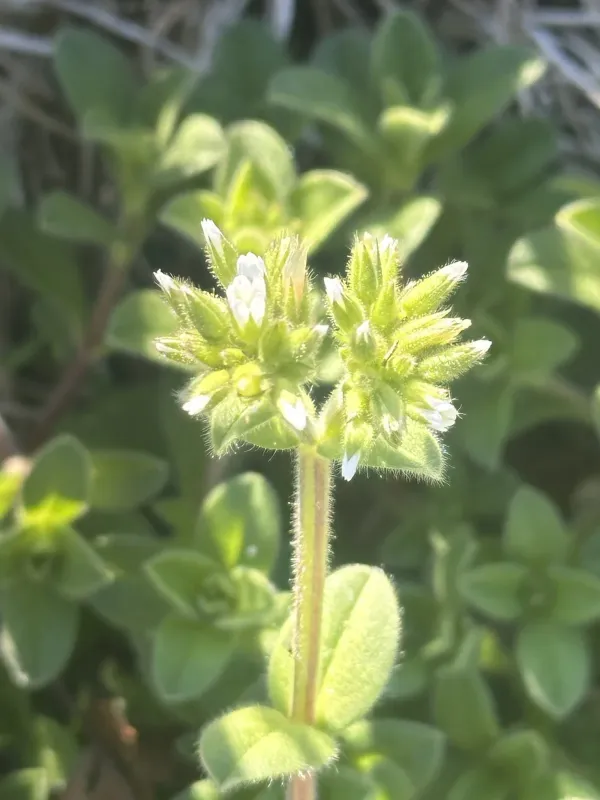
Sticky mouse-ear (Cerastium glomeratum) is an annual herb belonging to the Caryophyllaceae family. The plant grows to a height of 10–30 cm and is covered with glandular hairs, which give it a sticky feel and a dull green appearance.
The leaves are oval or ovate, arranged oppositely on the stem. The key identification feature is the inflorescence: small white flowers clustered together in dense, head-like bunches at the ends of the shoots.
The root system is fibrous and relatively shallow, which allows the plant to establish itself quickly in the topsoil. Stems can be either upright or spreading, often branching from the base.
This weed reproduces solely through seeds. A single plant can produce a vast quantity of tiny seeds that remain viable in the soil for several years, forming a significant persistent seed bank.
Flowering usually occurs from spring to early summer, allowing the plant to exploit the early growing season and compete effectively with spring-sown crops.
Where it grows
Sticky mouse-ear is widely distributed in temperate regions, thriving in loose, fertile, and moist soils. It is frequently found in agricultural fields, gardens, orchards, and waste grounds.
It acts as a primary weed in cereals, row crops, and managed grasslands, often colonizing gaps between crop rows where there is minimal competition.
The plant is an indicator of moist, compacted soil conditions. It readily colonizes disturbed land, such as field edges, path borders, and areas with poor ground cover.
Its high environmental plasticity allows it to adapt to various soil types, making it a persistent inhabitant of disturbed agro-ecosystems.
Once established, the plant spreads rapidly, especially in fields with reduced tillage systems where seeds are not buried deep enough to prevent germination.
Harm it causes
The main impact of sticky mouse-ear is resource depletion; it competes aggressively with crops for water, sunlight, and soil nutrients, particularly nitrogen.
As an early-season weed, it inhibits the initial growth of crops by shading the soil surface and suppressing the development of seedlings.
Sticky mouse-ear serves as a host for various pathogens and pests that can later migrate to commercial crops, increasing the overall phytosanitary burden on the field.
Contamination of the harvested product with seeds from this plant leads to quality degradation and increases costs associated with post-harvest grain cleaning.
In high-density infestations, yield losses can be significant, as crops struggle to reach their full genetic potential due to constant competition throughout the vegetative phase.
How to control
Integrated control starts with agronomic practices, such as thorough soil preparation, which helps trigger germination so that weeds can be eliminated by subsequent cultivation before planting.
Mechanical weed control, including harrowing or row cultivation, is highly effective in managing this species, especially when performed during the early seedling stage.
Crop rotation should prioritize competitive crops that establish canopy cover quickly, thereby starving the weed of necessary light for its development.
Chemical control involves the use of systemic herbicides. Selection should be based on regional weed management guidelines and the growth stage of the specific crop being treated.
Preventative measures, such as cleaning harvesting equipment to prevent seed dispersal and maintaining clear field margins, are essential for long-term population management.
Taxonomy
- Latin name
- Cerastium glomeratum
- Family
- Гвоздичные
- EPPO code
- CERGL