
Cerastium carinthiacum
Cerastium carinthiacum
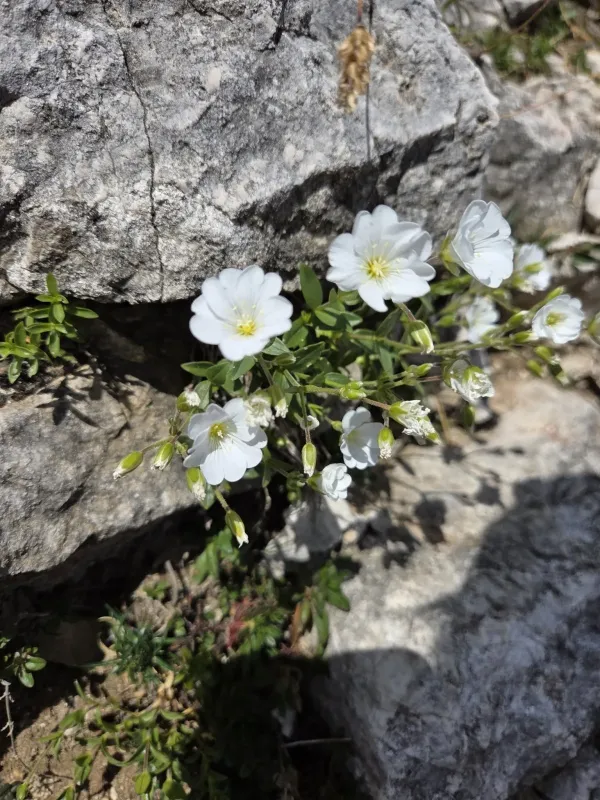
Description
How to tell it apart
Cerastium carinthiacum is a perennial herbaceous plant belonging to the Caryophyllaceae family. In agricultural terms, it is classified as a persistent weed that can spread through both seed dispersal and vegetative growth.
The plant features pubescent (hairy) stems that are typically erect or ascending. Its leaves are arranged in an opposite pattern along the stem and have an oblong to lanceolate shape with a greyish hue due to dense hairs.
The flowers possess five white petals that are characteristically deeply notched at the apex, which is a key identifying trait for this specific member of the Cerastium genus.
The root system is well-developed, allowing the plant to survive in various soil conditions and efficiently compete with crops for resources. This rooting capacity makes it difficult to eradicate with simple mechanical tools.
The plant is known for its ability to regenerate from small fragments of root or stem, which increases its persistence in cultivated fields and contributes to its status as a problematic weed.
Where it grows
This weed prefers open, moist habitats and is frequently found in pastures, fallow fields, and near drainage ditches. It thrives in soils that are rich in organic matter but can adapt to various conditions.
It often infiltrates fields that have undergone inadequate primary tillage or those with disrupted crop rotation sequences. Once established, it can spread rapidly across a field if left unchecked.
Cerastium carinthiacum is commonly found in mountainous and sub-mountainous regions, but it has adapted to lower agricultural landscapes through the movement of contaminated agricultural machinery and equipment.
Seeds are primarily spread by wind and water, especially during heavy rains or floods. In some cases, human activity during harvest and transport is a primary vector for spreading the seeds across different land sections.
It often forms dense patches or colonies that outcompete native or cultivated plants by covering the soil surface and utilizing available nutrients and water before the crops can establish their root systems.
Harm it causes
The primary damage caused by Cerastium carinthiacum is the direct competition for soil nutrients and moisture, which leads to stunted growth and reduced yields in various agricultural crops.
Due to its dense growth habit, it often shades smaller crop seedlings, hindering their photosynthetic activity and preventing them from reaching their full physiological potential during the early development phase.
The plant serves as a host for various pathogens and pests, which can migrate to crops, increasing the disease pressure and necessitating higher usage of chemical treatments on the farmland.
In fields with high weed density, the presence of this plant increases the overall moisture content of the harvested product, which can lead to storage issues and additional expenses for grain drying and cleaning.
Its persistence and rapid regeneration capacity make it a significant threat to long-term crop productivity, as it often survives conventional tillage practices if they are not deep enough to cut the root systems effectively.
How to control
Effective control requires a deep plowing technique as part of the primary tillage process to uproot and expose the plant's root system to drying conditions, which effectively kills the perennial parts.
Integrated weed management should include pre-sowing cultivation to trigger the germination of dormant seeds, followed by mechanical removal before the main crop is planted in the field.
Crop rotation strategies that include fast-growing competitive species can significantly reduce the establishment of this weed by shading out new shoots and preventing them from spreading.
Chemical control is often necessary for severe infestations; systemic herbicides, particularly those based on glyphosate, are effective when applied during the fallow period or before crop emergence.
- Ensure all planting seeds are thoroughly cleaned.
- Mow field edges to prevent seed dispersal into the crop.
- Monitor fields regularly to identify new patches early.
- Follow specific herbicide application rates to avoid environmental damage.
Taxonomy
- Latin name
- Cerastium carinthiacum
- Family
- Гвоздичные
- EPPO code
- CERCN