
Gray mouse-ear
Cerastium brachypetalum
Description
How to tell it apart
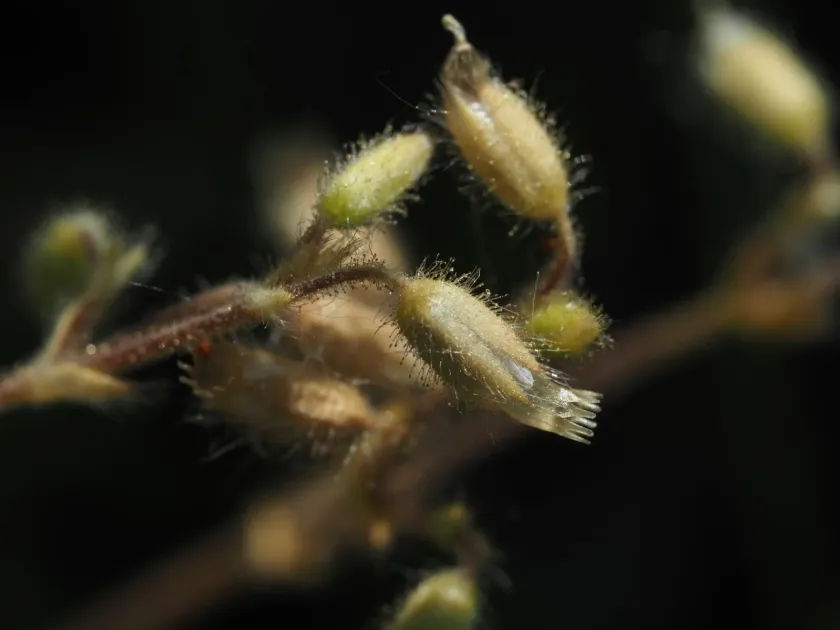
The Gray mouse-ear (Cerastium brachypetalum) is a member of the Caryophyllaceae family. It is an annual herbaceous weed characterized by glandular hairs on its stems and leaves.
The plant typically grows to a height of 5–25 cm. It possesses narrow lanceolate leaves and small white flowers, where the petals are equal to or shorter than the sepals, distinguishing it from other Cerastium species.
The root system is fibrous and shallow, allowing the plant to establish itself quickly in the upper soil layers during early spring conditions.
Seeds are tiny and brown, capable of remaining dormant in the soil seed bank for several seasons, ensuring persistent re-infestation of fields.
It is commonly identified as a winter annual, meaning it germinates in late autumn or early spring, providing a head start over sown crop species.
Where it grows
This species thrives in light, well-drained, and dry soils. It is frequently found in arable fields, particularly winter grain crops, as well as on roadsides and fallow lands.
It is highly adaptable and can colonize areas with poor crop density or exposed soil, making it a common sight in fields with low-input management.
Harm it causes
The primary damage caused by the Gray mouse-ear is its competition for nutrients and moisture during the critical early growth stages of cereals and other crops.
By consuming limited resources early in the season, the weed reduces the vigor and tillering of crop plants, directly impacting the overall yield potential of the field.
How to control
Chemical control should be managed through the application of selective broad-leaf herbicides. Optimal results are achieved when treatments are applied while the weed is in the seedling stage.
Mechanical management includes intensive tillage before seeding and harrowing in the spring to uproot seedlings and expose roots to the sun, preventing further growth.
Taxonomy
- Latin name
- Cerastium brachypetalum
- Family
- Гвоздичные
- EPPO code
- CERBR