
Bering chickweed
Cerastium beeringianum
Description
How to tell it apart
Bering chickweed (Cerastium beeringianum) is a member of the Caryophyllaceae family. It is a perennial herbaceous plant that typically grows in small, loose mats or clusters.
The stems are characterized by fine pubescence, occasionally featuring glandular hairs, which is a distinguishing feature of this specific species.
The leaves are arranged oppositely along the stem and possess a lanceolate to ovate shape, often appearing slightly grayish due to the hair coverage.
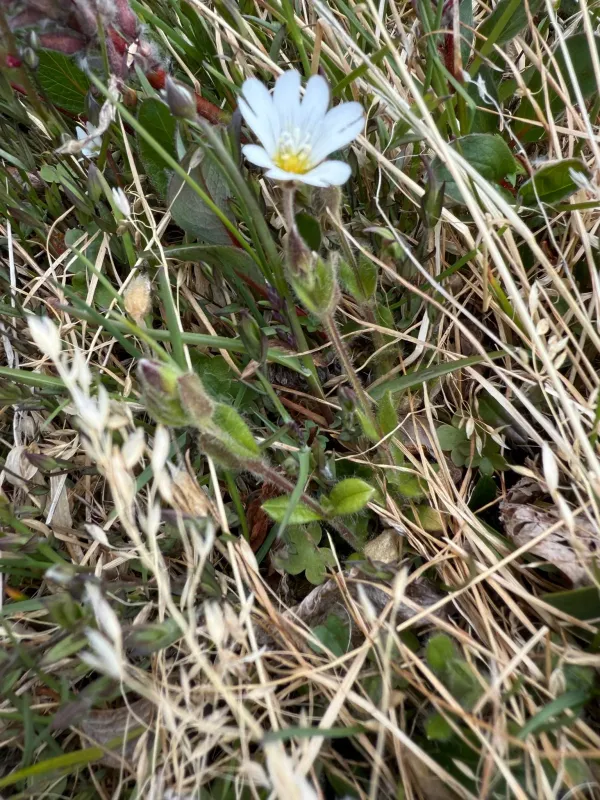
Its flowers have five white petals that are deeply notched at the tips, creating a characteristic appearance of ten petals, which is common in many chickweed species.
The root system consists of branching rhizomes that allow for both sexual reproduction via seeds and vigorous vegetative spread in favorable soil conditions.
Where it grows
Bering chickweed is primarily found in Arctic and sub-Arctic regions. In agricultural settings, it occupies fields, roadsides, and abandoned land with cool climates.
The plant prefers moist, loamy, or rocky soils, often invading areas where the natural soil structure has been disturbed by human activity or machinery.
It frequently colonizes fields of perennial forage crops, where the lack of intensive soil tillage allows the weed to establish itself and spread through its rhizomes.
Its natural resilience makes it capable of surviving in harsh environmental conditions, including poor light and low temperatures, which gives it an edge in northern latitudes.
On arable land, it is often found in patches where drainage is poor, as it thrives in high-moisture environments typical of damp, northern fields.
Harm it causes
The main harm caused by Bering chickweed is its intense competition for nutrients and water, which stunts the growth of adjacent cereal and forage crops.
Due to its ability to sprout from small rhizome fragments, mechanical cultivation that is not deep enough can accidentally stimulate its propagation across the field.
In forage crops, its presence reduces the overall quality of hay and silage, as the weed's texture and moisture content make processing and storage difficult.
The weed initiates growth early in the spring, allowing it to occupy space and block sunlight from reaching slower-developing seedlings of agricultural crops.
Dense clusters of this weed can lead to increased localized humidity at the soil surface, potentially creating favorable conditions for secondary plant pathogens.
How to control
Deep primary tillage is the most effective mechanical method for control, as it helps to uproot the rhizomes and expose them to drying conditions on the surface.
Crop rotation incorporating crops that require regular row cultivation is highly recommended to suppress the weed population through mechanical disturbance.
Chemical control involving systemic herbicides is effective when applied during the active vegetative growth phase to ensure translocation to the root system.
Environmental conditions, particularly temperature, must be considered when applying herbicides, as the plant's metabolic activity slows down in colder climates.
- Deep plowing with turnover of the soil layer.
- Inter-row cultivation for row crops to disrupt rhizome growth.
- Application of selective systemic herbicides during the early growth stage.
- Monitoring field perimeters to prevent the ingress of weed seeds.
Taxonomy
- Latin name
- Cerastium beeringianum
- Family
- Гвоздичные
- EPPO code
- CERBE